
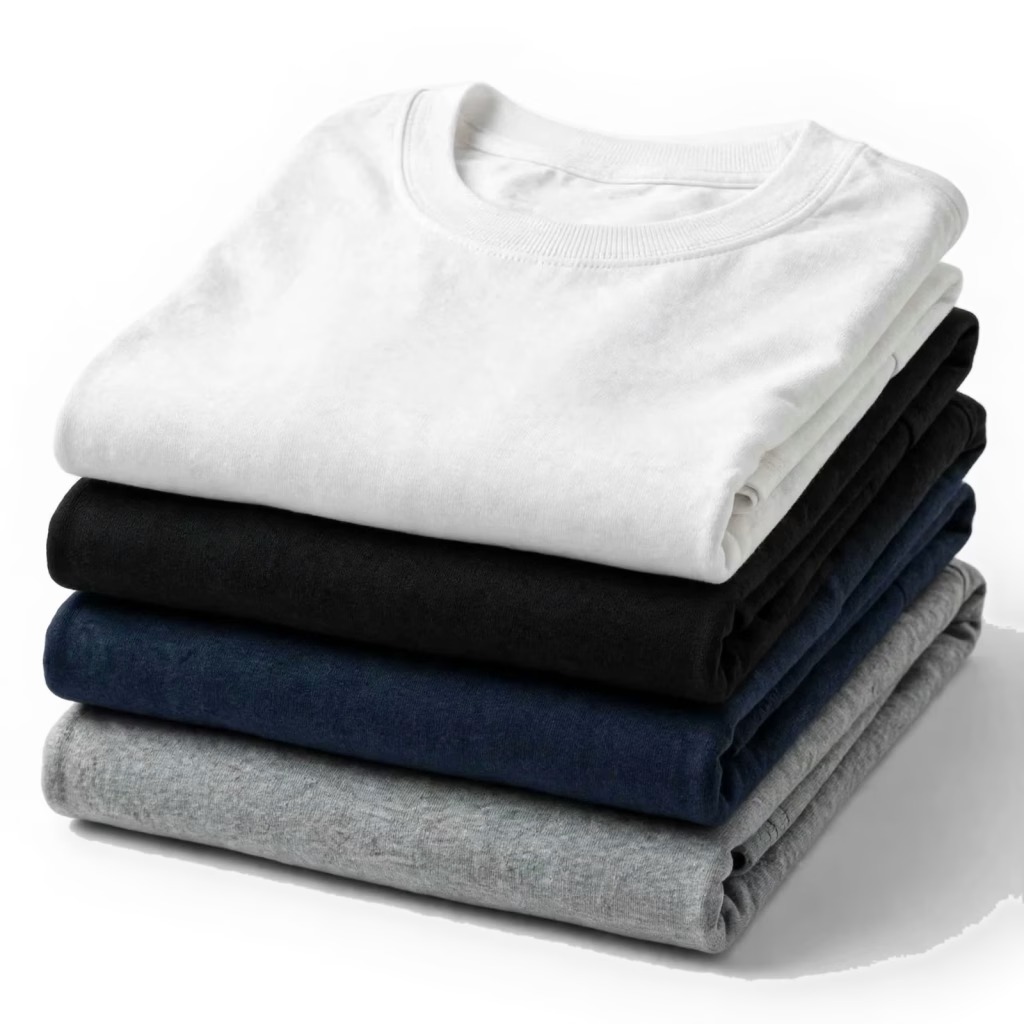
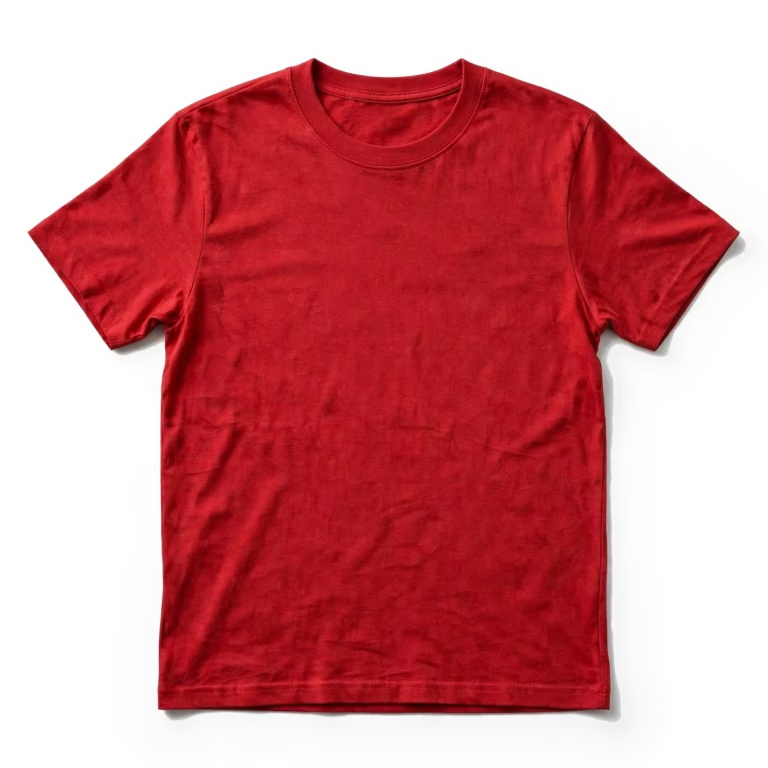
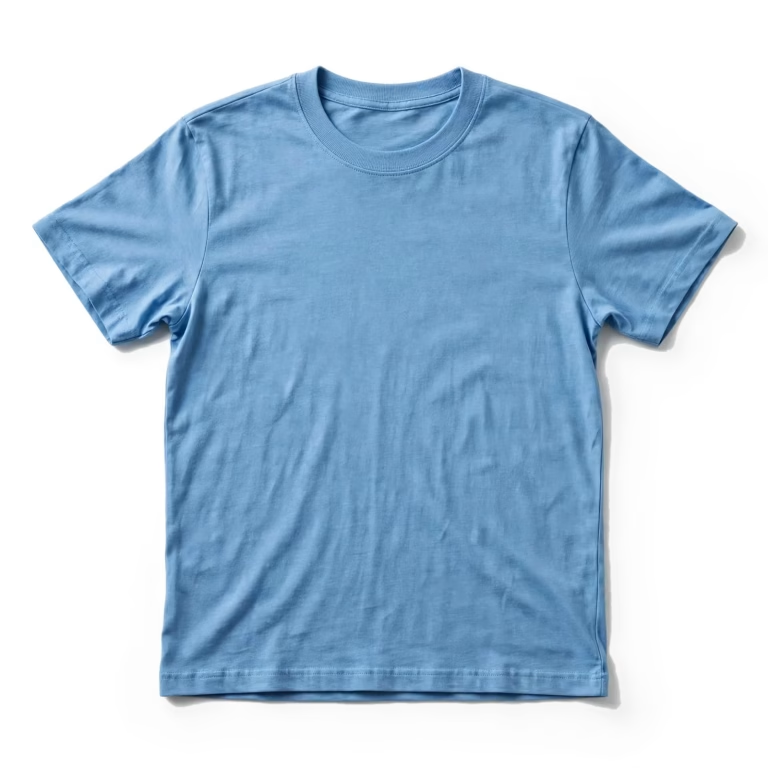
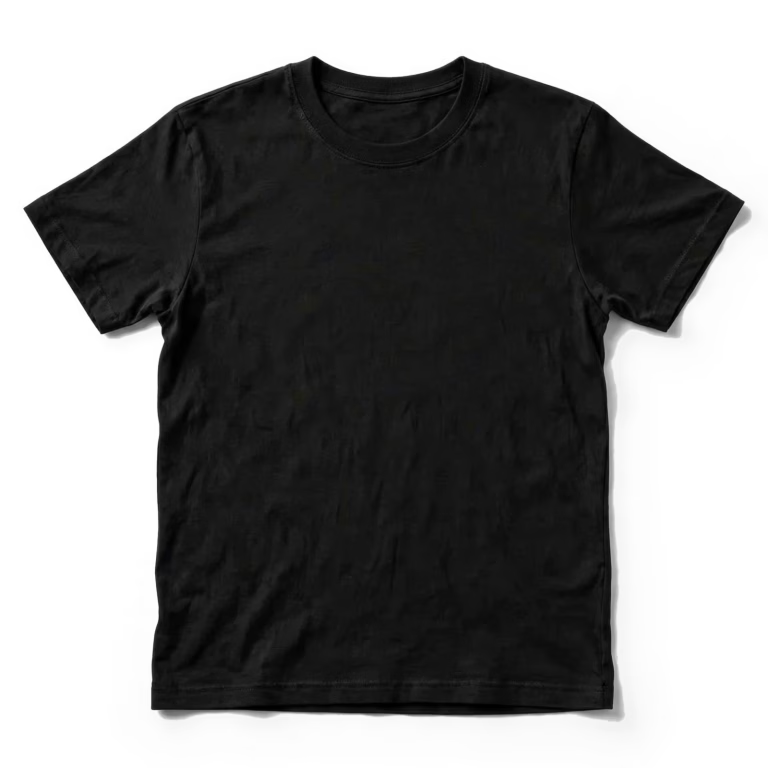
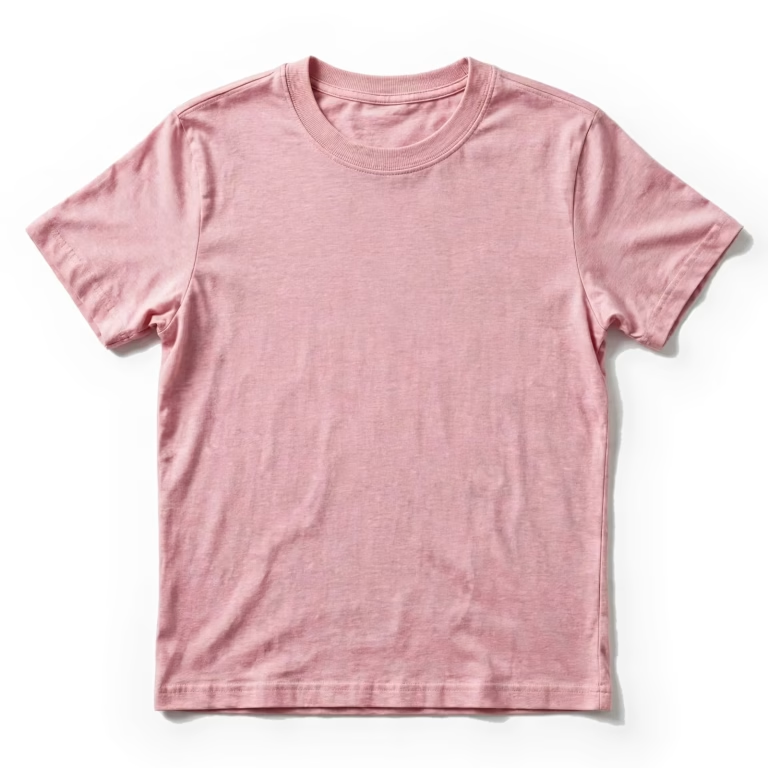
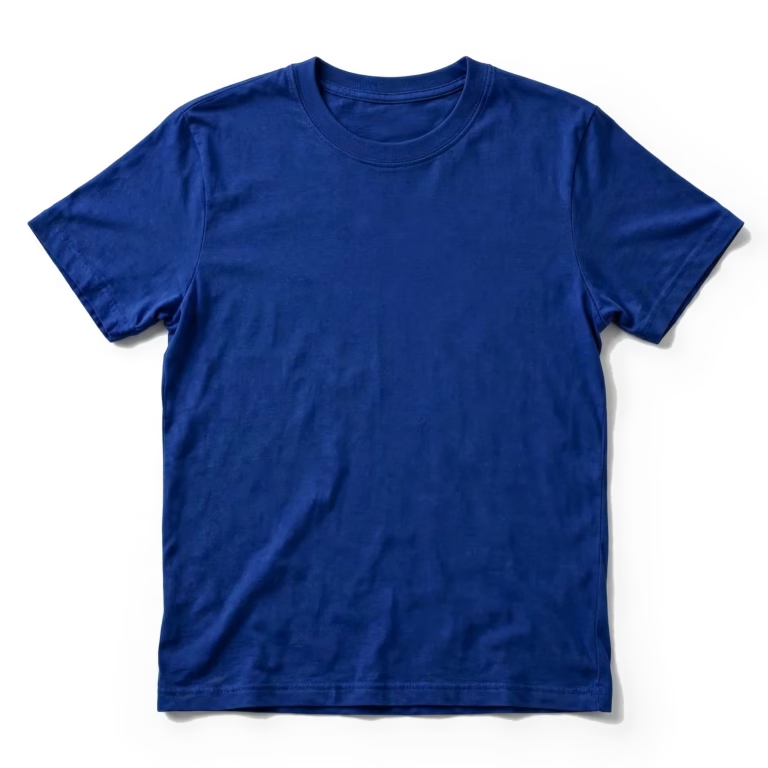
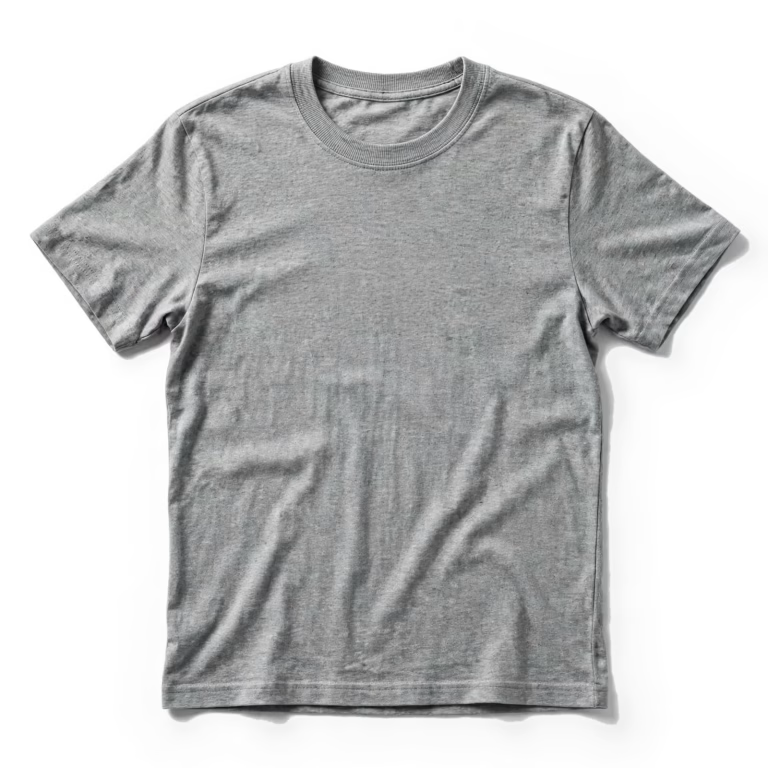
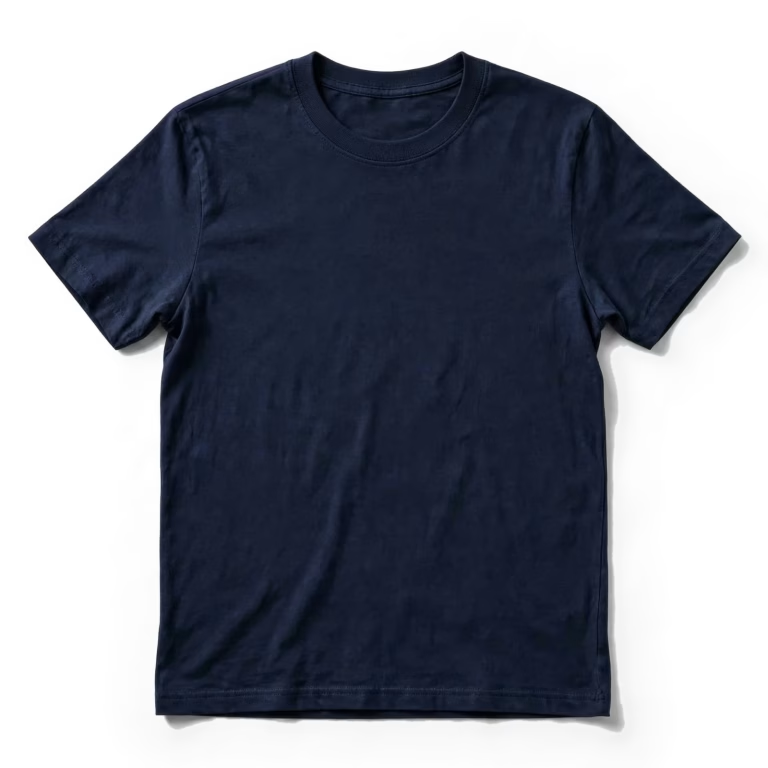
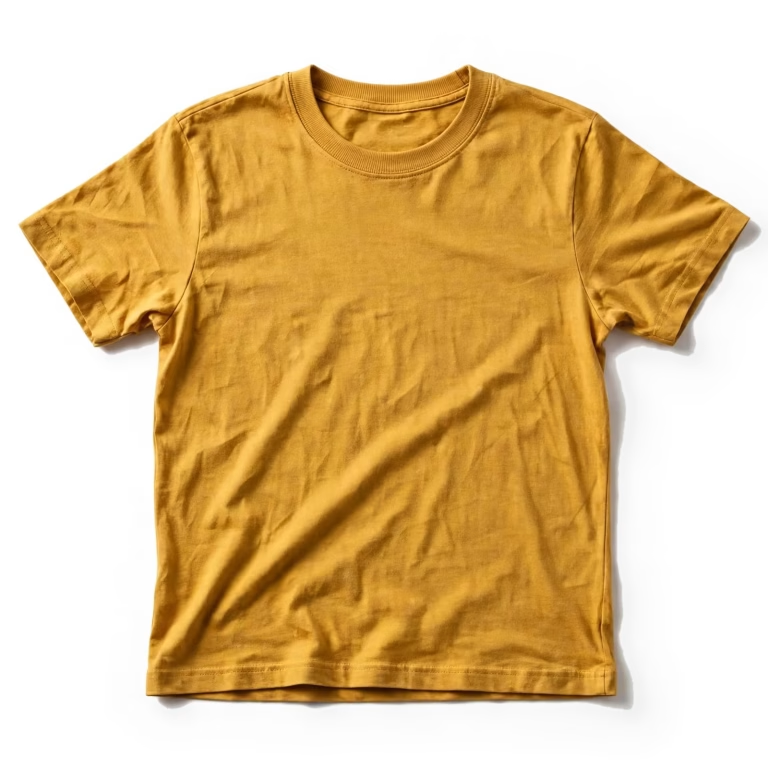
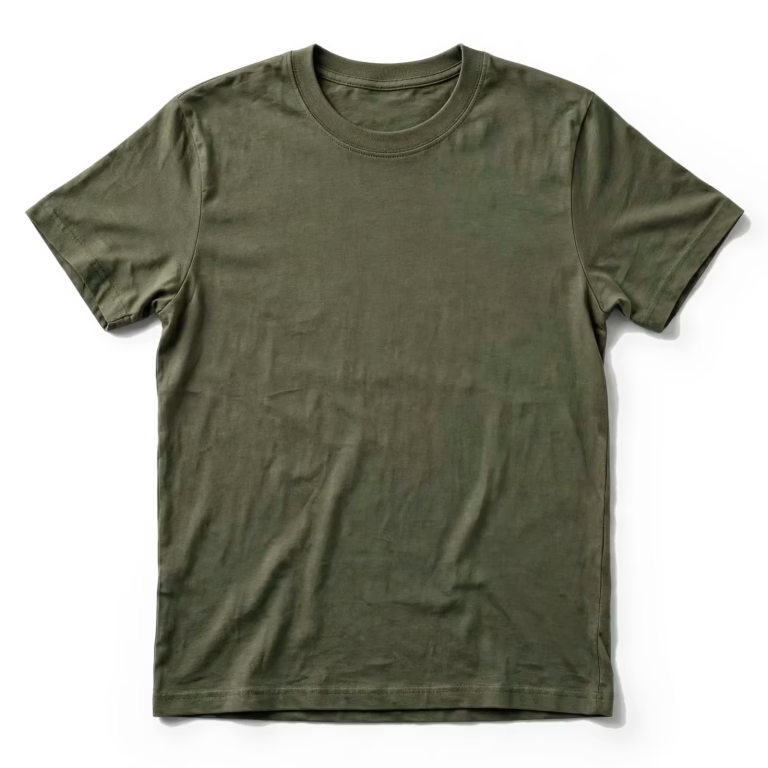
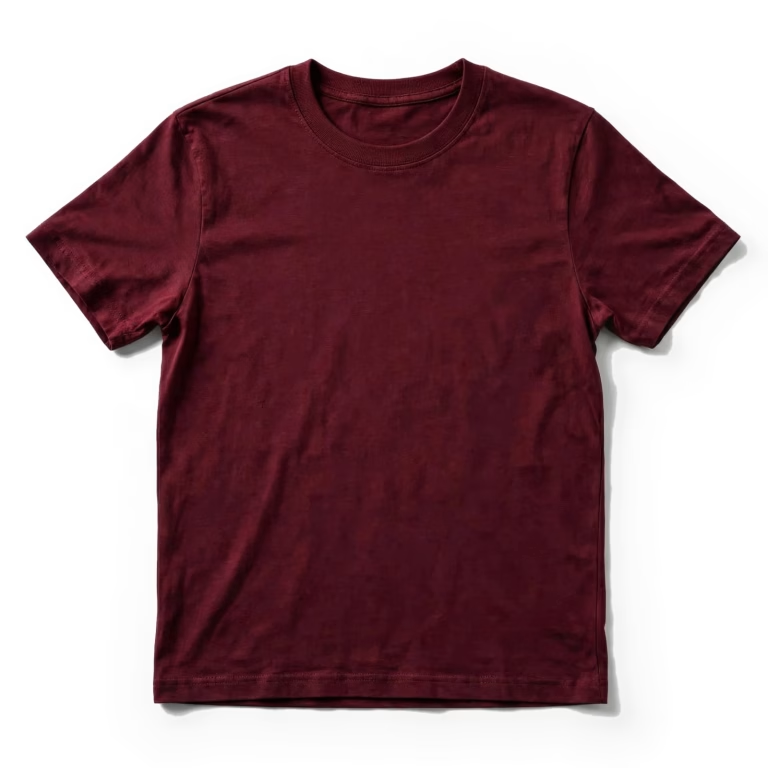
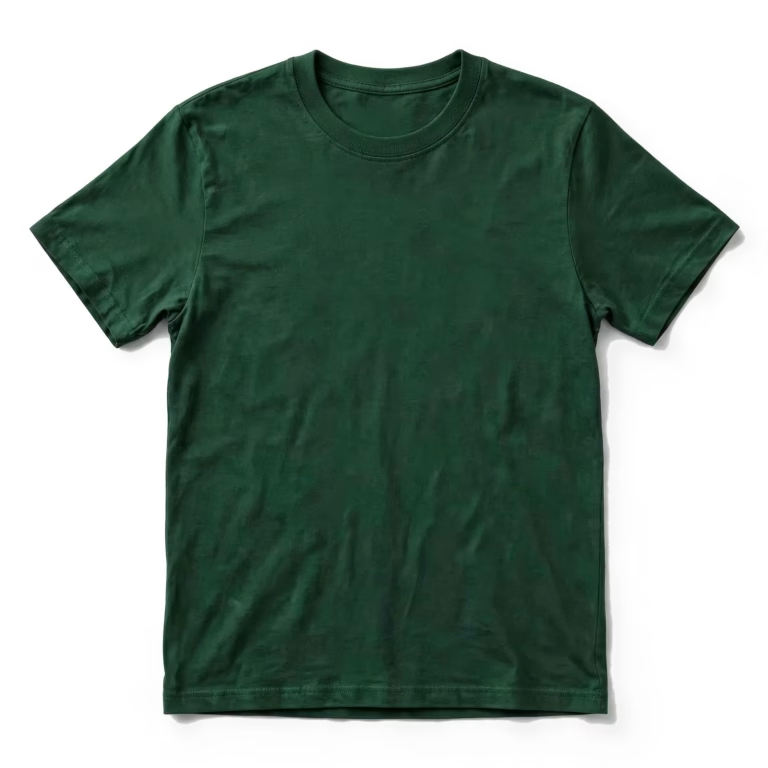
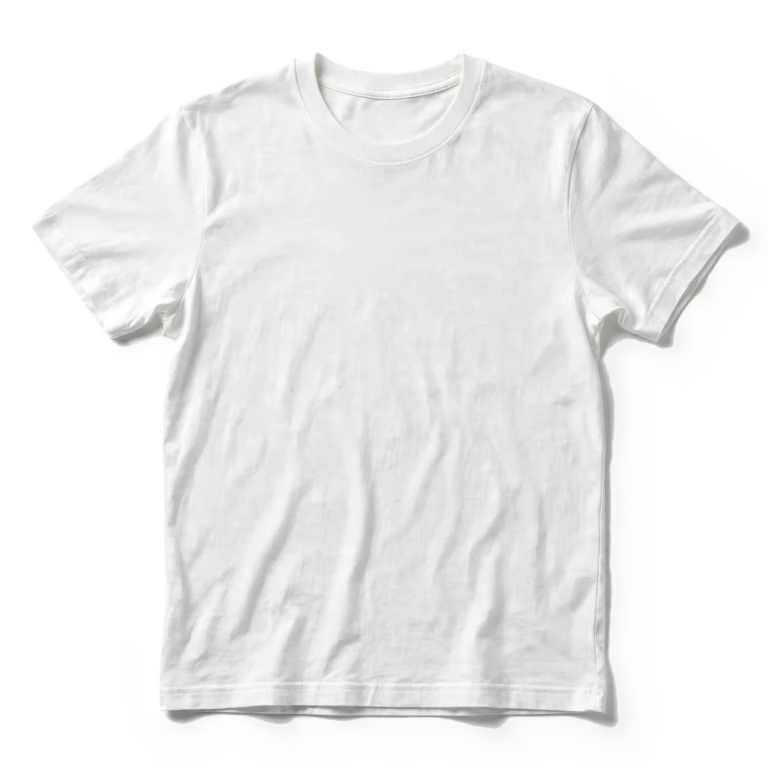
Crew Neck T-Shirt Manufacturer Bangladesh for Basics Brands, Retailers and Promotions
The crew neck is the default t-shirt of the planet, and precisely because it is everywhere, buyers judge it harshly – they own ten already and know exactly what a good one feels like. Basics brands build their reputation on it, retailers anchor their opening price points with it, and promotional programmes choose it because nobody has ever refused a well-made crew neck. Our production treats it with the respect the volume deserves: the same collar standard, fabric standard and inspection standard at 500 pieces as at 500,000.
Crew Neck T-Shirt Fabric Options
- 100 percent combed cotton single jersey at 160 to 180 GSM – the standard retail crew neck weight
- Carded cotton at 180 GSM for value programmes that still need a stable collar and body
- Heavyweight cotton at 200 to 240 GSM for premium and streetwear-led crew necks with a firm drape
- Cotton and elastane jersey for fitted styles that keep their shape at the neck and hem
- Organic and recycled cotton options, knitted to order for sustainability-led ranges
Rib for the collar is knitted with elastane as standard on our crew necks, which is the single biggest difference between a neck that recovers after washing and one that waves.
Crew Neck Styles, Depths and Fits
The classic crew sits close with a ribbed band of about two centimetres; a deeper rib and a slightly lower scoop serve fashion programmes; a high crew with a narrow rib serves layering and uniform use. Fits run regular, slim, relaxed and oversized, with raglan and set-in sleeve options, and ladies crews are cut with their own neckline curve and body shaping. Long sleeve crews extend the style across seasons on the same block, and every style keeps the neckline in proportion across the full size run, graded rather than stretched. Sleeve length and body length follow the market: North American programmes run a touch longer in the body, European programmes a touch closer. Those preferences are recorded per buyer on the pattern file, so a range that sells on both sides of the Atlantic is graded once, correctly, and then simply repeated.
Collar Ribbing, Neck Tape and Construction Craft
Three small operations decide whether a crew neck still looks new in a year. The collar rib is knitted to the neck size, not stretched onto it, and carries elastane so it returns after every wear. The back neck is taped shoulder to shoulder, which stops the neckline growing and covers the seam for comfort. And the collar is attached with a stitch density that lets the join flex without popping. None of this photographs, and all of it is felt – usually at the moment a customer compares our shirt against the cheaper one hanging beside it.
Custom Embroidery, Printing and Branding
The crew neck chest is the most printed surface in clothing: screen print for bold graphics, DTG for full colour, DTF for short runs and fine detail, and small embroidery where a premium mark is wanted. Private label programmes add neck prints or woven labels, branded back-neck tape and retail folding with size stickers. Buyers printing their own garments downstream buy the same shirts unbranded through our blank t-shirts for printing programme, made on the same lines to the same collar standard.
Custom Sizes, Fits and Colours
Sizes run XS to 3XL as standard, with tall and plus extensions available on the same block, and youth sizes for school and club programmes. The colour library covers the permanent basics – white, black, navy, grey marl, red, royal and bottle green – plus seasonal shades dyed to order against a swatch or Pantone reference. Because crews are so often the anchor style of a range, we hold the approved shade standard on file so hoodies, polos and crews ordered across a year all match on the rail.
Crew Neck Sampling and Fit Approval
A crew neck sample is assessed on the body, not the table: neckline sitting flat, collar recovery tested by hand, body length and sleeve position checked against the brief. Our samples are made in the production jersey with the production rib, couriered for fitting, and revised where the fit needs it before the bulk is cut. Buyers in Europe, the UK and Canada often approve across two rounds – a first fit sample, then a confirmation sample in the final shade – and both are kept on file as the standards the bulk is measured against.
Quality Assurance and Production Follow-Up
The collar gets its own line on our inspection sheets: rib width, neck opening measurement and recovery checked at first output and again at final inspection, alongside the standard fabric, measurement and print checks. Finished shirts are reviewed under standard light for shade, and AQL inspection closes every order with results and photographs shared to the buyer. A named contact follows production end to end, which matters on basics programmes where a small drift repeated over 50,000 pieces becomes a big problem – our job is to catch the drift at piece fifty.
Crew Neck T-Shirts for Retail Basics, Uniforms and Events
Retail basics programmes live on repeat purchase, and repeat purchase is the collar and the wash behaviour, remembered. Uniform and workwear buyers choose crews for under-layer comfort and easy branding; events and campaigns choose them because the style suits every age and body in the audience. In the Middle East and East Asia, lighter weights and relaxed fits lead; in Europe and North America the classic midweight regular fit remains the anchor. One block, tuned per market, is how most of our buyers structure the programme.
Why Source Crew Neck T-Shirts from Bangladesh?
Crew necks are the highest-volume garment in knitwear, and Bangladesh’s knitting and sewing belt is built for exactly that scale: fine jersey knitted locally, rib and trims made in the same region, and sewing lines that run basics all year rather than between fashion seasons. The result is a stable price, a stable quality and lead times that hold at volumes where smaller bases start to queue. Export routines into the USA, Europe, the UK, Canada, Australia, the Middle East and East Asia are the daily habit of the industry here.
Why Choose Siatex Bangladesh?
We have made garments in Bangladesh since 1987, and the crew neck is the style our factory has sewn more than any other. That history shows in the unglamorous places: collar standards written down and enforced, shade files kept for years, a sample library that makes a reorder identical rather than approximate. One accountable team handles your programme, and buyers stepping up to volume can see the same shirt’s economics at scale on our bulk t-shirts page.
Looking for a Crew Neck T-Shirt Manufacturer Bangladesh?
Send the weight, fit and colours, or a reference shirt, and we will return a price and a sample in the production fabric. If the collar on your current supply is the problem, tell us – it is the first thing we will fix and the easiest thing to prove at sampling.
Siatex Bangladesh
Made in Bangladesh
OEM/ODM Private Label Production Only
Why Crew Neck Collars Go Baggy – and How Ours Do Not
A baggy collar has three usual causes, all decided in production. The rib contains no elastane, so every pull over the head stretches it a little more; the rib is cut too large and stretched onto the neckline, storing the distortion that washing later releases; or the back neck is left untaped, so the whole neckline grows under its own seams. Our standard answers all three: elastane rib knitted to the measured neck size, a shoulder-to-shoulder tape on every shirt, and a recovery check at inspection where the collar is stretched and must return to its recorded measurement. It is a ten-second test that predicts a year of wear.
Choosing Crew Neck Depth and Rib Width for Your Market
Neckline taste varies more than buyers expect. North American basics buyers favour the classic close crew with a mid-width rib; European fashion programmes often ask for a slightly deeper rib and a touch more drop; uniform and layering programmes want the highest, narrowest neck that still passes over the head comfortably. None of these is a different garment – they are settings on the same block, set at sampling and recorded on the specification. Where a range sells into several regions, one depth usually serves all if it is chosen deliberately rather than inherited from a previous supplier’s pattern.
Midweight or Heavyweight – Matching GSM to the Programme
At 160 to 180 GSM a crew neck is the versatile default: cool enough for summer, structured enough for print, economical enough for promotion. At 200 GSM and above the shirt changes character – firmer drape, warmer hand, a premium and streetwear feel, and a higher price that the customer can feel is justified the moment the garment is lifted. Workwear and outdoor programmes also step up in weight for abrasion life. The honest advice is to match weight to promise: a brand selling a heavyweight story must deliver heavyweight cloth, and a value programme should not pay for grams its customers did not ask for. Weight also steers printing: fine DTG detail sits best on the smoother face of a midweight combed jersey, while heavyweight cloth carries bold screen prints and embroidery with the most authority.