
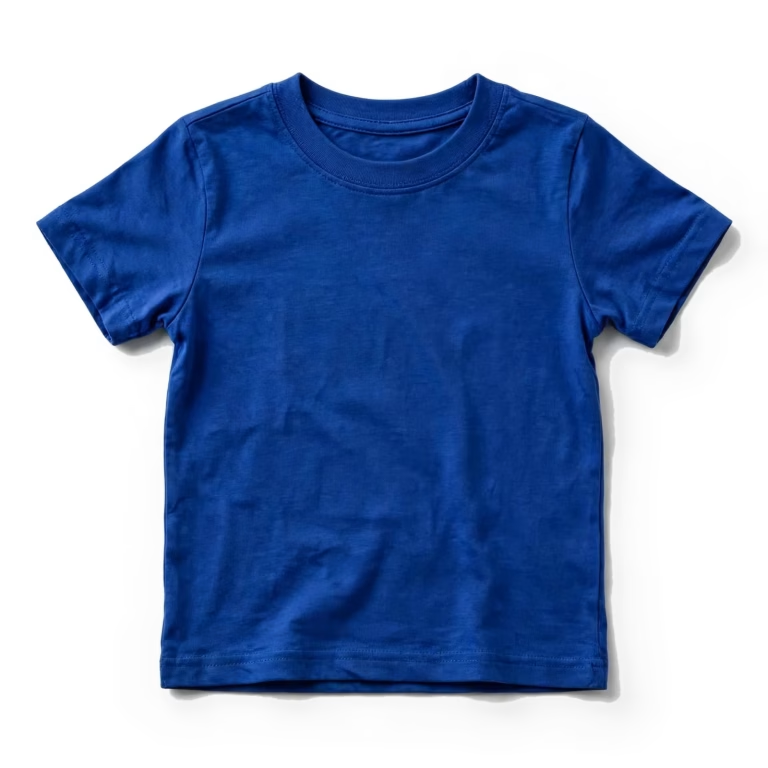
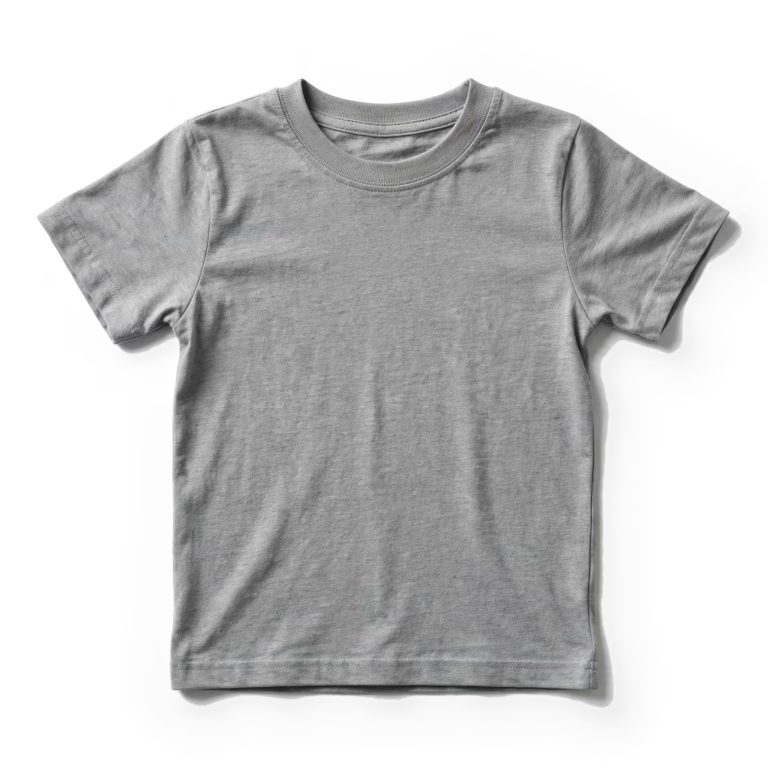
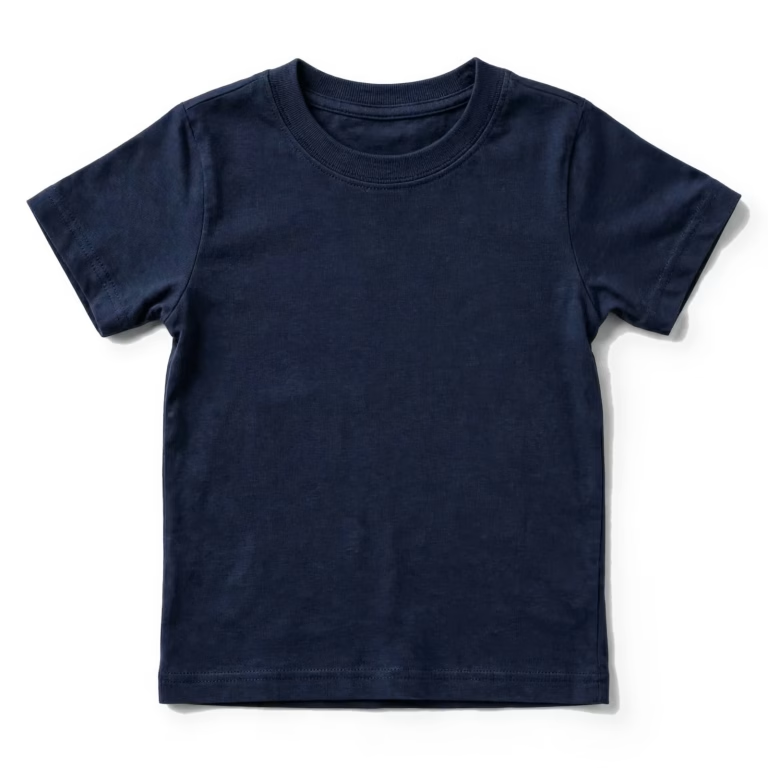
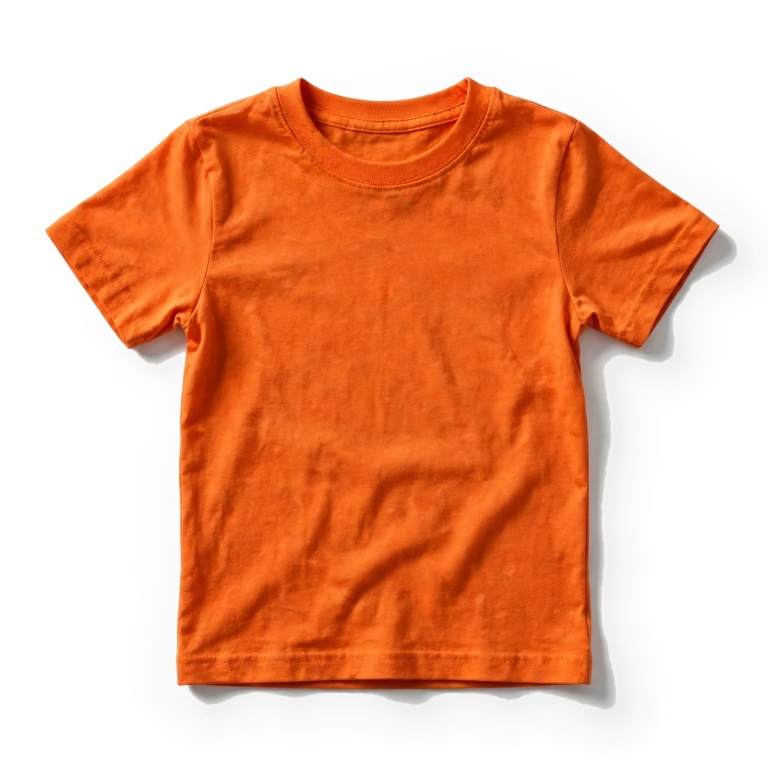
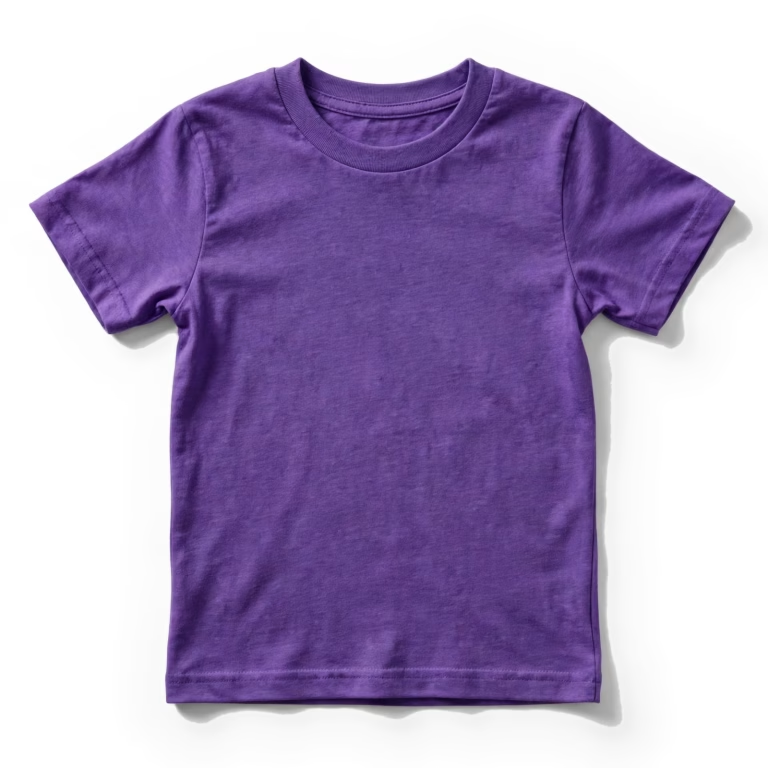
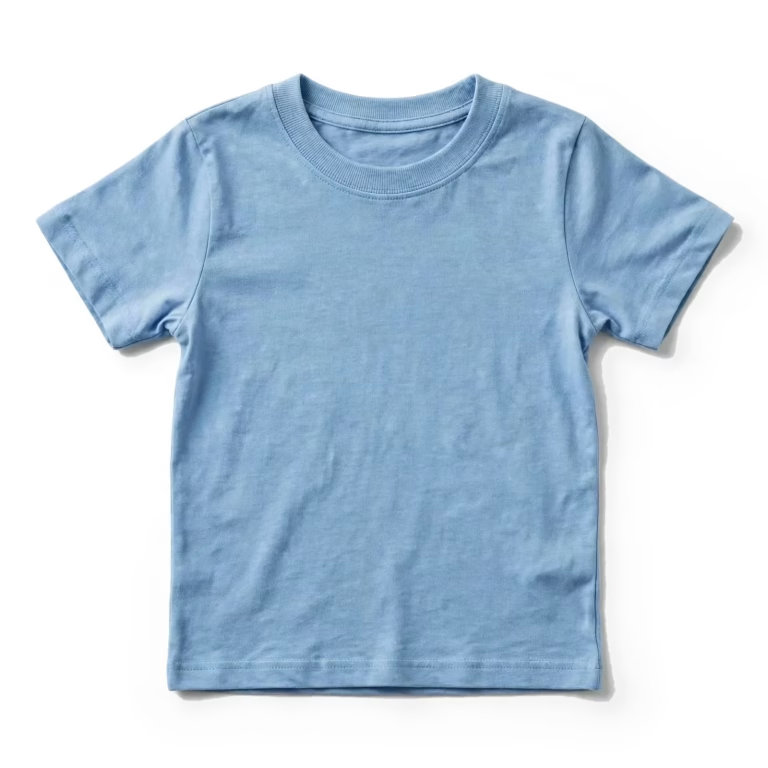
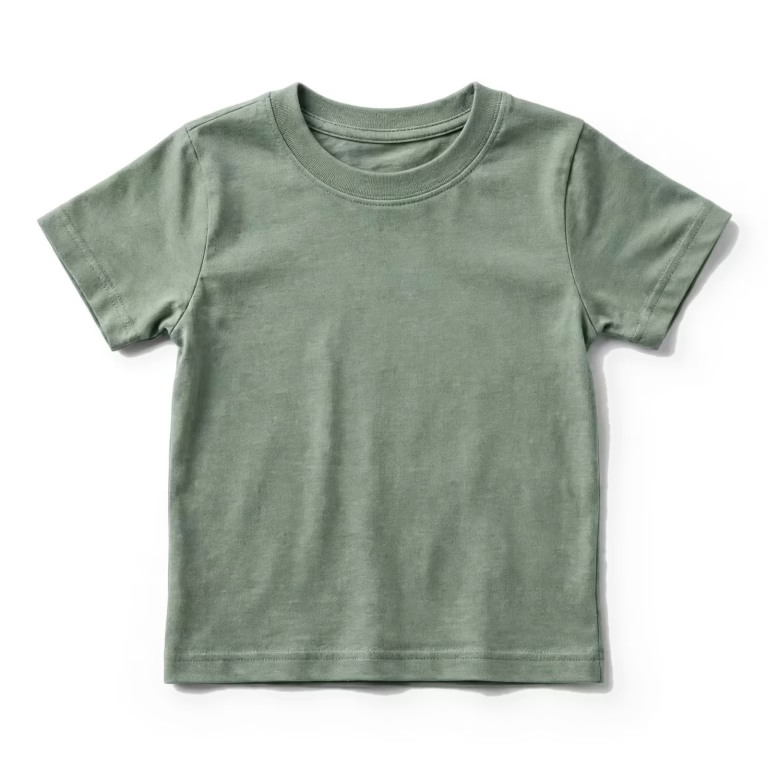
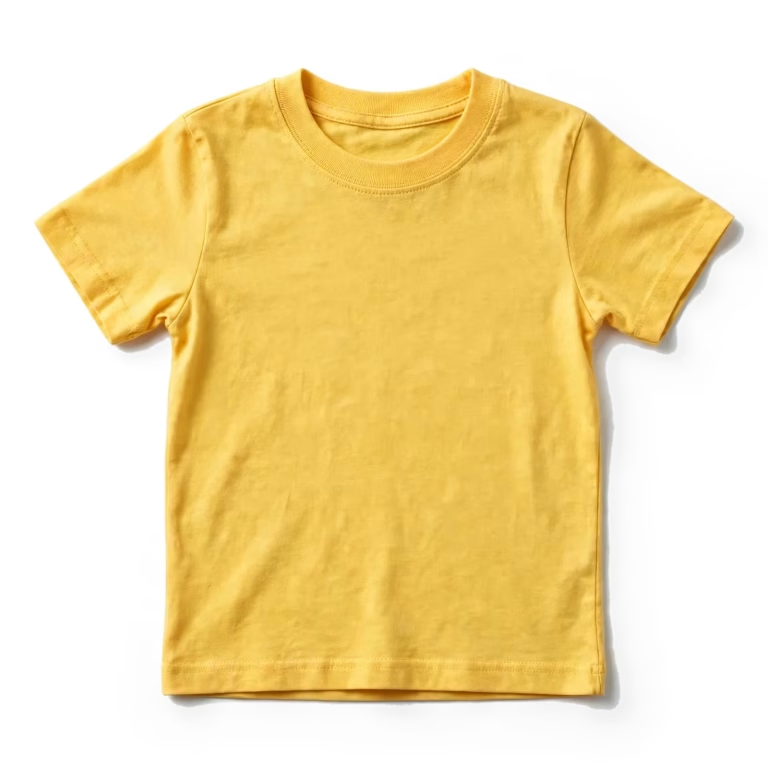
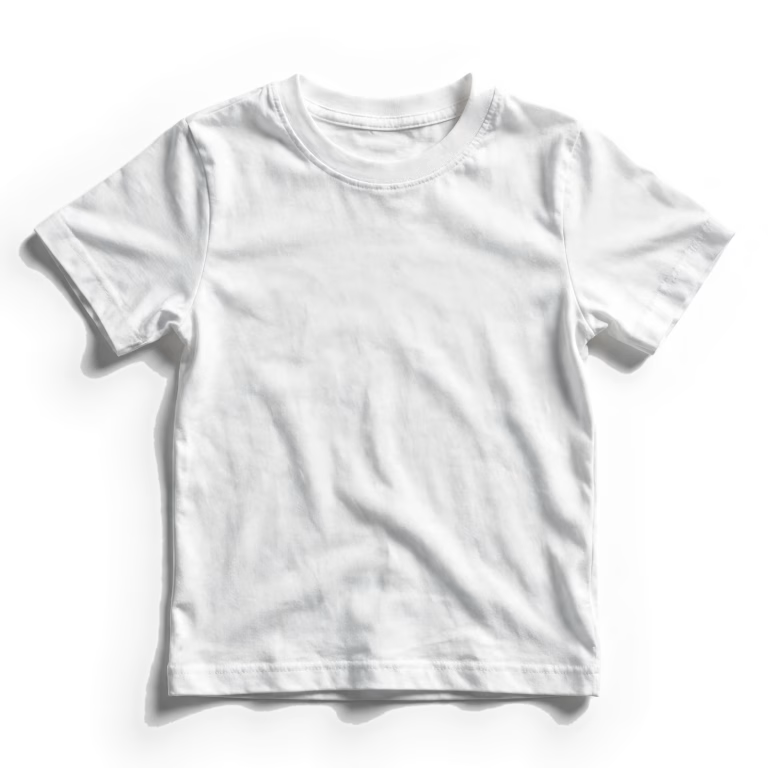
Kids T-Shirt Manufacturer Bangladesh for Schoolwear, Brands and Clubs
Children’s tees are bought by institutions and parents for opposite reasons that meet in the middle: schools need uniformity and survival, parents need softness and value, kids brands need charm that still washes. The production answer to all three is the same disciplined basics making, adjusted for smaller bodies and stricter rules – softer hand feel, safer trims, tougher stitching at the points children actually stress. Our kids lines run year-round, because school and club programmes reorder on their own calendar, not the fashion one.
Kids T-Shirt Fabric Options
- 100 percent combed cotton single jersey at 150 to 160 GSM – soft against skin, light enough for all-day wear
- Carded cotton at 160 to 180 GSM for school and club programmes that wash several times a week
- Cotton and polyester blends where colour-fastness through endless washing matters most
- Organic cotton options for baby-adjacent and sustainability-led children’s ranges
- Peached and bio-washed finishes for an extra-soft first touch that parents notice in the shop
All fabrics for children’s programmes are specified with skin comfort first: smooth yarns, clean dyeing and finishes appropriate for young wearers, with testing available to the destination market’s standards.
Kids Styles, Necklines and Fits by Age
Toddler styles carry envelope or popper shoulders so the shirt goes over a small head without a fight; older kids styles run classic crew and V-necks with proportions graded by age band, not scaled from adult patterns. Bodies are cut with growing room where school programmes ask for it, sleeves are set for playground movement, and teen ranges bridge toward adult styling on their own block. Girls styles carry their own shaping from the middle age bands up, and every age band’s neckline is sized so it passes the head comfortably – the small detail that decides whether a shirt gets worn or refused. Long sleeve kids styles and matching adult-child sets are developed on the same shade and fabric standards, so a school or a brand can build the whole children’s story – tee, long sleeve, club colours – as one programme instead of three separate negotiations.
Soft Seams, Safe Trims and Construction Craft
Children feel seams adults ignore, so neck and shoulder seams are finished flat and covered, labels are printed or soft-woven to avoid scratch, and stitch density is set to flex rather than saw at the skin. Drawcords and decorative trims follow the destination market’s children’s safety rules as a matter of specification, buttons on toddler styles are sewn to the stricter pull standard, and every metal trim is checked. Reinforced shoulders and hems answer the real life of the garment: backpacks, playgrounds and being pulled off over the head by the collar, daily.
Printing, Embroidery and Branding Children Keep
Kids graphics are printed with soft-hand inks that flex with the fabric, because a stiff plasticky print is the first thing a child complains about and the first place a cheap shirt cracks. School and club programmes carry embroidered or printed crests sized to the chest of each age band, names and class marks where the brief asks, and retail ranges run full character-free artwork programmes of the buyer’s own designs. Family ranges often match the kids tee to an adult style – our crew neck t-shirts share shade standards so parent and child colours truly match.
Sizes, Age Bands and Colours
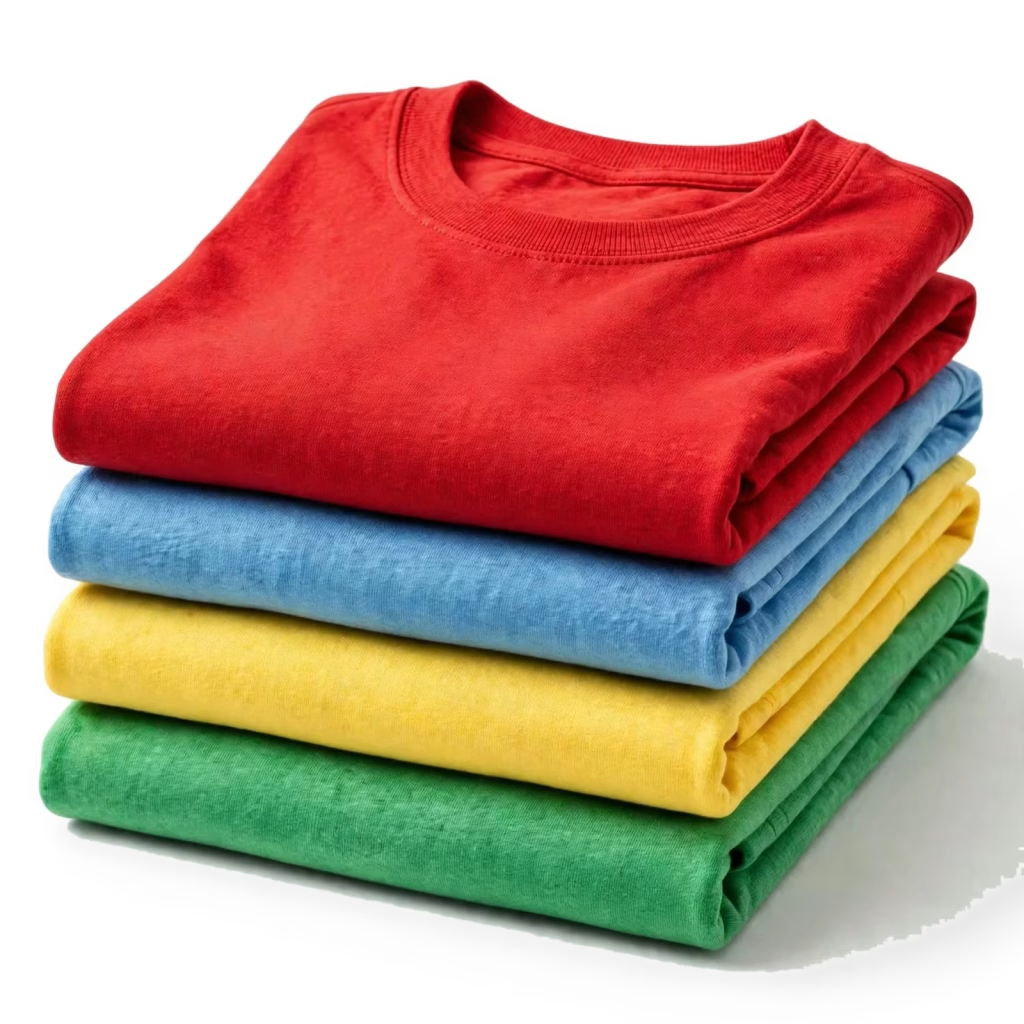
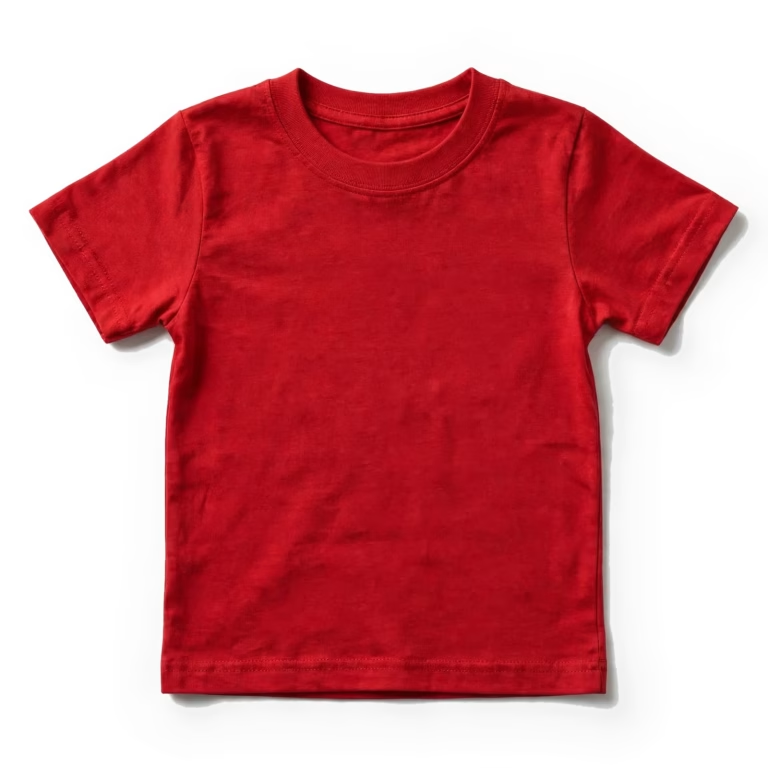
Sizing runs by age band – typically 2-3 years through 13-14 – with height and chest measurements recorded beside each age on the specification, because age labels alone mislead across markets. Schools usually buy a size up policy into the run; retail buyers buy true. Colours cover school standards (white, navy, red, royal, bottle green, grey) and the bright palette of children’s retail, all dyed to the same standard across age bands so siblings and classes match exactly.
Sampling and Fit Checks for Small Wearers
Kids samples are checked on size-appropriate stands and, where buyers arrange it, on real children – the only honest test of a neckline. We sample across the age range, not just the middle size, because grading faults hide at the extremes: the toddler neck that will not pass a head, the teen size that is secretly an adult small. Photographs on stands are shared for committee approvals, the approved set is filed, and bulk is measured against the same age-band standards at inspection.
Quality Assurance and Production Follow-Up
Children’s orders carry the full standard routine – fabric, measurement and print checks, final AQL with photographs – plus the children’s extras: trim pull checks on small sizes, label content verified against the destination market’s rules, and needle-safety discipline throughout production and packing. Results are shared with the buyer as a file, not a summary, because schools and brands are answerable to parents and must be able to show their working. One contact follows the order from fabric to carton.
Kids Tees for Schools, Clubs and Family Retail
A school tee is a uniform that gets played in; a club tee is a membership badge; a retail kids tee is a small garment bought with a parent’s full scepticism about value. All three reward the same virtues – softness that survives washing, colour that stays the class colour, sizing that can be reordered next term without a fresh argument. Programmes in the UK, Europe, Canada and Australia reorder term by term and year by year from the held specification, which is precisely how a children’s programme should behave: boring to buy, delightful to wear.
Why Source Kids T-Shirts from Bangladesh?
Children’s basics are volume garments with a conscience: they must be inexpensive, because children outgrow them, and unimpeachable, because children wear them. Bangladesh’s knitwear industry holds both ends of that bargain – deep experience with school and children’s programmes for the world’s strictest markets, soft-finish fabric production at scale, and costing that leaves room for the quality steps. Export routines to the USA, Europe, the UK, Canada, Australia, the Middle East and East Asia include the children’s documentation those markets require, handled as routine.
Why Choose Siatex Bangladesh?
We have manufactured in Bangladesh since 1987, and children’s wear has been part of our output across those decades – long enough to know that a kids programme is a trust before it is an order. One team holds your sizing, safety specification and artwork; the approved sample set stands behind the bulk at inspection; and reorders run from the file, term after term. Programmes that dress the whole family or the whole school can add adult sizes from the same shade library through our bulk t-shirts production.
Looking for a Kids T-Shirt Manufacturer Bangladesh?
Send the age range, the colours and the use, and we will return a price and a sampling plan covering the full size run. If safety documentation for your market is the first question, ask it first – we will answer with the specification and the test options before any talk of price.
Siatex Bangladesh
Made in Bangladesh
OEM/ODM Private Label Production Only
Age-Band Sizing – Why We Measure More Than the Label
An age label is a promise about a child who does not exist; children of one age vary by a full size in both directions, and they vary differently in different markets. Our specifications record height, chest and garment measurements beside every age band, and we advise buyers on the local norm for their market – North American and northern European children size larger than the same age in East Asia, for example. Schools solve the problem with a fitting set and a size-up policy; retail brands solve it with honest measurement charts on the product page. Both solutions start with the manufacturer’s numbers being true, which is a discipline we hold at inspection, size by size.
Children’s Safety Standards – What a Serious Buyer Asks
Ask four questions of any children’s supplier. Are drawcords and trims specified to the destination market’s children’s rules? Are buttons and small parts pull-tested on the small sizes? Is there a needle-control and metal-check routine in production and packing? Are fibre content and care labels verified against the garments, not copied from the order sheet? A prepared factory answers all four with documents and routine; a factory meeting the questions for the first time will answer with reassurance instead. We build children’s programmes to the rules of the USA, the UK, Europe, Canada and Australia as specified on each order, and the checks appear on the inspection file the buyer receives.
Softness That Survives Washing – the Parent Test
Parents judge a kids tee in the laundry, not the shop: does it stay soft, does the neck still pass the head, does the colour still match the school photograph. That is decided by yarn quality, a proper bio-wash or soft finish, collar rib with recovery, and dyeing done to a fixed recipe. Our children’s fabrics are finished for the tenth wash, and the approval sample is washed before sign-off wherever the buyer wishes, so the garment being approved is the garment as it will actually live. Programmes that pass the parent test get reordered; programmes that fail it get returned, discussed, and quietly replaced in the school bag by another supplier’s shirt. One practical note for buyers: order the approval wash test on the darkest and the lightest colour in the range, not the middle one – dye behaviour differs by shade, and the extremes are where fading and softness loss show first.