
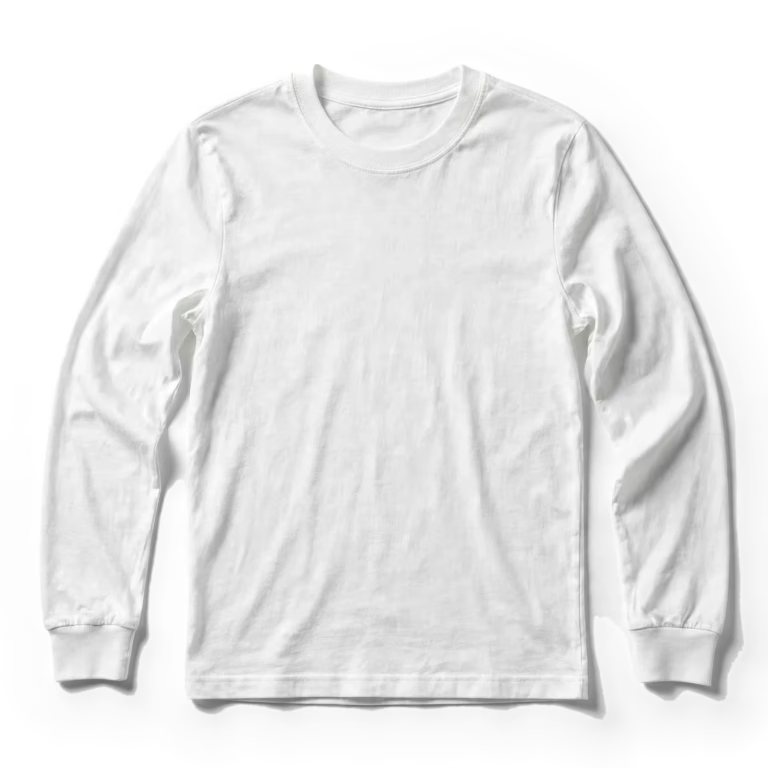
Long Sleeves T-Shirt Manufacturer Bangladesh for Layering, Workwear and Winter Basics
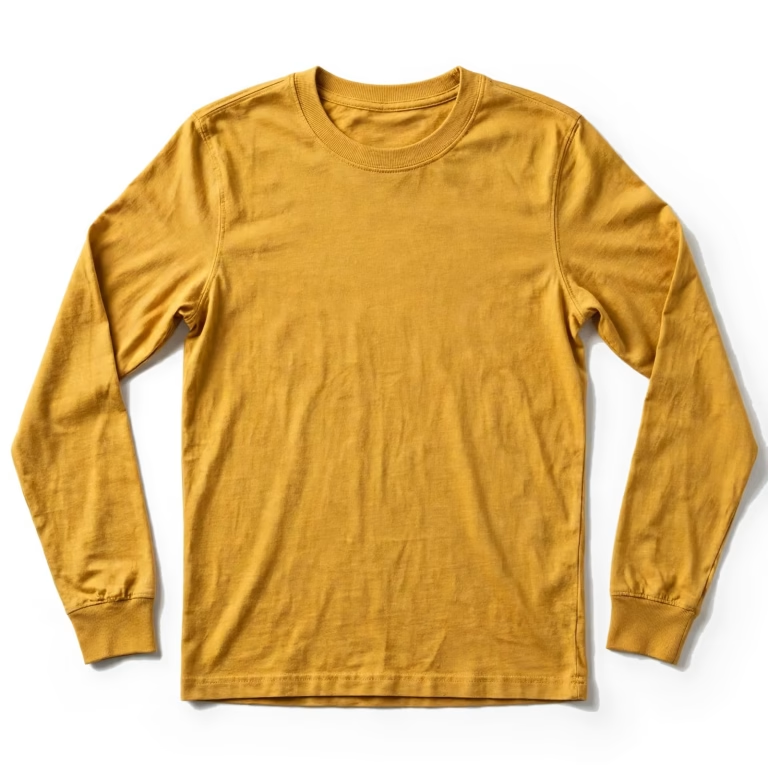
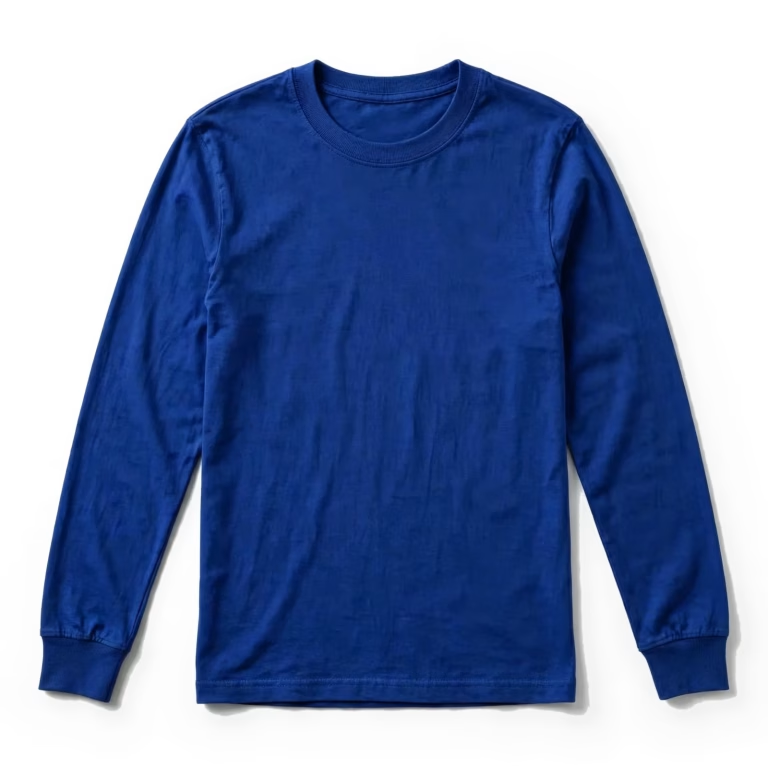
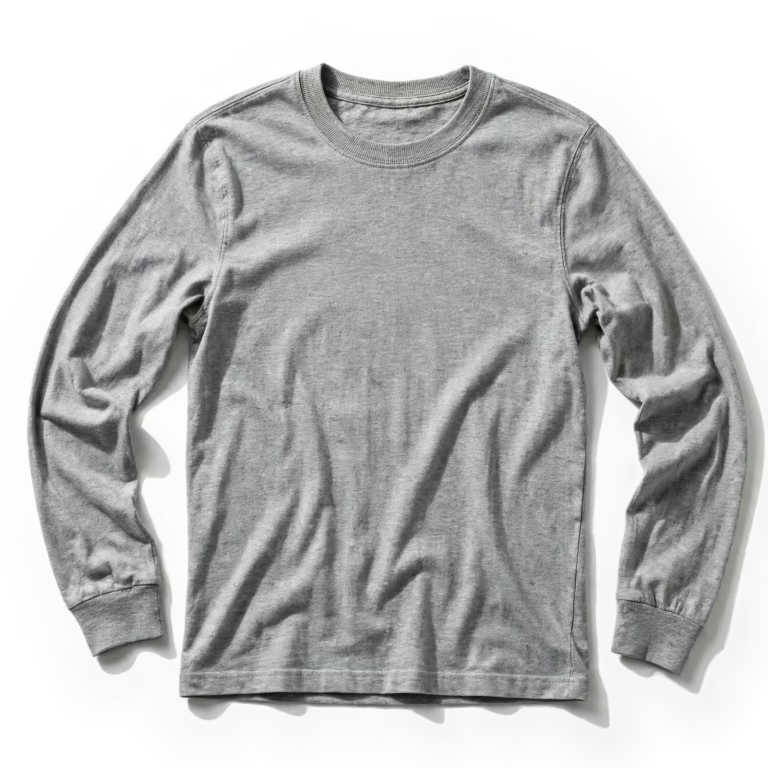
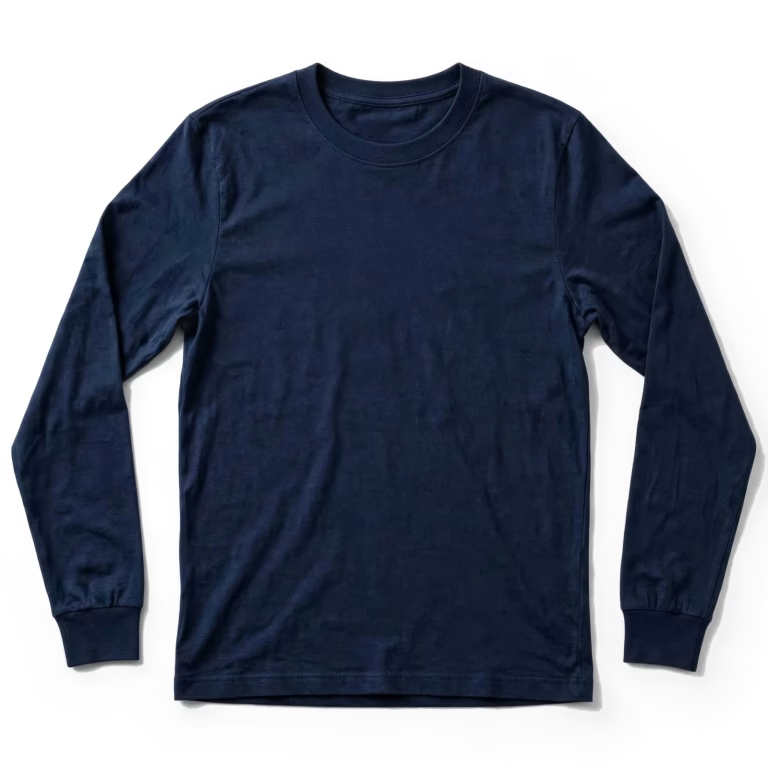
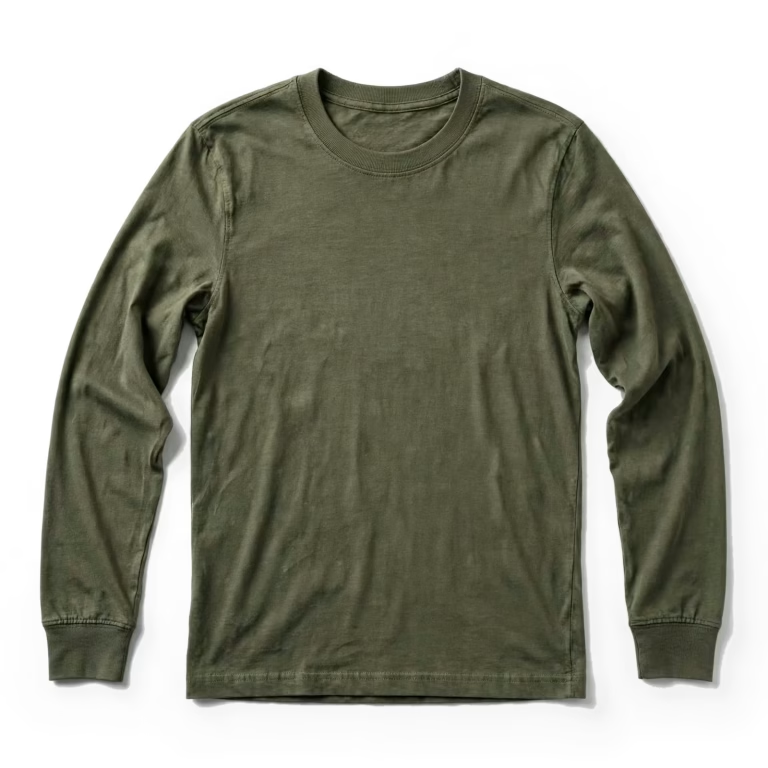
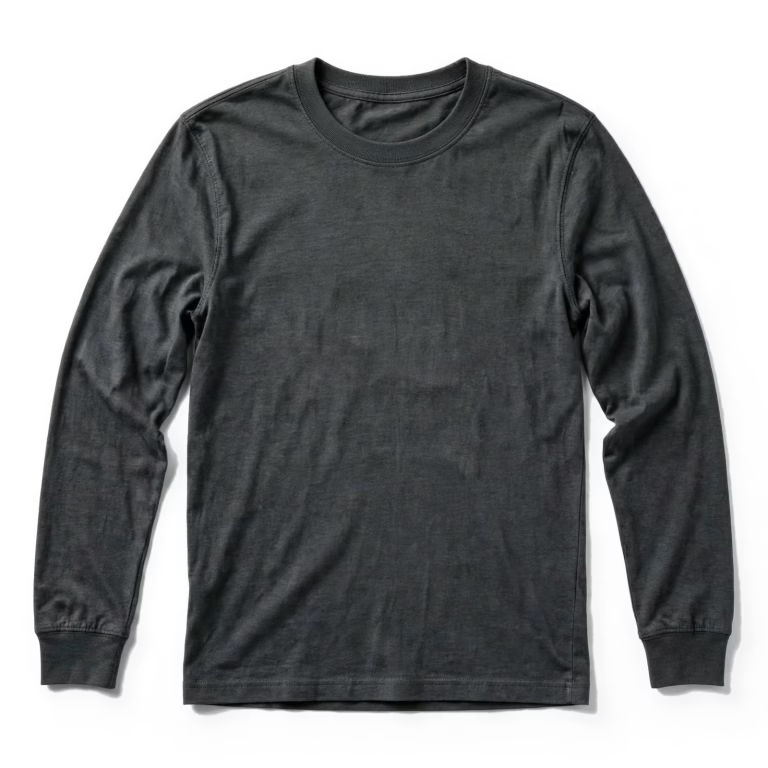
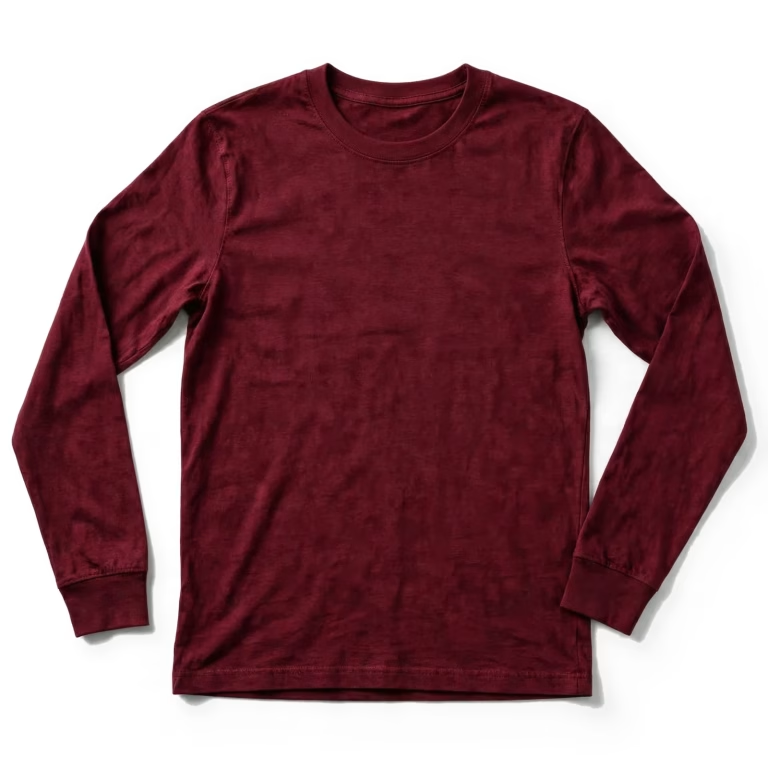
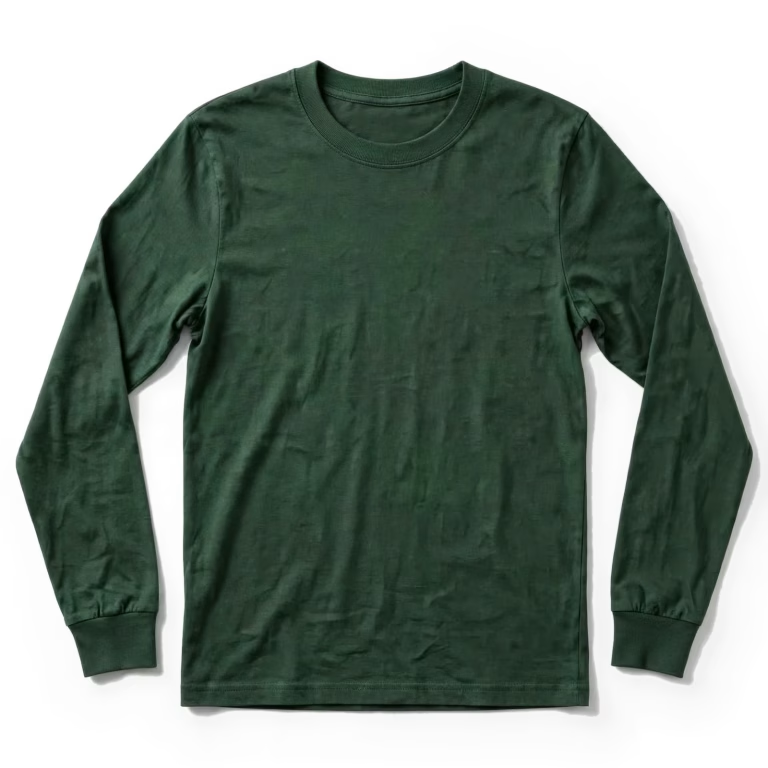
The long sleeve tee works as three garments at once: a standalone top in the shoulder seasons, the base layer under shirts, fleeces and workwear through winter, and a sun-cover and modesty garment in markets where arms stay covered. That range of duty is why it sits in so many programmes at once – basics brands sell it beside the crew, uniform buyers issue it under everything, and sports programmes use it for training in the cold months. Our lines run long sleeve styles as a core product, with cuffs, bodies and necklines graded as one pattern family so the range reads as a family on the rail.
Long Sleeves T-Shirt Fabric Options
- 100 percent cotton single jersey at 160 to 180 GSM – the standard long sleeve weight, soft with a clean drape
- Thermal and waffle knits for base layer and winter programmes that need trapped warmth
- Heavyweight cotton at 200 to 220 GSM for standalone winter tops and workwear
- Cotton with elastane for fitted ladies and fashion styles where the sleeve must follow the arm
- Brushed-back and interlock fabrics for a smoother face and a warmer hand in cold markets
Sleeve and body always come from the same fabric lot in our make, so shade match between arm and body is guaranteed rather than hoped for.
Long Sleeve Styles, Necklines and Cuffs
Crew neck is the anchor style, with V-neck and henley placket versions for heritage and fashion programmes, and polo-collar long sleeves where a smarter line is needed. Cuffs come ribbed with elastane for recovery, or as a clean hemmed band for a lighter, more tailored finish; thumbhole cuffs serve sports and outdoor briefs. Raglan sleeves suit sport and casual programmes, set-in sleeves the classic basics. Fits run regular, slim and relaxed across mens, ladies shaped on their own block, and youth sizes for school and club wear. A mock-neck version serves cold-weather and modest-wear programmes without changing the body, and elbow-patch or reinforced-elbow variants can be built for workwear briefs where the sleeve takes friction all day. Each variant is sampled in its own right, because a cuff or neck change quietly alters how the whole sleeve hangs.
Sleeve Setting, Cuff Recovery and Craft
A straight sleeve is a cutting and setting discipline: the sleeve is cut on the true grain so it cannot spiral, matched at the underarm notch when set, and sewn with the ease distributed where the pattern intends. Cuffs are ribbed with elastane and attached at the correct ratio so the wrist is held without being gripped, and the finished sleeve length is measured on the garment, not the pattern, because sewing take-up is real. Shoulder seams are taped, side seams sit true, and the body hem is finished to the same standard as our short sleeve tees – the long sleeve is a crew neck’s sibling, not its poor relation.
Custom Printing, Sleeve Graphics and Branding
The long sleeve adds a branding surface no short sleeve can offer: the sleeve itself. Down-arm prints, repeated logos along the sleeve and small wrist marks are a signature of streetwear and sports programmes, and our print floor sets them with the same registration care as a chest graphic. Chest and back printing, embroidery and private label finishing follow the usual routes, and coordinated sets – a long sleeve tee matching our hoodie sweatshirts in the same shade – are a routine range build for autumn programmes.
Custom Sizes, Fits and Colours
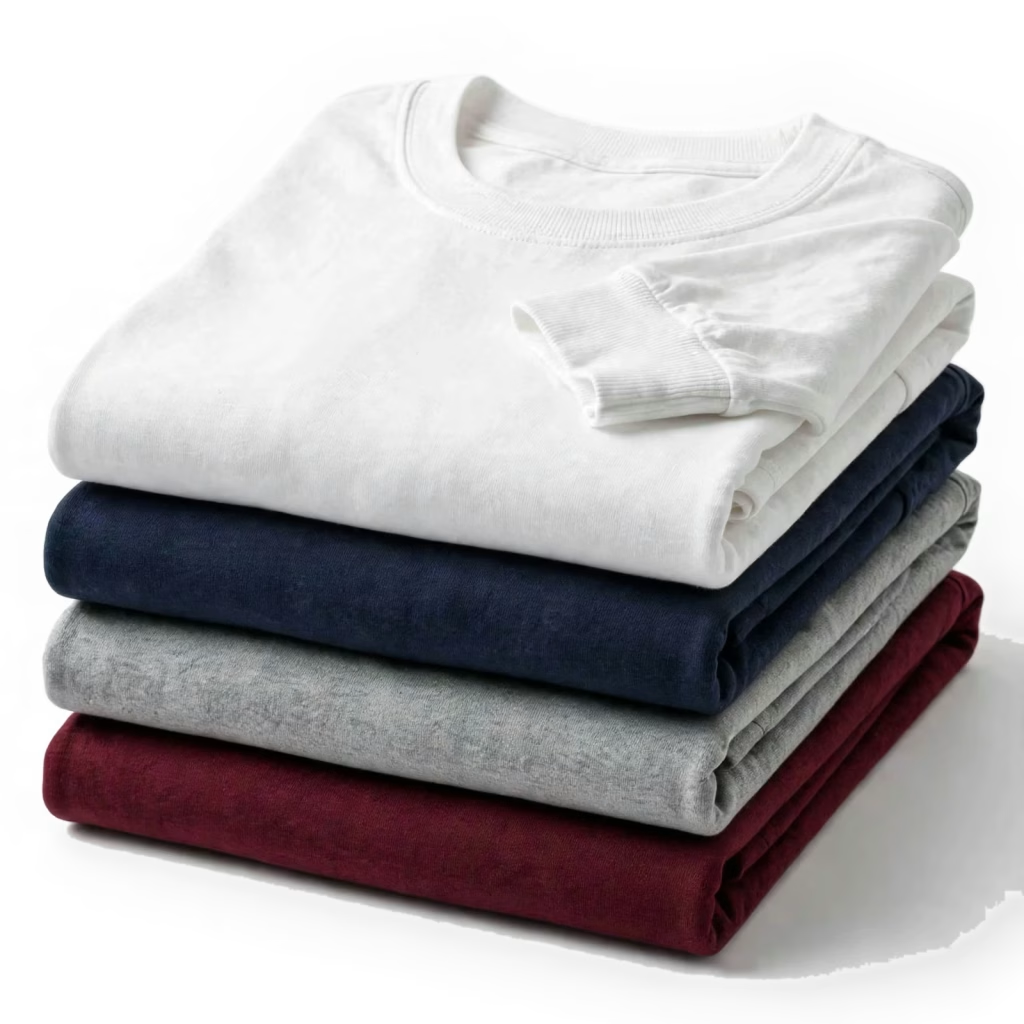
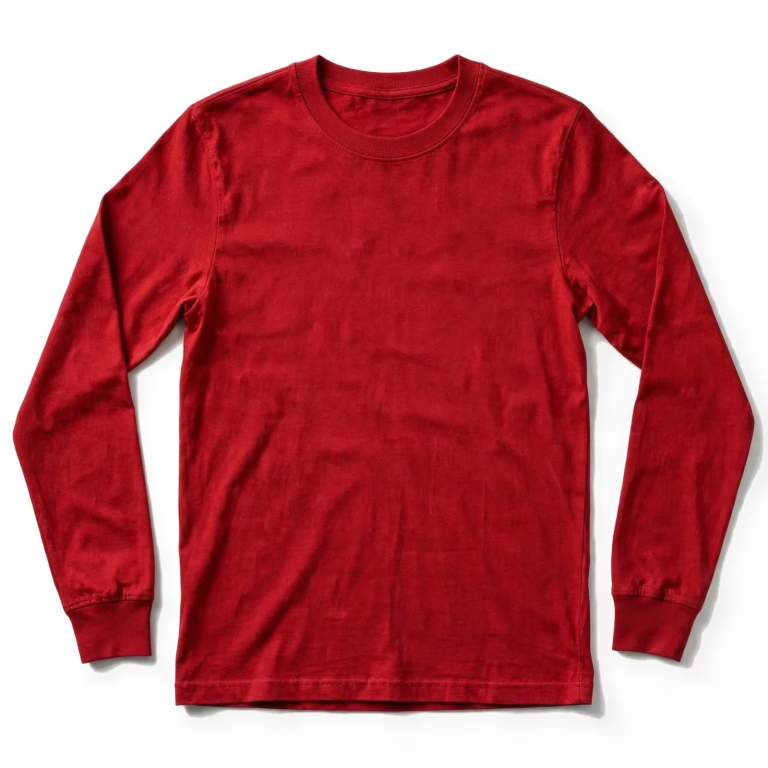
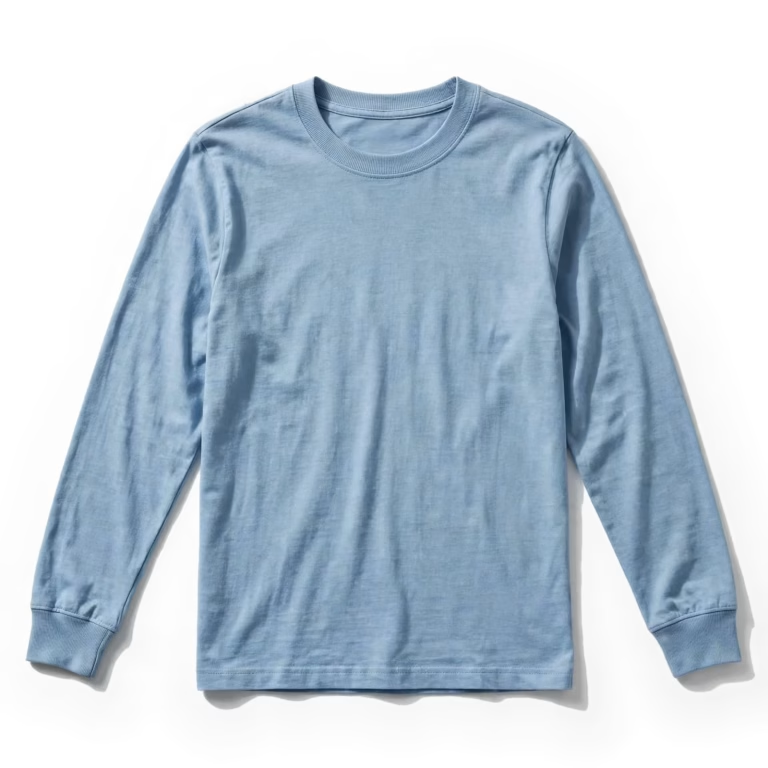
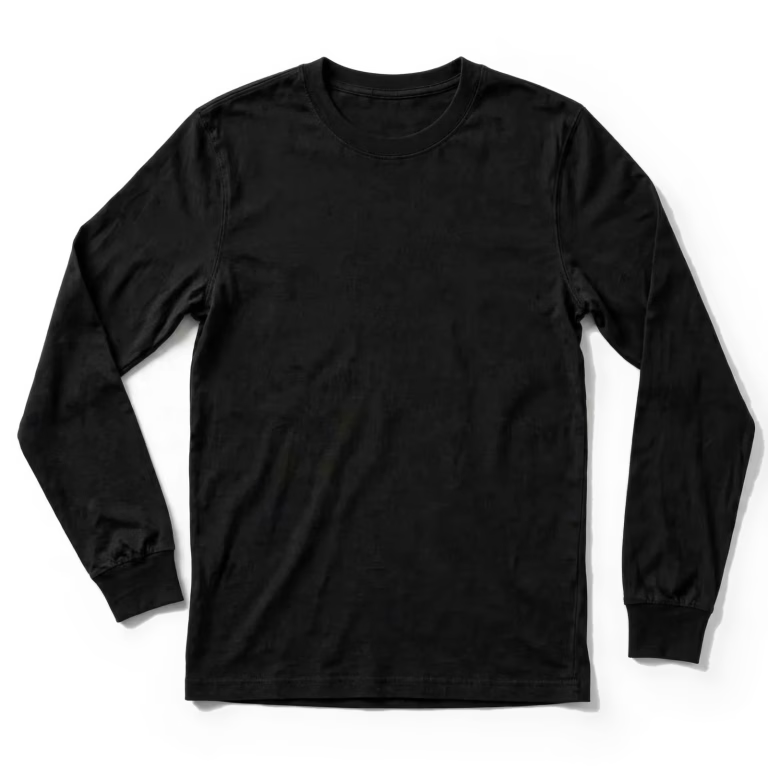
Sizes run XS to 3XL with tall options where sleeve length matters most, and every size is sleeve-graded – the arm grows with the body in the pattern, which is why our large sizes do not wear like mediums with longer bodies. Core colours mirror the basics library: white, black, navy, grey marl, charcoal, red and bottle green, with seasonal shades dyed to order. Two-tone styles with contrast sleeves or cuffs are quoted inside the same style family and share the fabric booking.
Sampling and Fit Checks for Sleeved Garments
Sleeved garments are sampled on the body and in motion: arm raised, arm forward, cuff position checked at rest, because a sleeve that measures right lying flat can still pull at the shoulder in wear. Samples are made in the production fabric and cuff rib, couriered for fitting, and revised on the pattern where the arm or body needs adjustment. Buyers approving for the UK, Canada and northern Europe typically wash the sample before signing, and we encourage it – the wash test is where cuff recovery and sleeve twist tell the truth.
Quality Assurance and Production Follow-Up
Sleeve length, cuff recovery and sleeve straightness appear by name on our inspection routine, alongside fabric checks before cutting, measurement verification and print registration checks. Finished garments are reviewed for shade match between sleeve and body under standard light, since the two pass through the same hands but must also match under a shop’s lighting. Final AQL inspection with photographs closes each order, and one contact follows the programme from fabric booking to carton.
Long Sleeve Tees for Layering, Workwear and Sport
Layering programmes want a smooth, midweight body that disappears under a shirt and a cuff that stays at the wrist instead of riding into the sleeve above it. Workwear wants cover, durability and a cuff that does not catch. Training programmes want the sleeve to move and the fabric to wash weekly without fading the club colour. East Asian and Middle Eastern buyers add a fourth brief: a modest, full-cover summer garment in the lightest honest fabric. The same factory base serves all four because the pattern and fabric choices are made per programme, not per habit.
Why Source Long Sleeves T-Shirts from Bangladesh?
Sleeved basics are pure sewing craft: more operations than a short sleeve, more places for quality to leak, and therefore a garment where an experienced, stable workforce shows directly in the finished piece. Bangladesh’s knitwear belt supplies that workforce at a cost structure that keeps a long sleeve programme profitable at retail, with knitting, dyeing and trims inside one region and export routines to the USA, Europe, the UK, Canada, Australia, the Middle East and East Asia running daily.
Why Choose Siatex Bangladesh?
We have manufactured in Bangladesh since 1987, and our long sleeve styles are cut from the same proven blocks as the crew necks our buyers have reordered for years – extended at the pattern stage by people who understand where a sleeve grade succeeds or fails. One team holds your fabric, pattern, printing and packing; the approved sample stands beside the bulk at inspection; and the specification file makes the autumn reorder identical to the spring original. The same standards carry our short sleeve crew neck t-shirts, so a mixed programme stays one family.
Looking for a Long Sleeves T-Shirt Manufacturer Bangladesh?
Send the neckline, cuff style, weight and quantity, and we will return a price and a sample plan. If sleeve behaviour on your current supply is the issue – twisting, shortening, loose cuffs – say so in the first message; the sample round is where we will prove the difference.
Siatex Bangladesh
Made in Bangladesh
OEM/ODM Private Label Production Only
Ribbed Cuffs or Hemmed Cuffs – Which Finish Suits the Style?
A ribbed cuff with elastane grips the wrist, keeps the sleeve out of the way during work and gives the classic casual silhouette; it is the right choice for basics, workwear and sport. A hemmed cuff – a simple band of the body fabric, turned and stitched – falls looser and reads more tailored, suiting fashion and ladies programmes where the sleeve is part of the look rather than a tool. The cost difference is small; the character difference is large. Decide by how the garment will be worn, and record the choice on the specification, because a cuff swapped silently between sample and bulk changes the garment your customer thought they were buying.
Why Sleeves Twist – Grain, Setting and Wash Behaviour
A twisting sleeve is cut off grain or set carelessly, and no amount of pressing fixes it after washing – the fabric simply returns to where it wants to live. Our discipline is dull and effective: sleeve patterns notched for the true grain line, fabric rested before cutting so the knit is stable, underarm points matched at setting, and a wash test on the sample garment with the sleeve position marked before and after. Buyers can run the same test on any supplier’s sample in one wash cycle, and we would rather they did – it is the fastest audit in the sleeved-garment business.
Base Layer Weights – Building a Layering Programme That Works
A base layer should be the lightest garment in the system that still behaves: 150 to 160 GSM jersey, a close but not tight fit, a cuff that seals at the wrist and a body long enough to stay tucked. Heavier fabric under a shirt adds bulk without adding much warmth; the warmth in a layered system comes from the layers above trapping air. Programmes for northern Europe, Canada and the northern USA often pair our midweight long sleeve with a fleece over it in the same shade family, sold as a set. Buy the weight for the layer’s job, not for its own sake. One more layering point buyers miss: order the base layer a shade family darker or lighter than the mid layer it sits under, never the identical shade in a different fabric – two fabrics never dye to a perfect match, and near-identical shades side by side look like a mistake, while a deliberate step between shades looks like a designed set.