
Trimming and Accessories Services in Bangladesh
A garment is judged by its details - the button that feels right, the zip that runs clean, the label that carries your brand properly. Trimming and accessories at Siatex Bangladesh is the service that sources, checks and prepares every one of those details to your specification, so nothing small ever holds up something big.
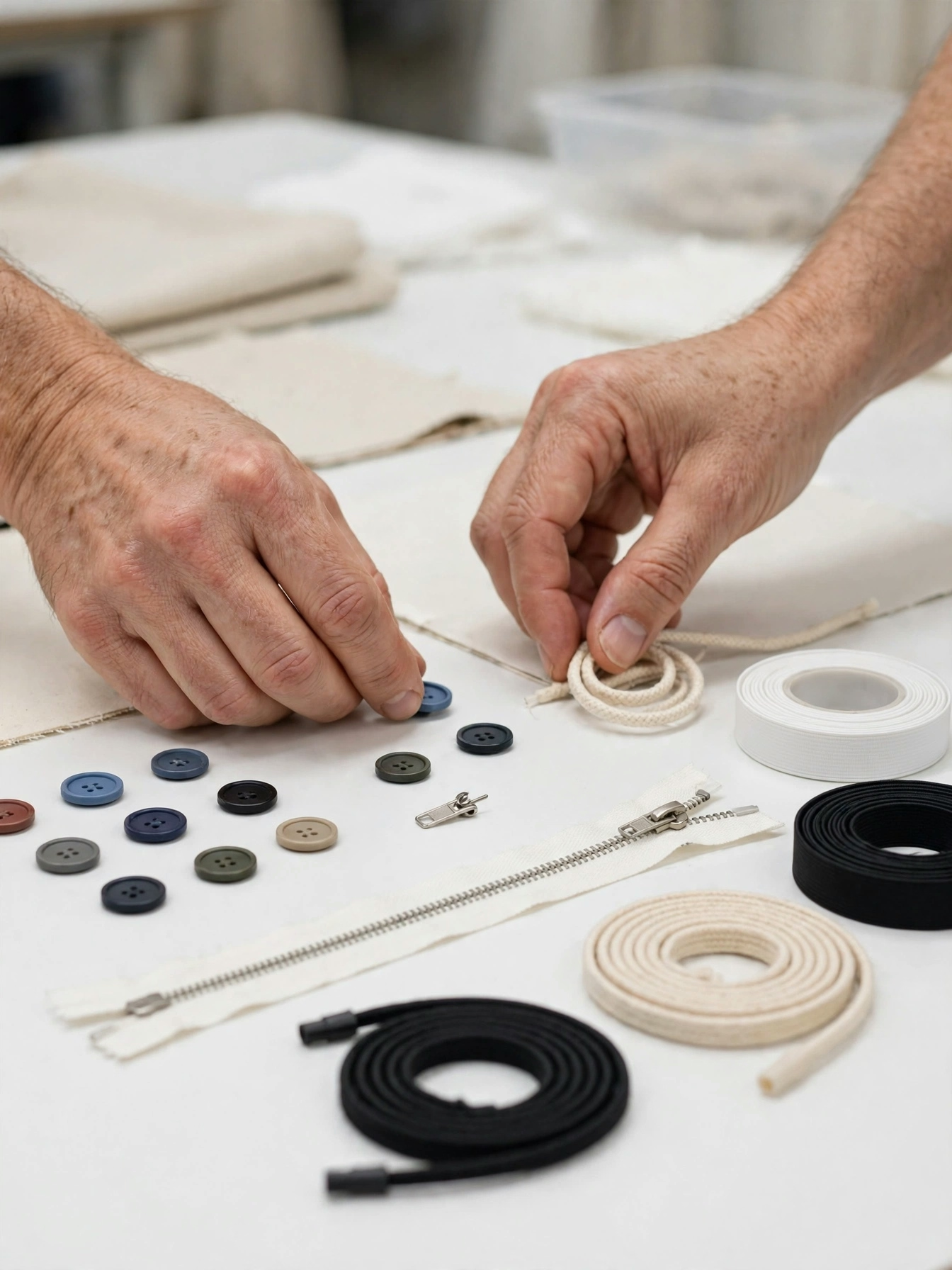
Trims are ordered from your approved sample and trim card: buttons, zips, drawcords, elastic, tapes, threads, interlinings, labels, hangtags and packaging. Each item is sourced, approved, inspected on arrival and issued to production in counted sets matched to the cutting plan.
We run this service for private label brands, importers and retail programmes in the USA, the UK, Germany, Canada and Australia, and for buyers selling into Spain, Italy, Japan and the UAE. Your branding arrives as artwork and leaves as finished garments carrying it exactly as approved - on every unit, in every carton.
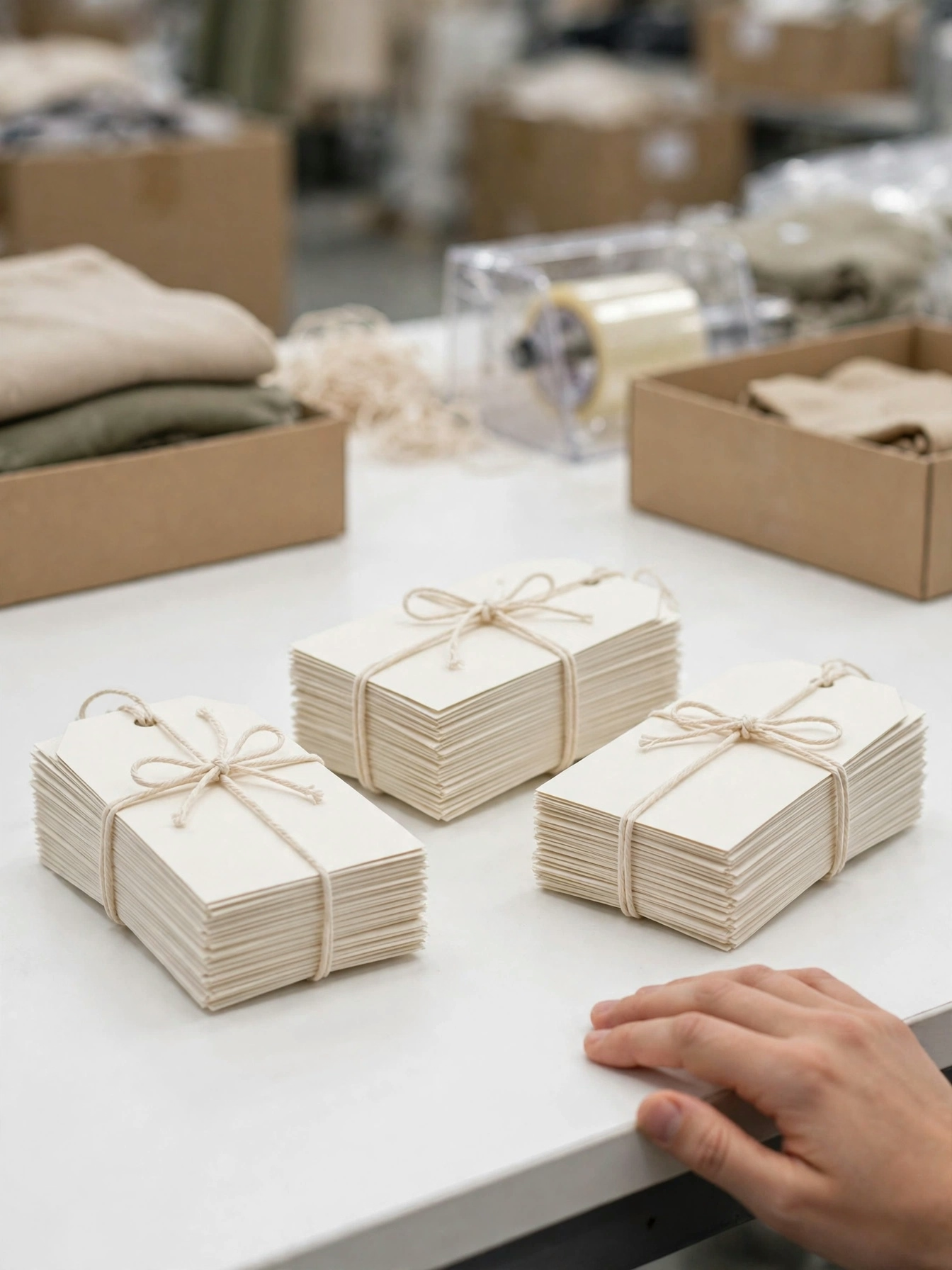

Trim and Accessories Sourcing Services in Bangladesh for Private Label Brands
Trims fail orders quietly: a late zip delays a line, a wrong shade of button cheapens a garment, a misprinted label stops a shipment. The sections below explain how we prevent that – sourcing against approved standards, checking every delivery, holding buffer stock on the items that bite, and managing your branded items as the brand assets they are.
1. Trim Sourcing From Your Approved Sample and Trim Card
Every trim on your order is sourced against a reference: the approved sample’s actual button, zip and cord, recorded on a trim card with material, size, finish and shade. Sourcing works from that card – not from a purchase order description – so a horn-effect button or a matte black snap is matched as an object, not interpreted as a phrase.
Where your specified item is not available locally at the right quality, we present matched alternatives for approval before anything is bought, with the difference stated honestly. The procurement desk that buys your fabric runs your trims with the same rule: nothing substituted silently, ever.
2. Buttons, Zips and Fasteners Checked for Function, Not Just Looks
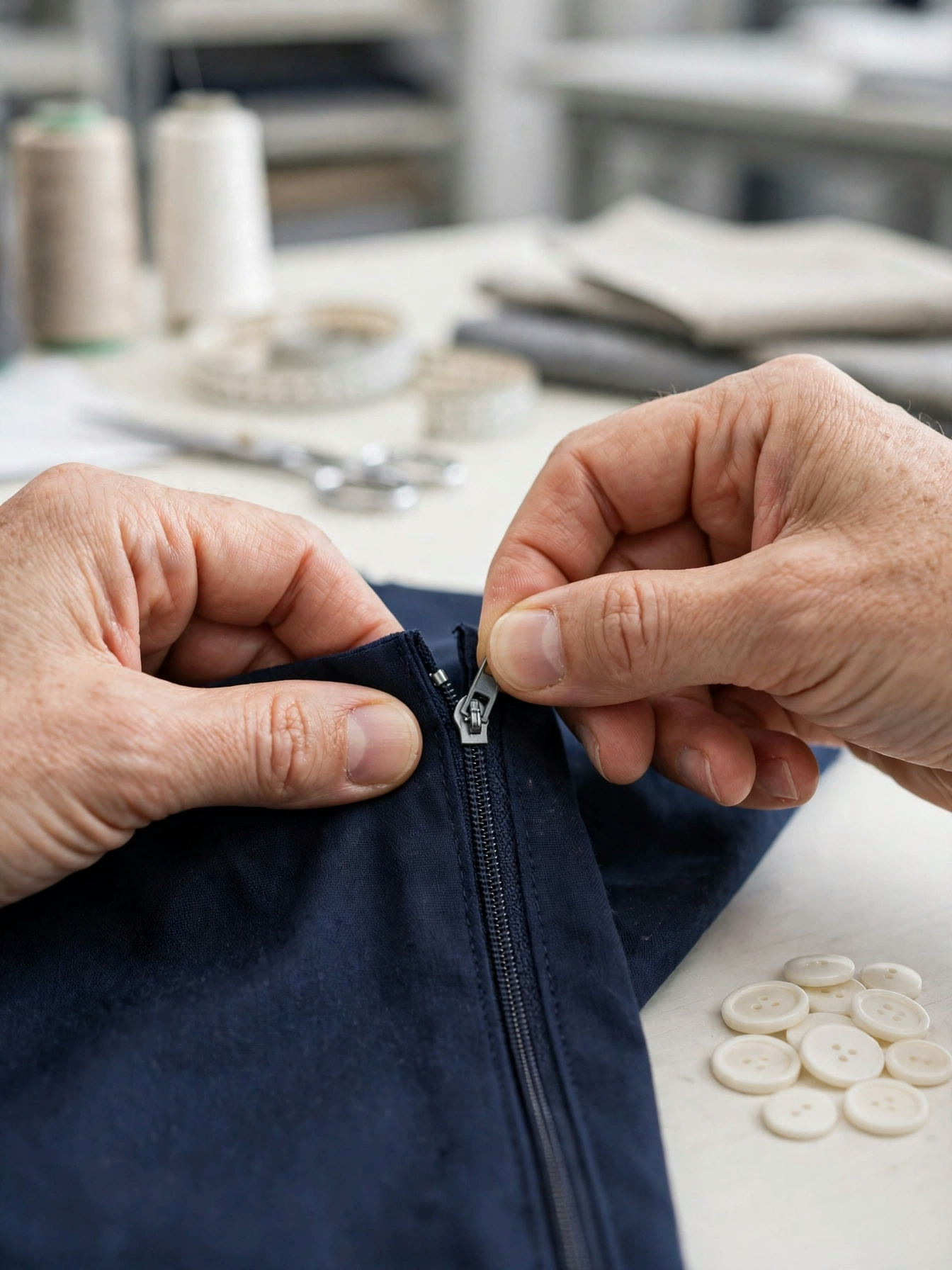
Fasteners are tested as working parts. Zips are run up and down, checked for slider smoothness, tape shade and stop strength; buttons are checked for size, thickness and hole or shank consistency; snap fasteners and eyelets are set and pull-tested on the actual garment fabric, because a snap that holds on a swatch can tear out of a light jersey.
Sewing thread is matched for shade and grade to the fabric and the operation – a cheap thread on a good garment is a false economy your customers find at the first wash. These are the checks that keep a polo shirt placket or a jacket front working long after the first wear.
3. Woven Labels, Care Labels and Hangtags Made to Your Artwork
Your labels are produced from your artwork files exactly: woven main labels with your brand’s weave and fold, printed care and size labels carrying the fibre content, care symbols and origin wording your market requires, and hangtags in your board, finish and string or pin specification.
Proofs are checked against the artwork character by character before production – a misspelt brand name on ten thousand labels is the classic disaster of this trade, and it is prevented by reading, not by hoping. Accuracy here is what puts your name properly on every hoodie and tee that leaves the factory.
4. Incoming Inspection and Counted Issue to Production
Every trim delivery is inspected on arrival: shade against the card, size against the specification, count against the order, function on a sample set. Failed lots are rejected to the supplier while there is still time to replace them – not discovered at the sewing line with the input date already burning.
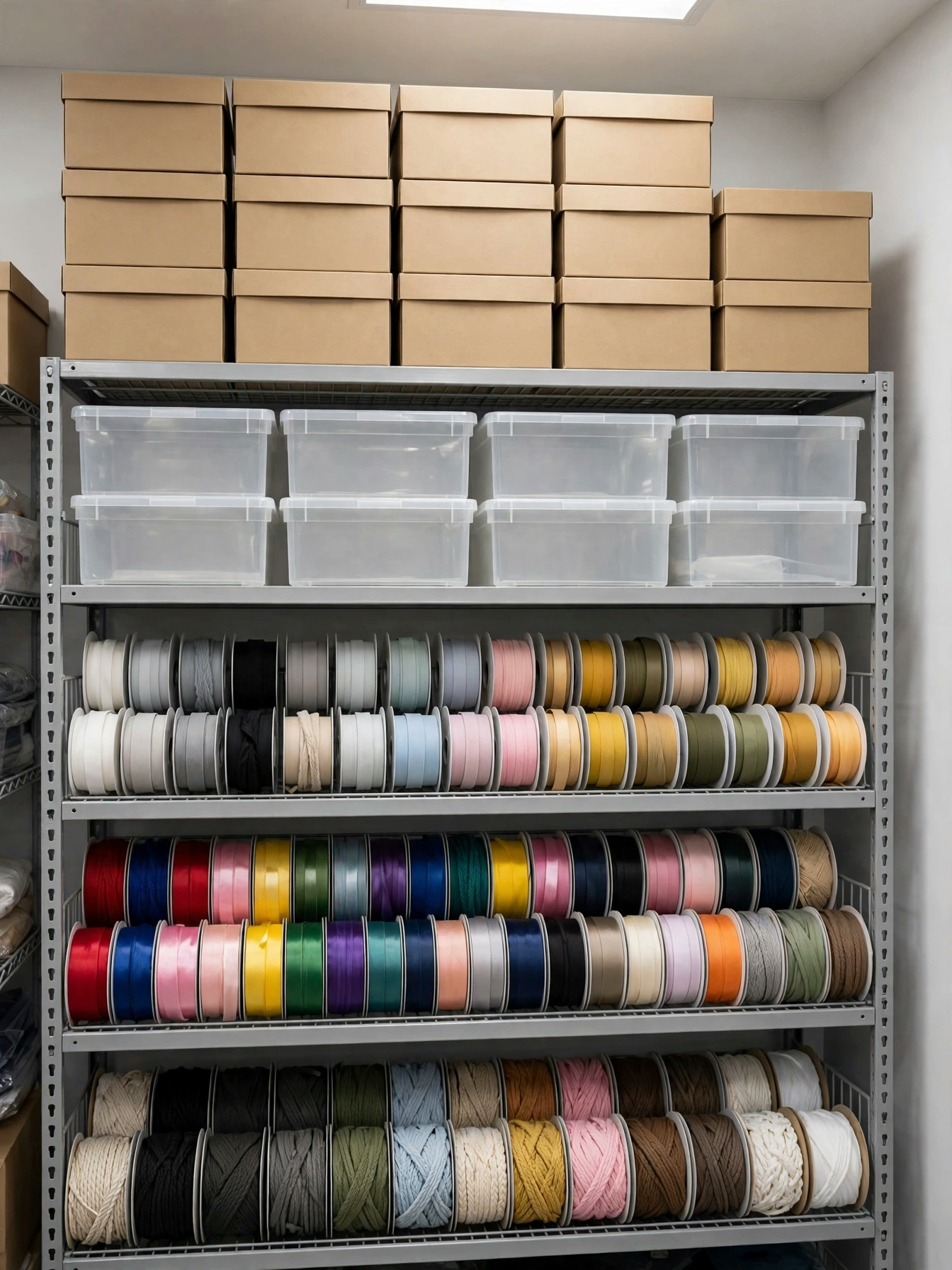
Accepted trims are stored by order and issued to production in counted sets matched to the cutting quantities, size by size. The line is never short by a handful of buttons at the final garment, because the issue was counted against the same numbers the cutting room worked from.
5. Buffer Stock Held on the Trims That Delay Orders
Experience says which trims bite: the branded button with a long remake time, the dyed-to-match zip tape, the special elastic. On running programmes we hold agreed buffer stock of your critical items, so a short delivery or a small overrun in cutting never becomes a stopped line or a missed vessel.
Buffers are agreed with you openly – which items, what cover, reviewed as programmes change – the same foresight our merchandisers apply across the order, and one reason repeat programmes on styles like our tank tops run to calendar season after season.
6. Packaging Accessories Finished to Retail Standard
The last trims are the ones your customer touches first: polybags in the gauge and warning wording your market requires, tissue, silica, carton quality and markings, barcode and price tickets applied straight and in the right sequence. Packing accessories are sourced and checked with the same card discipline as sewing trims.
Retail-ready presentation is specified in your packing instruction and audited at final inspection, so a garment that sewed beautifully is not let down by a crooked ticket or a bag that splits in the carton – the standard our women’s clothing buyers’ retail customers inspect us by.
Trim Sourcing for Clothing Buyers in the USA, UK, Germany and Canada
Branded trims are where distance buyers feel most exposed: your labels and tags are printed ten thousand kilometres from your desk. Our answer is proofing you can audit – artwork proofs checked character by character, production samples of every branded item photographed and sent before bulk, and counts reconciled at packing against your order file.
European buyers get fibre content and care wording checked against EU labelling rules; North American programmes get the origin and care labelling the FTC and Canadian rules require, and polybag warnings where state or provincial law asks for them. Your trims arrive on the garments exactly as your compliance team approved them – because the checking happened here, in writing, before the sewing started.
The Trim Card System, Explained
A trim card is a physical board – or its digital twin – carrying a sample of every trim on your style: the button, the zip, a length of cord and elastic, the thread shade, the labels and the tag, each noted with its material, size and supplier reference. One card is approved by you, one lives with the buying desk, one travels with the order file to the line.
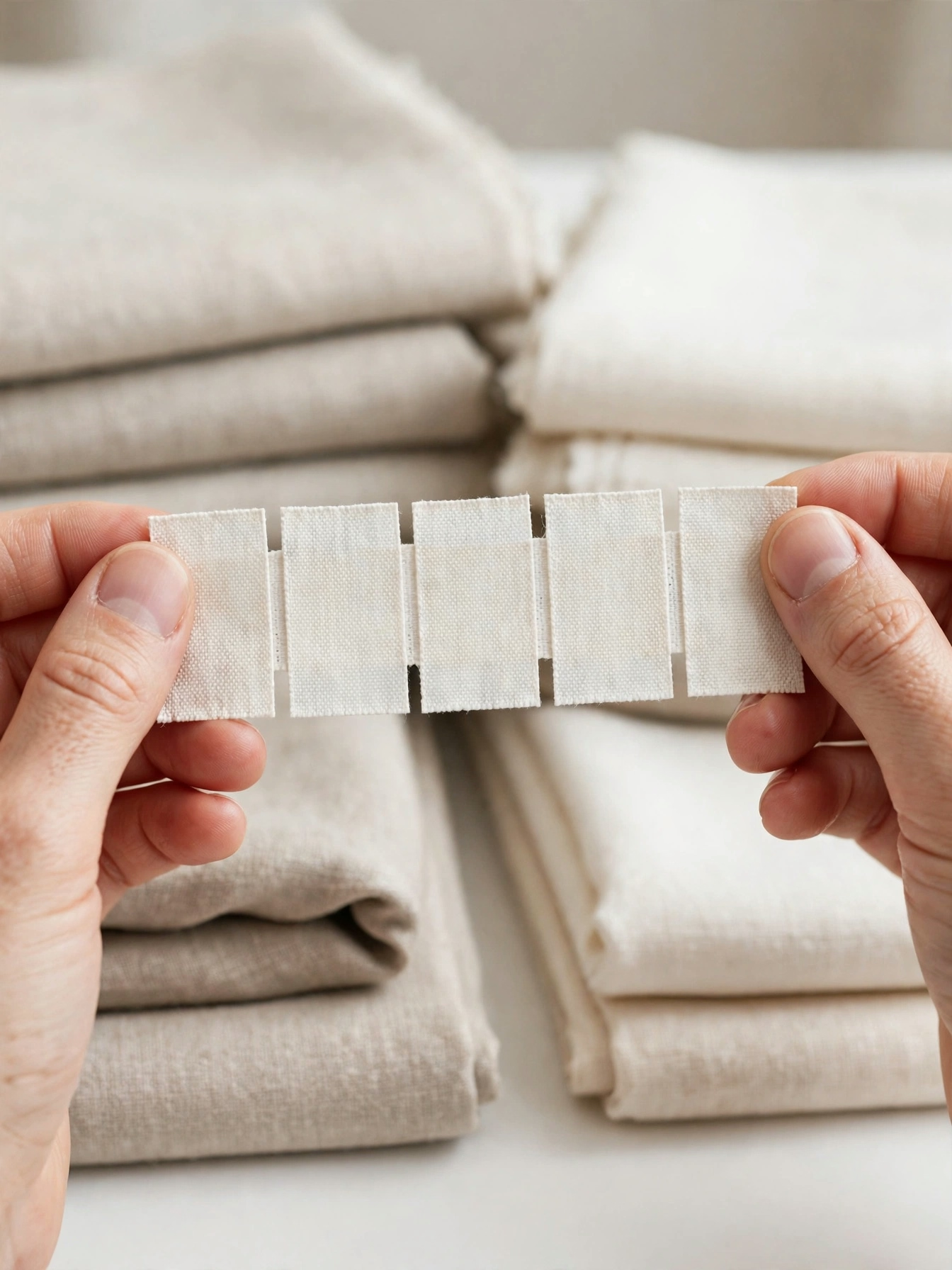
Three copies of one standard means three chances to catch a mismatch and no room for interpretation. When a repeat order arrives a year later, the card is pulled and buying starts from the object itself – which is why repeat programmes keep their hand feel and their look across seasons instead of drifting a little with every order. New styles on a running programme get their own card built at sampling, approved with the sample itself, so the trim standard is never an afterthought added once the order is already confirmed.
Dyed to Match – How Trim Shades Are Controlled
Coloured trims – zip tapes, cords, elastic, buttons, thread – are dyed or selected to match your fabric standard under the same light conditions used for fabric approval. A zip tape that matches in daylight can drift under store lighting, so shade is judged in the light box beside the approved fabric, not at a desk by a window.
Where an exact dye match is impossible on a particular material – some plastics and metals take colour differently – you see the closest options against the fabric before buying, and the choice is recorded on the trim card. No garment leaves with a trim shade that was decided by a supplier’s convenience.
Imported and Specialist Trims, Planned Honestly
Some specifications call for trims Bangladesh does not make at the right quality: branded zip systems, specialist performance hardware, particular recycled or certified materials. Those are imported through the same Chattogram route as speciality fabrics, with the lead time stated in the sourcing proposal and built into your critical path from the start.
The rule is simple: a specialist trim is a planned import with a date, never a surprise discovered at input week. Your merchandiser tracks it with the fabric, reports it in the same updates, and holds the buffer conversation early – while there is still time to choose a local alternative if the calendar demands one.