
Fabric Sourcing Services in Bangladesh
Most garments succeed or fail in the fabric. Fabric sourcing at Siatex Bangladesh is the service that finds, checks and secures the exact cloth your product needs - the right fibre, weight, hand feel and colour - from the mills that can repeat it, order after order, at the price your range was built on.
Send us a tech pack specification, a swatch from a garment you already sell, or a target fabric described in plain words. Our sourcing team works from whichever you have: matching construction and GSM, dyeing to your colour standard, and testing the result before it is ever costed into a garment.
We source fabric for private label brands, importers and retail programmes in the USA, the UK, Germany, Canada and Australia, and for buyers selling into Italy, France, Sweden and Japan. Knit or woven, local or imported, commodity jersey or a certified sustainable base - one team owns the search and the evidence behind it.
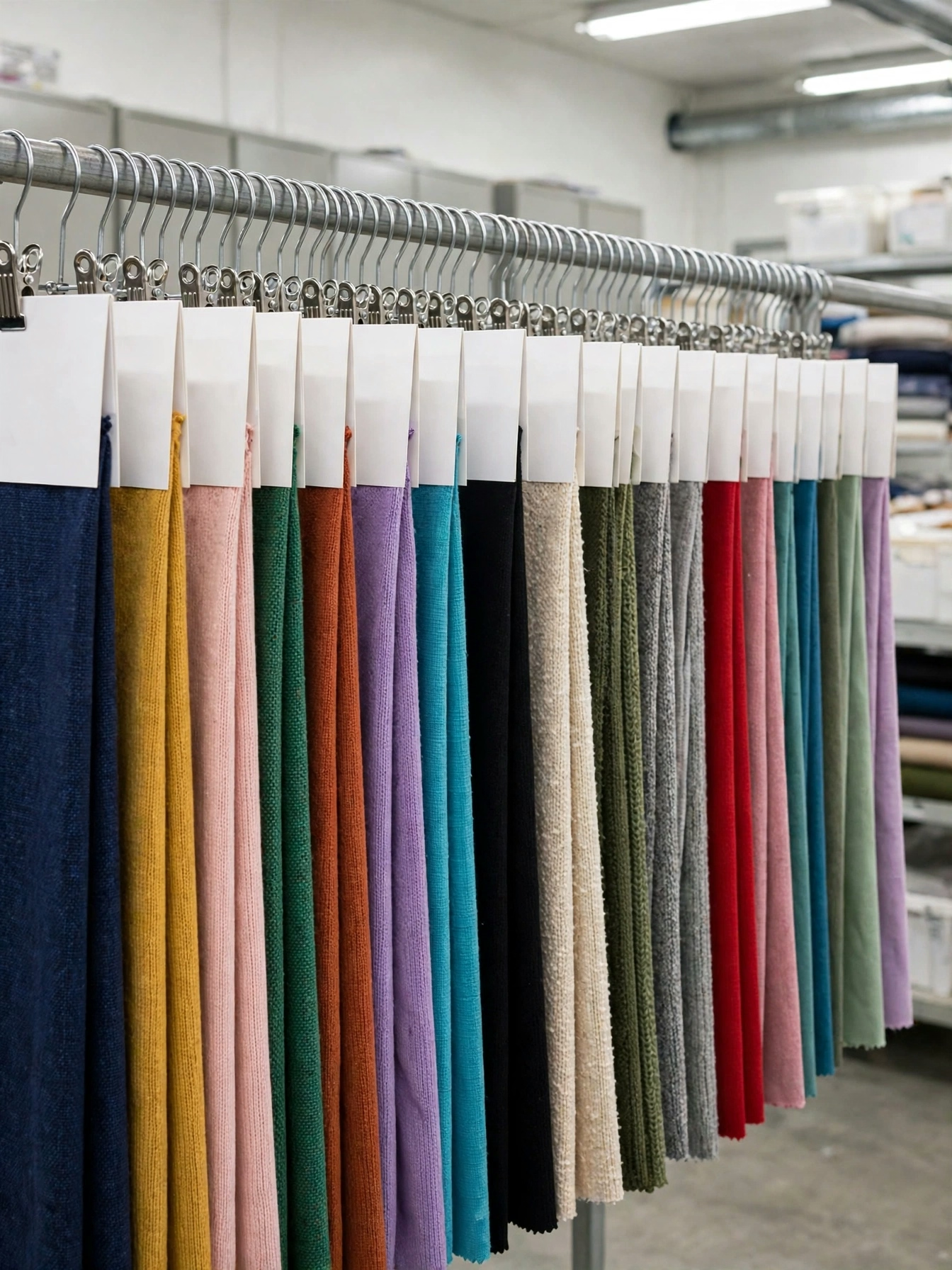
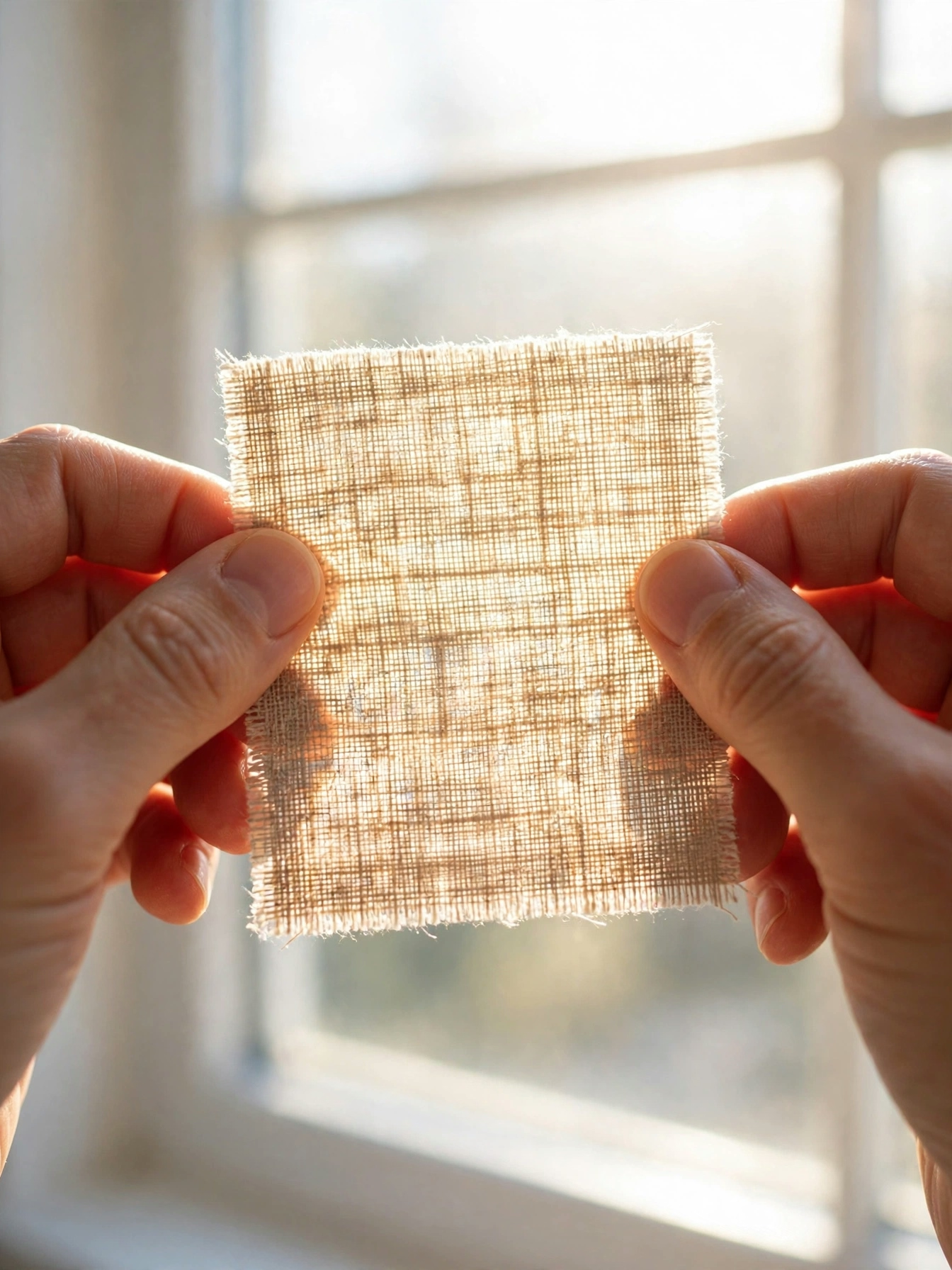
Fabric Sourcing Services in Bangladesh for Private Label Brands
Good sourcing is not finding a fabric once – it is finding a fabric that behaves: in the lab dip, in the bulk roll, in the wash and in the repeat order next season. The sections below explain how we source against a specification, use our mill network, manage approvals and check quality, so the cloth in your bulk order is the cloth you approved.
1. Fabric Sourcing From Your Specification, Swatch or Tech Pack
Every search starts from evidence. A specification gives us fibre, construction, GSM and finish; a swatch gives us all of that to measure directly; a description gives us the garment’s job – drape, warmth, stretch, opacity – and we source to the job, then prove the match with swatches and test results.
Where an exact match does not exist at a workable price, we say so early and present the closest alternatives with their differences stated – a GSM a touch lighter, a blend a step different – so the choice is yours, made on samples, the same starting discipline as our research and development work.
2. A Bangladesh Mill Network for Knit and Woven Fabrics
Our sourcing desk buys from the mills of the Dhaka, Narayanganj and Gazipur belt every week: knitters for jersey, fleece, rib and interlock; weavers for poplin, twill, canvas and denim; dye houses whose shade work we have checked across hundreds of lots. Repeat buying means our orders join known production schedules, not cold enquiries.
That network is also our intelligence. The sourcing team knows which mill holds which quality steady, who is loaded, who is developing new bases – knowledge that puts a crew neck tee programme on the right jersey from the first costing instead of the third correction. It is also why our procurement buyers and the fabric desk never work from different information: the same mill record, the same shade history and the same delivery experience feed both desks on every order.
3. Lab Dips, Handlooms and Strike Offs Managed to Approval
Colour and surface are approved in stages, and we manage every stage: lab dips against your colour standard under standard light, handloom or sample-yardage pieces for hand feel and construction, print strike offs where the fabric carries a design. Each round is checked by us before it is sent to you, so your time is spent approving near-misses, not rejecting surprises.
Approved standards are filed physically and digitally against your account – the dip, the swatch, the test report – so a repeat order two seasons later is dyed against the same standard your first order was, not against someone’s memory of it.
4. Fabric Checks for GSM, Shrinkage, Shade and Hand Feel
A beautiful swatch can hide a difficult fabric, so sourced bases are checked before they are recommended: GSM against tolerance, shrinkage in wash, spirality on knits, colourfastness, pilling tendency, and shade continuity across the lots a bulk order would need. The results travel with the swatch when we present a fabric, in numbers.
This is where sourcing protects production. A fabric whose shrinkage behaves is a fabric the pattern can be cut for honestly – the check our sweatshirt and fleece programmes pass through before any base is allowed into a costing.
5. Certified and Lower Impact Fabric Options for Your Market
More ranges now arrive with a materials policy attached, and our sourcing desk works to it: organic cotton bases from certified supply chains, recycled polyester and recycled cotton options, and fabrics carrying OEKO-TEX Standard 100, with the certificates collected and checked as part of the sourcing file – not requested in a hurry at shipment.
Tell us the standard your market asks for – European retail requirements, a brand’s own restricted substances list, labelling rules in the USA – and the sourcing shortlist is built inside it from the start, so compliance is a property of the fabric itself, not a document chased afterwards.
6. Honest Fabric Lead Times Planned Into Your Order Calendar
Fabric decides the real start date of every order, so we quote its lead time as carefully as its price: mill production, dyeing, finishing and delivery into our store, with the imported-base route – overseas mill, Chattogram port, customs – quoted separately where it applies.
Those dates feed the critical path your merchandiser runs, which is why our fabric promises and our shipment promises agree. An activewear base that needs importing is ordered weeks earlier than a local jersey – planned at sourcing, not discovered at cutting.
Fabric Sourcing for Clothing Buyers in the USA, UK, Germany and Australia
Distance turns fabric into a trust exercise: you approve from a swatch and a test report while we stand in front of the bulk rolls. Our answer is evidence at every stage – counter swatches from the actual bulk lot, shade bands across the dyeing, test results from the base that will ship, photographed and filed against your order.
German and UK buyers get the documentation their compliance teams file; North American programmes get the labelling and testing evidence their importers require; Australian buyers get early warning on any base with a long route behind it. One sourcing standard from Bangladesh, evidenced the same way every time.
The Knit Fabrics We Source Every Week
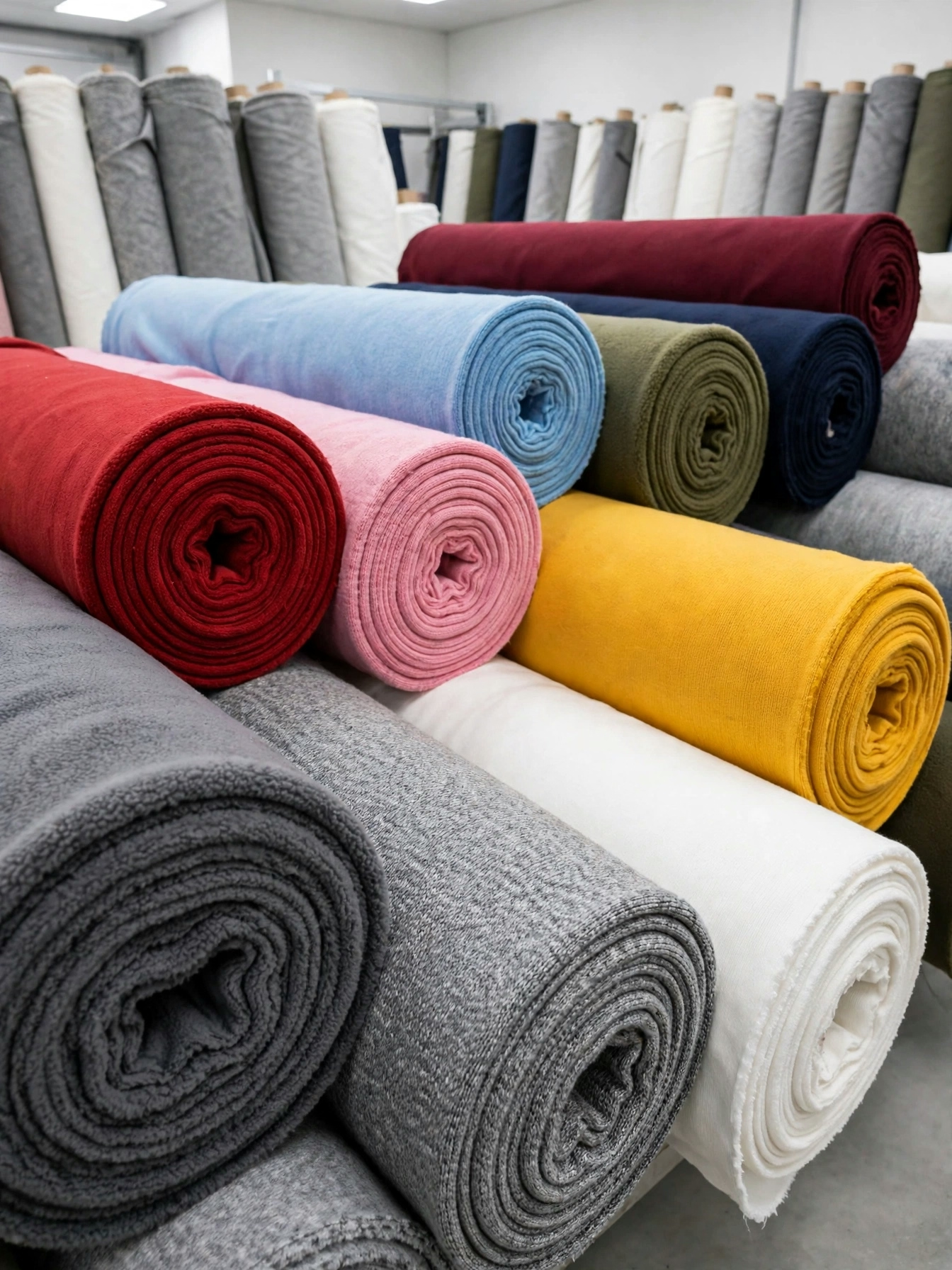
Single jersey in cotton and cotton blends for tees and underwear; fleece – brushed and loopback – for hoodies and sweatshirts; rib for cuffs, collars and fitted styles; interlock for baby and children’s wear where softness and opacity matter; piqué for polo shirts; French terry, Ponte and scuba bases for structured casual ranges. Each is sourced across a GSM range, with the stretch, recovery and finish – peach, silicone wash, moisture management – your specification calls for.
Because these bases run through our own lines weekly, the sourcing advice is practical, not theoretical: which jersey weight keeps its shape in a fitted women’s tee, which fleece pills at a price point, which rib recovers after washing. You hear it before the fabric is in your costing, not after it is in your stores. Stock-supported bases – the jerseys and fleeces our regular programmes run on – can often be drawn faster than a fresh mill order, and the sourcing desk will always tell you which route your fabric is taking and why.
Woven and Speciality Fabrics, Including Imported Bases
Poplin and oxford for shirting, twill and canvas for chinos and workwear styles, denim in the weights casual ranges use, corduroy and flannel for seasonal programmes, and lightweight wovens for dresses and blouses – sourced from the weaving belt and checked for reed marks, shade and hand feel before recommendation.
Speciality bases – performance synthetics with wicking finishes, bonded fabrics, seersucker, jacquards – are sourced locally where the capability exists and imported where it does not, with the route and its lead time stated in the sourcing proposal, so a special fabric never becomes a surprise delay.
How Fabric Cost and Quality Are Balanced in a Sourcing Decision
Every shortlist we present carries both numbers and evidence: the price per kilo or metre at your quantity, and the quality record behind it – test results, the mill’s history on similar bases, our own inspection findings. The cheapest fabric that passes is sometimes the right answer for a promotional range; it is rarely the right answer for a garment your brand will re-order for five seasons.
We will show you where a small step up in fabric buys a large step in garment life – and where it buys nothing at all. That balance, explained in samples and figures, is the working heart of sourcing: the fabric decision made once, properly, before it is multiplied by every garment in the order.