
Knitting Services in Bangladesh
Every knitted garment starts as yarn on a cone. Knitting services at Siatex Bangladesh turn that yarn into the jersey, fleece, rib and interlock your products are made from - knitted on our own circular machines, checked as grey fabric, and released to dyeing only when its weight and construction are right.
Knitting in house changes what we can promise. Your fabric's GSM is set at our machines, its faults are caught on our inspection frames, and its calendar answers to the same critical path as your order - instead of depending on an outside mill's queue and an outside mill's honesty.
We knit for our own production programmes and for buyers who source knitted fabric through us, serving private label brands in the USA, the UK, Germany, Canada and Australia, and buyers selling into Italy, Denmark, South Korea and the UAE. The constructions your garments need, knitted to the standard your approved sample set.
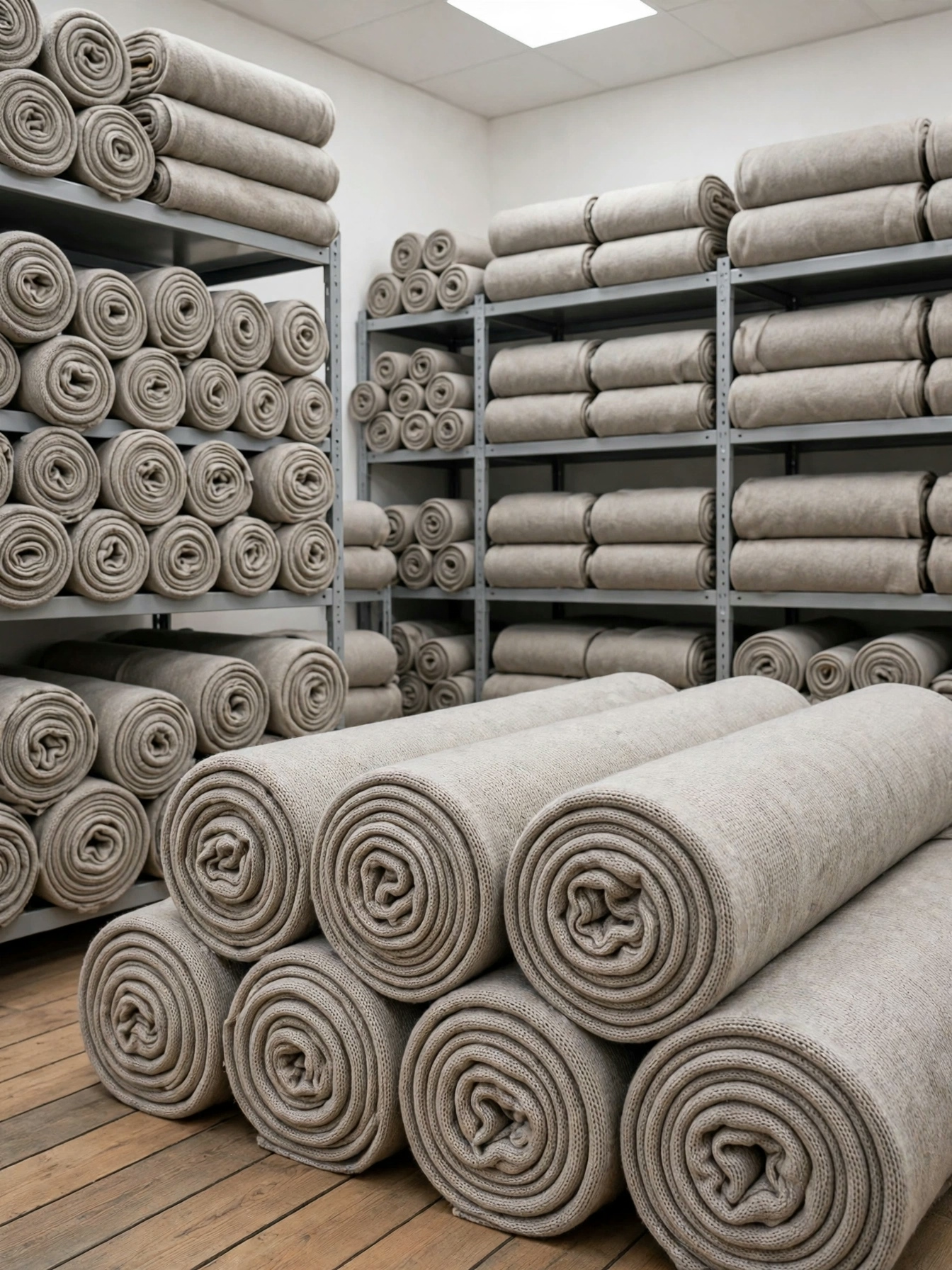
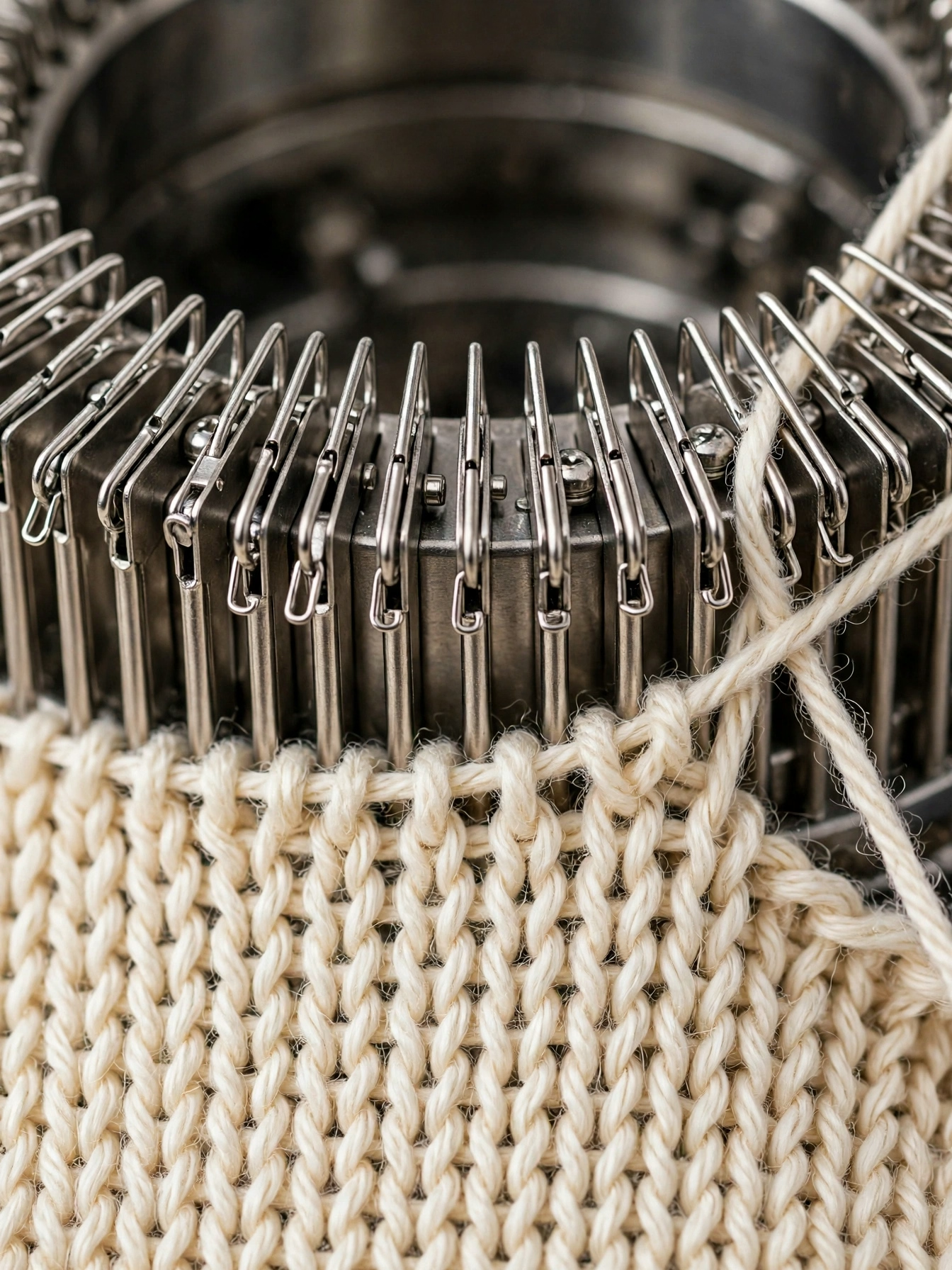
Knitting Services in Bangladesh for Private Label Clothing Brands
A knitted fabric carries its quality in its structure: loop length, yarn quality, machine gauge and weight decide how the garment feels, drapes, washes and lasts. The sections below explain how our knitting floor controls that structure – construction range, GSM discipline, yarn and shade management, and the grey fabric checks that keep faults out of your dyeing lots.
1. In-House Knitting That Puts Your Fabric Under Our Control
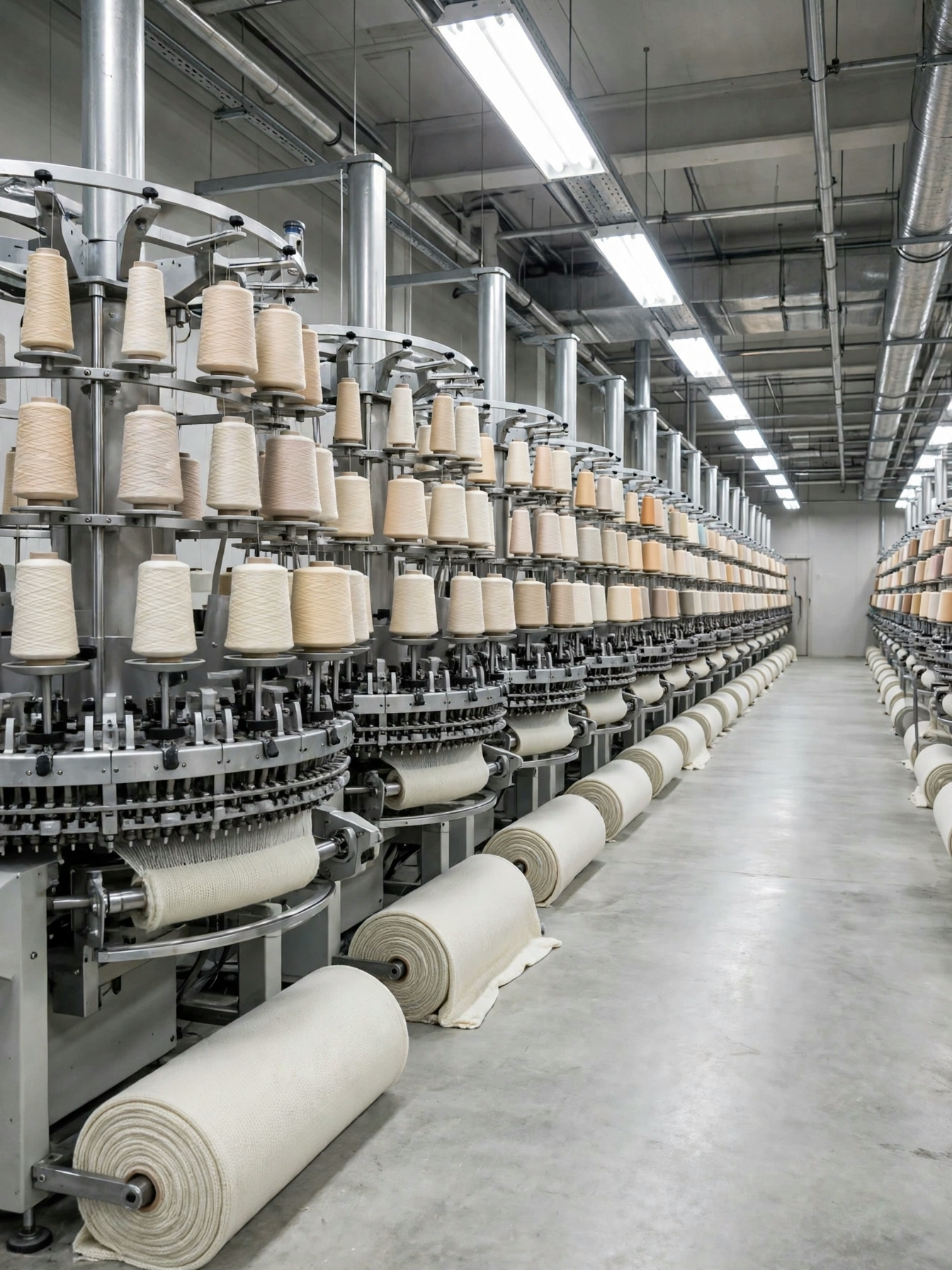
When fabric is bought in as finished cloth, its history is a claim; when it is knitted in house, its history is a record. Our knitting floor runs the bases our garment programmes use most – which means the fabric in your order was made for your order, from yarn bought against your specification, on machines whose settings are written into the production file.
Control shows up in the details buyers feel: a fabric whose weight holds across the whole lot, a hand feel that matches the approved swatch because the loop length was set to it, and a replacement roll that can be knitted again to the same record if a fault is found – options a bought-in fabric simply does not offer.
2. The Knit Constructions We Run – Jersey, Fleece, Rib and Interlock
Single jersey for tees, underwear and light tops; fleece – brushed and loopback – for hoodies and sweatshirts; rib for collars, cuffs and fitted bodies; interlock for baby and children’s wear; piqué for polo shirts; French terry and Ponte bases for structured casuals. Each construction runs across its GSM range on the gauges that keep its surface clean.
Construction advice comes with the service: which base holds a fitted legging programme’s recovery, which fleece weight brushes without thinning, which jersey takes a print without cracking – answered from what our own lines sew every week, not from a catalogue.
3. GSM and Weight Control Set at the Machine
Finished GSM is decided by yarn count, loop length and machine settings long before dyeing adds its share – so we control it at the machine. Grey fabric is weighed and checked roll by roll against the target, and settings are corrected during the run, not discovered after it: a drift caught at roll three never becomes a lot problem at roll thirty.
That discipline is what keeps a sweatshirt programme’s body fabric and its rib trims in the same weight family across every colour in the order – the consistency your customers read as quality without ever knowing its name.
4. Yarn Sourcing and Shade Work Behind Consistent Fabric
Knitting quality starts at the cone. Yarn is sourced from spinners whose counts and evenness we have verified across seasons, inspected on arrival, and stored by lot – so a fabric run draws from one yarn lot wherever the quantity allows, and shade work in dyeing starts from an even base.
Lot discipline is invisible in the finished garment and obvious in its absence: barre marks, shade bands and uneven dyeing are usually yarn stories, not dye house stories. Our yarn-to-fabric record means that when a shade does drift, the cause can be traced – cone, machine, roll – and corrected at the true source.
5. Grey Fabric Checks for Loops, Holes, Needle Lines and Faults
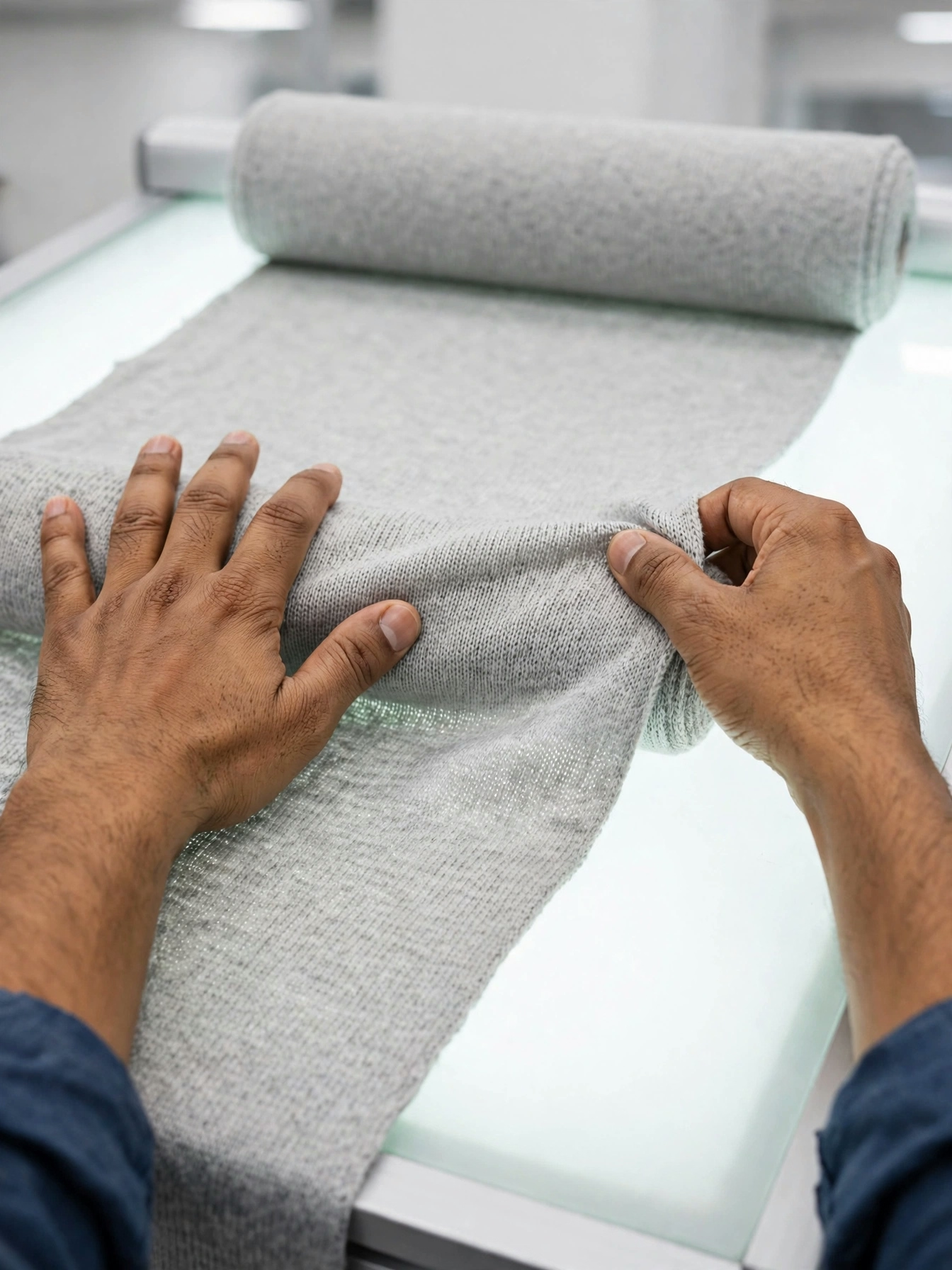
Every roll of grey fabric passes inspection before dyeing: dropped stitches and holes, needle lines, oil marks, thick and thin places, contamination and barre are marked and graded, and rolls that fall below the standard for your programme are rejected back to the knitting floor – never pushed into dyeing to become expensive faults.
Inspecting at grey stage is the cheapest quality decision in the whole chain: a fault found here costs a roll; the same fault found after dyeing costs a lot; found after cutting, an order. It is the first of the checks our production buyers benefit from without ever seeing.
6. Knitting Lead Times Planned Inside Your Order Calendar
Because the knitting floor answers to the same plan as your order, its lead time is a managed date, not a hope: yarn arrival, knitting, grey inspection and dyeing release are scheduled against your cutting date, and greige fabric for running programmes is knitted ahead where your calendar is fixed.
A hoodie season that must land for autumn retail gets its fleece knitted while approvals are still closing – the overlap that factories without their own knitting cannot safely offer, because their fabric start waits on someone else’s floor.
Knitting Capacity for Clothing Buyers in the UK, Germany, Canada and Australia
Buyers at distance cannot watch a fabric being made, so we make its record watchable: yarn lots, machine settings, grey inspection results and weights roll by roll, filed against your order and summarised in the reporting your merchandiser already sends. The fabric’s story is documented with the same care as the garment’s.
European buyers get the fibre and composition accuracy their labelling demands; North American programmes get the consistency repeat orders are judged on; Australian buyers get early, honest dates from a floor we control. Knitting in house is, in the end, a promise-keeping machine – and keeping promises is the whole business.
From Yarn Cone to Grey Fabric – How a Knitted Base Is Born
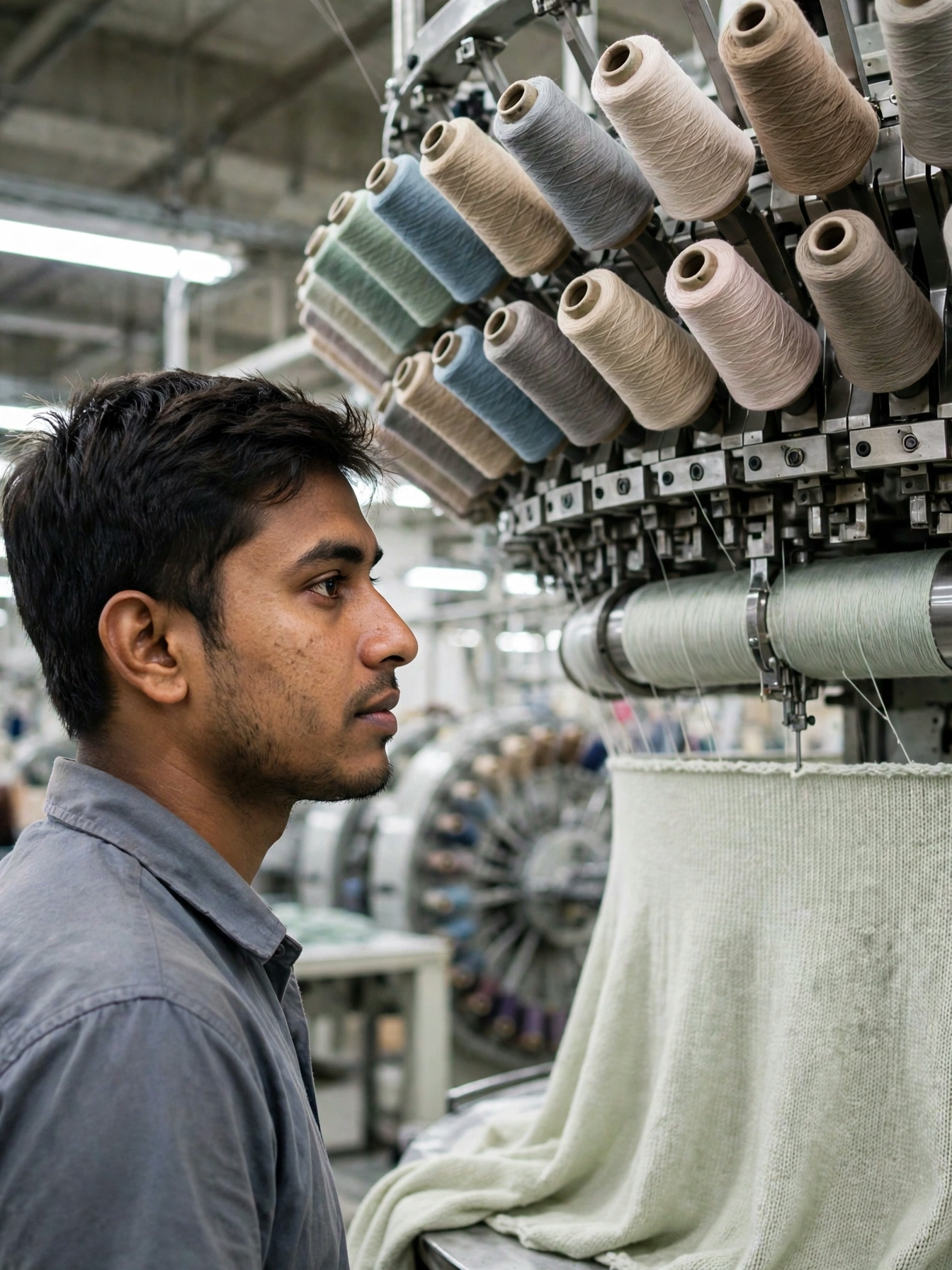
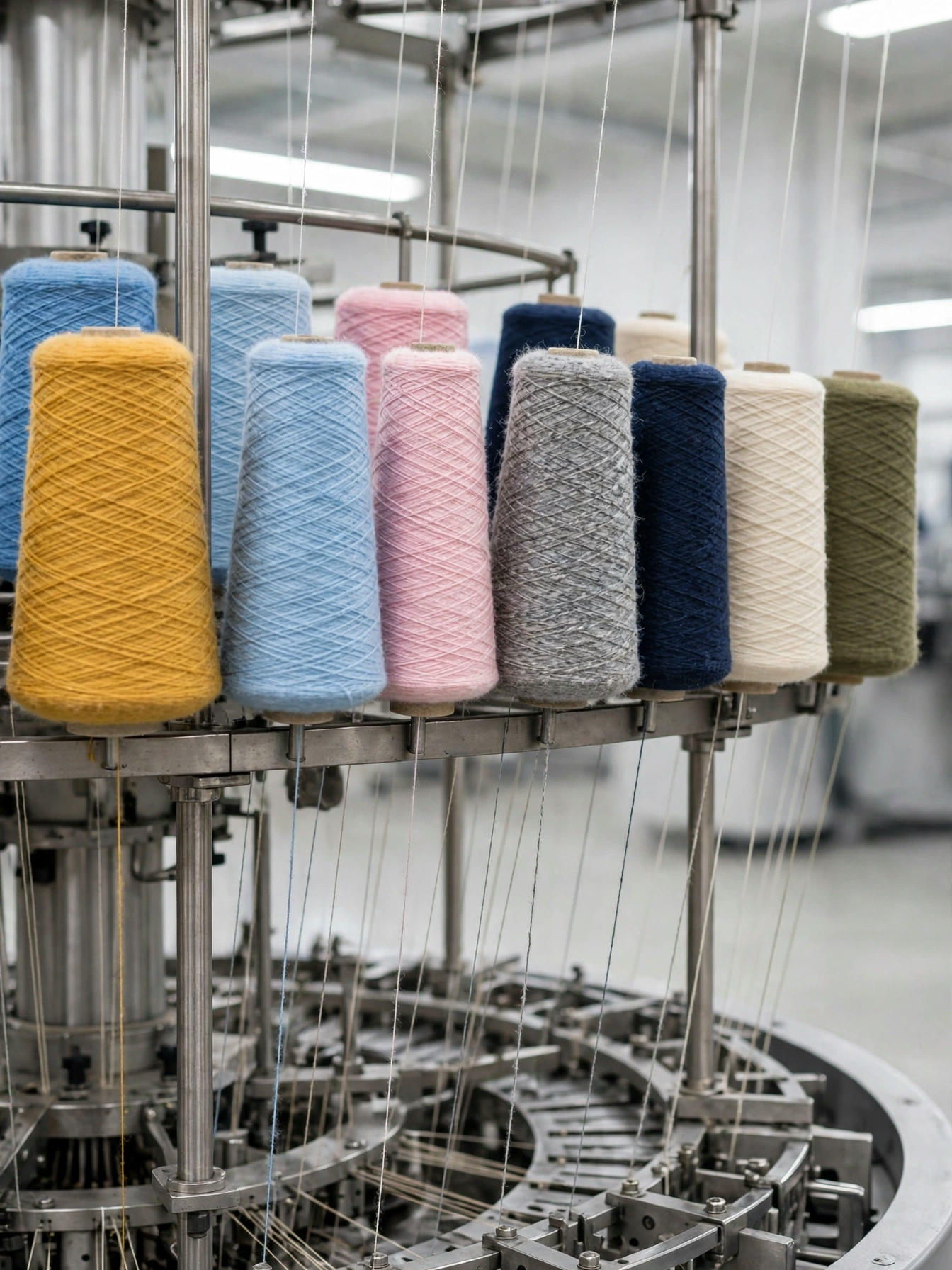
Yarn cones are mounted on the machine’s creel and threaded through tension guides to the needle cylinder, where hundreds of needles form loops course by course, building the fabric tube that winds onto the roll below. Loop length – set by the machine’s stitch cams – decides the fabric’s weight and hand feel more than any other single setting.
The operator’s craft is consistency: watching the fabric as it forms, hearing a needle problem before it becomes a line of faults, stopping for a yarn join so the join never shows in a garment panel. A knitted base carries the fingerprints of that attention – or its absence – into every garment cut from it. Machines are serviced and their needles changed on schedule rather than on failure, because the cheapest needle line to fix is the one that never forms in the fabric.
Matching the Knit to the Garment – Which Construction Suits Which Product
Tees and underwear want single jersey’s lightness and drape; hoodies and sweatshirts want fleece’s warmth and brushed face; polos want piqué’s texture and collar stability; baby wear wants interlock’s softness on both faces; fitted styles want rib’s stretch and recovery. GSM follows function: a fashion tee and a workwear tee may share a construction and differ by half in weight.
Our sourcing and knitting teams give that advice at development, with swatches knitted to your target so the decision is made on fabric, not on description. The right construction at the right weight is the cheapest quality a garment ever gets – it costs nothing extra to choose well at the start.
Why In-House Knitting Protects Your Colour and Your Calendar
Shade problems are usually born before dyeing: mixed yarn lots, uneven loop length and greige stored badly all print through as colour faults no dye house can fully correct. Knitting in house removes those causes at the source – one lot per run where quantity allows, grey fabric inspected and stored properly, dyeing lots built from rolls with a shared history.
The calendar gains the same way. An outside mill’s queue is a negotiation; our own floor is a schedule. When your programme’s dates matter – and they always do – fabric that starts on a floor answering to your merchandiser is fabric that arrives when the plan said it would.