
Garment Production Services in Bangladesh
Production is where every earlier promise is either kept or lost. At Siatex Bangladesh the sewing floor runs as a service to the buyer, not just a factory routine: your approved sample, your costing and your materials meet a production plan built for your order, and you see the work as it happens.
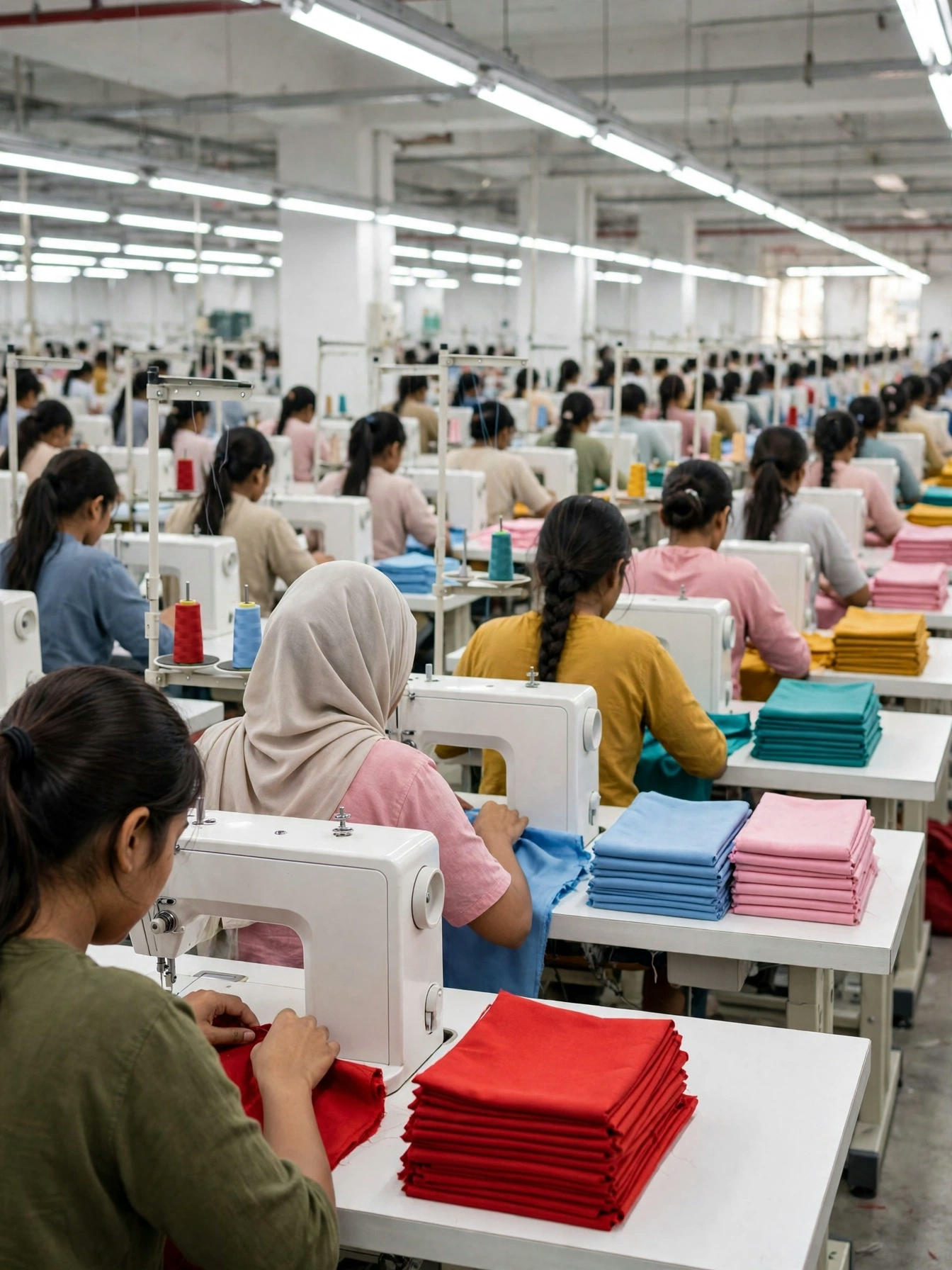
Cutting, sewing, finishing and packing sit under one roof in our Dhaka factory, run by line chiefs who work from the approved sample and the order file - not from habit. The same construction, the same measurements and the same trims, from the first bundle off the line to the last carton sealed.
We produce for private label brands, importers and retail programmes in the USA, the UK, Germany, Canada and Australia, and for buyers selling into France, Italy, Denmark and Japan. Lightweight jersey, heavy fleece, woven shirting or children's wear - the floor is organised around garment families, so your style runs on a line that knows its construction.
Garment Production Services in Bangladesh for Private Label Brands
A bulk order is thousands of small decisions made correctly in sequence. The sections below explain how an order moves through our floor: how it is cut, how the lines are set and balanced, how quality is checked while there is still time to fix things, and how you are kept informed until the cartons close.
1. Cutting Room Accuracy From the Approved Marker Plan
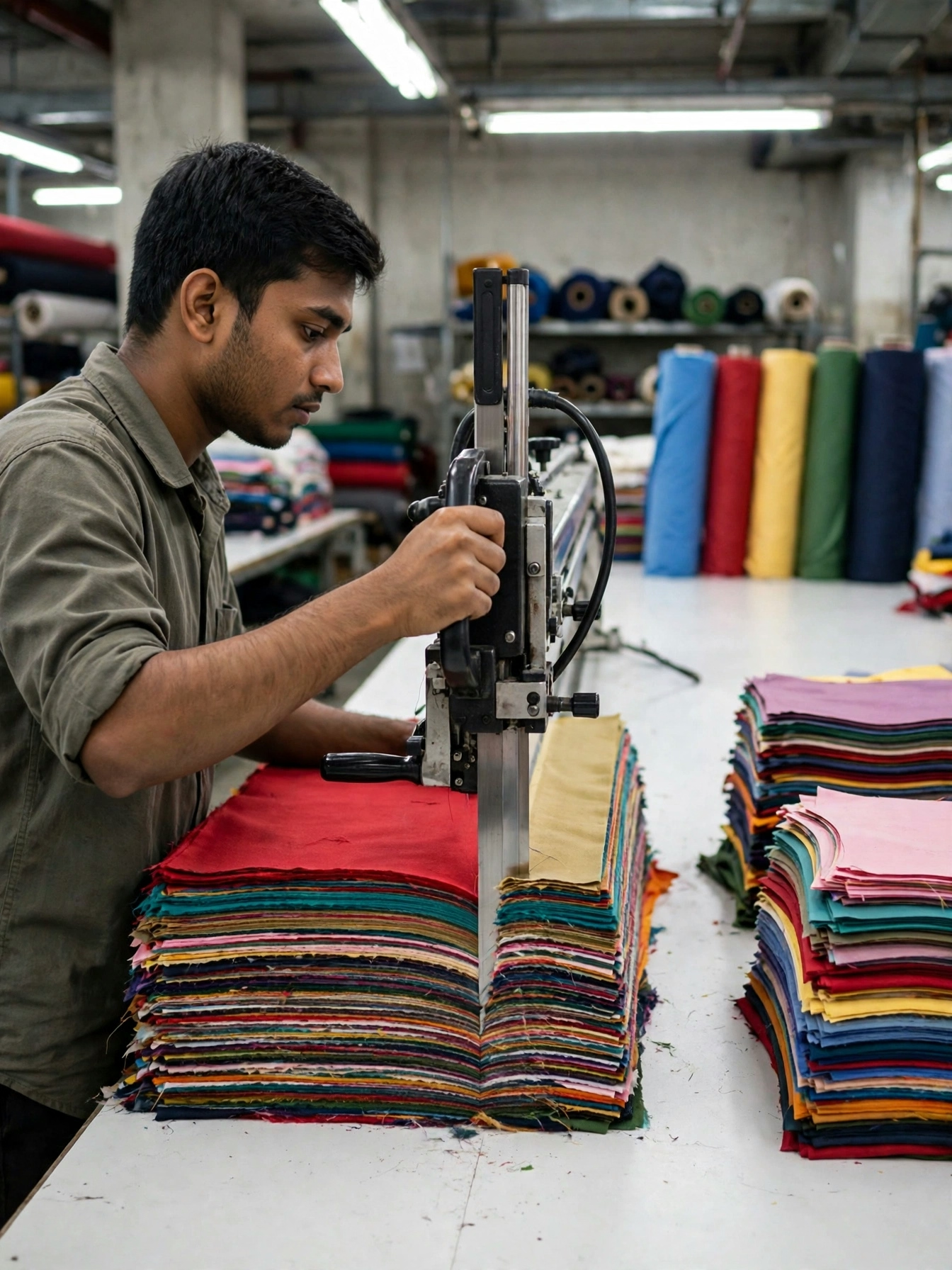
Production starts at the cutting table, where the marker plan from procurement is laid over fabric that has been inspected, rested and shade-sorted. Layers are spread evenly, patterns are checked against the approved measurements before the knife moves, and cut parts are numbered and bundled by size so panels from different rolls never mix inside one garment.
That care at the start is invisible in the finished garment – which is exactly the point. Accurate cutting is why the size set you approved at sampling is the size set your customers measure in store, across every colour and every repeat.
2. Sewing Lines Organised Around Your Garment Type
Our lines are set by garment family, not by whoever is free. A fleece programme runs with the machines, folders and attachments its construction needs; a woven shirt line is balanced for collars, cuffs and plackets; a children’s range runs with the smaller operations and extra safety checks its styles demand.
Operators work the operations they specialise in, supervised by line chiefs who sew the first pieces against the approved sample from sample development before the line is allowed to run at speed – the sample hangs at the line head, and nothing drifts away from it quietly.
3. Line Balancing and Output Planning for Bulk Clothing Orders
Before a style enters the floor, its operations are timed and the line is balanced: how many operators on each step, what each hour should produce, where the slow operation sits and how it is supported. That plan – not optimism – is what sets the production dates we give you.
Balancing is also what protects quality at volume. A line planned honestly runs at a pace its operators can sew well; a line pushed beyond its plan produces faults faster than anyone can catch them. Programmes like our sweatshirts run to the same plan season after season, which is why their output dates behave.
4. Inline Quality Checks While Garments Are Being Sewn
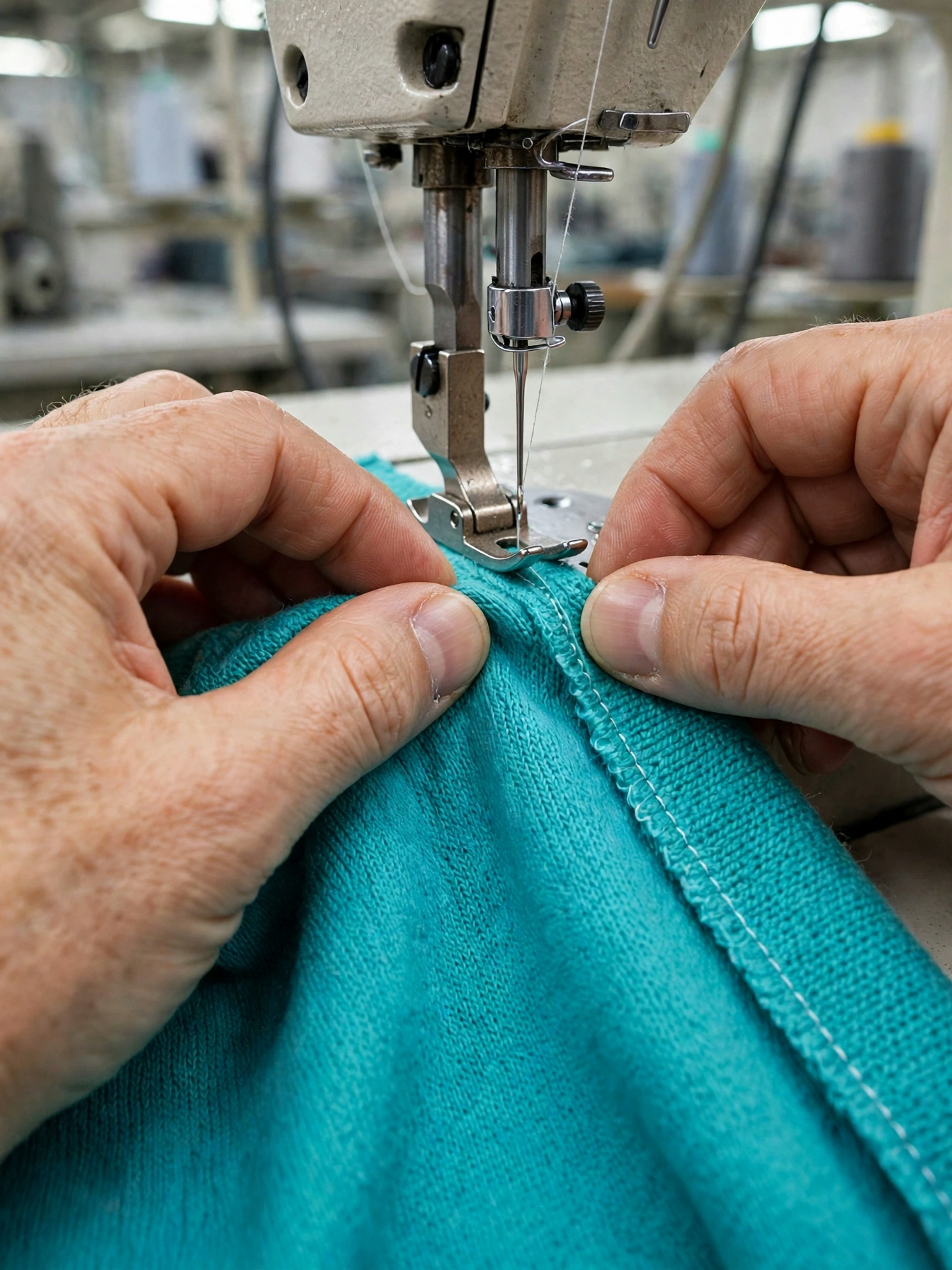
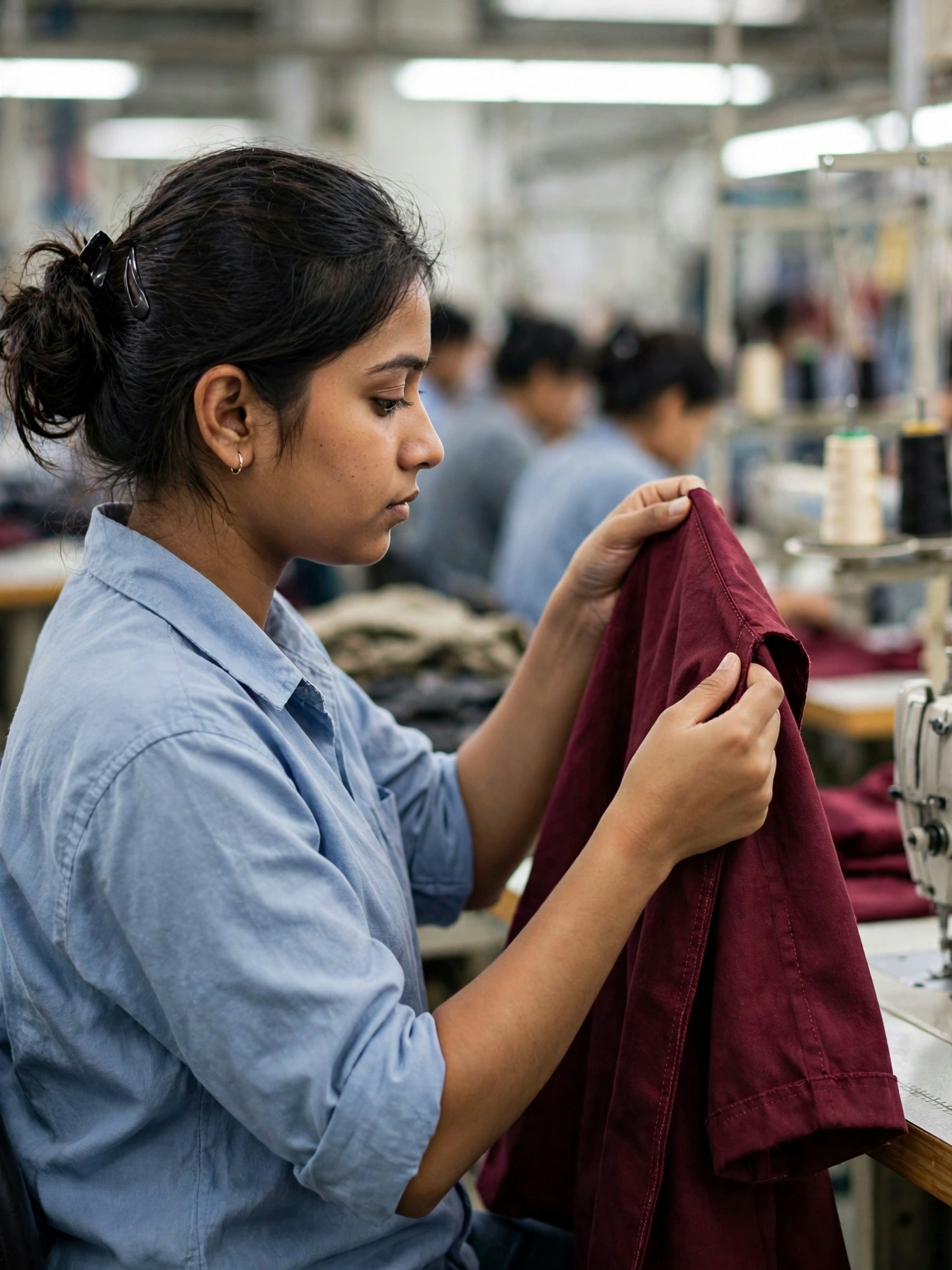
Our checkers work inside the line, not only at the end of it. Pieces are measured and inspected as they come off key operations – seams, stitching density, symmetry, label placement – so a drifting measurement is corrected on the next bundle, not discovered in a finished carton.
Faults found inline go back to the operation that made them, with the operator shown the standard again; the line chief records the pattern of faults daily. It is slower thinking than end-line inspection, and it is why finished-goods audits on our floor are usually a formality rather than an argument.
5. Finishing, Pressing and Final Preparation Under the Same Roof
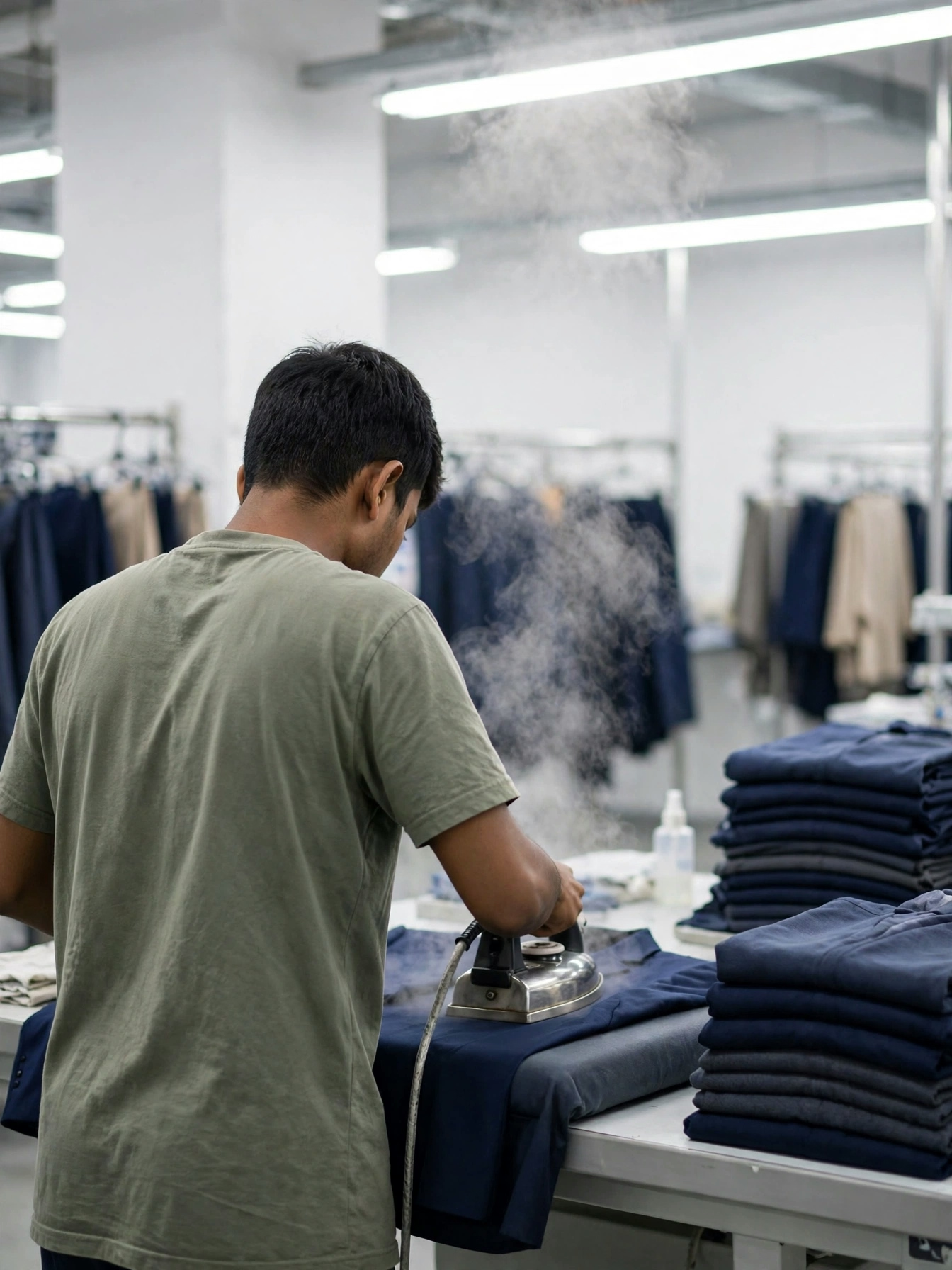
After sewing, garments move to finishing: thread trimming, final measurement, stain and needle checks, pressing to your presentation standard and folding to your retail or warehouse specification. Metal detection runs where a buyer’s standard asks for it, children’s wear included as routine.
Keeping finishing in house matters more than it looks. The people who press and fold your garments work to the same order file as the people who sewed them, so the presentation your kids’ clothing arrives with is the presentation approved at the buying desk – not whatever an outside finisher decided was close enough.
6. Production Updates With Photographs at Every Stage
You should never have to chase a factory for news of your own order. Our merchandisers send stage updates as the order moves – cutting started, line input, first output, finishing, packing – with photographs of your actual garments on our floor, so a buyer in Chicago or Copenhagen sees the same order the line chief sees.
Bad news travels at the same speed as good. If output slips against the plan, you hear it with the reason and the recovery steps while there is still time to protect your launch date – the standard our leggings and activewear buyers plan their calendars around.
Production Capacity for Clothing Buyers in the UK, Germany, Canada and Australia
Capacity is a promise about other people’s calendars, so we make it carefully. UK and German retail programmes run against fixed delivery windows into Felixstowe and Hamburg; Canadian buyers plan around winter selling seasons that forgive nothing; Australian programmes cross long sea transits that turn a small delay into a missed season.
Our answer is planning you can inspect: a line plan per order, output counted daily against it, and capacity for new programmes quoted from the floor’s real loading – never from hope. When the floor cannot take an order honestly, we say so at quotation stage and offer the earliest date we can defend, in writing. That honesty is deliberate: a defended date lets your warehouse, your freight forwarder and your marketing team plan around a delivery that actually happens.
How a Bulk Order Moves From Cutting Table to Packed Carton
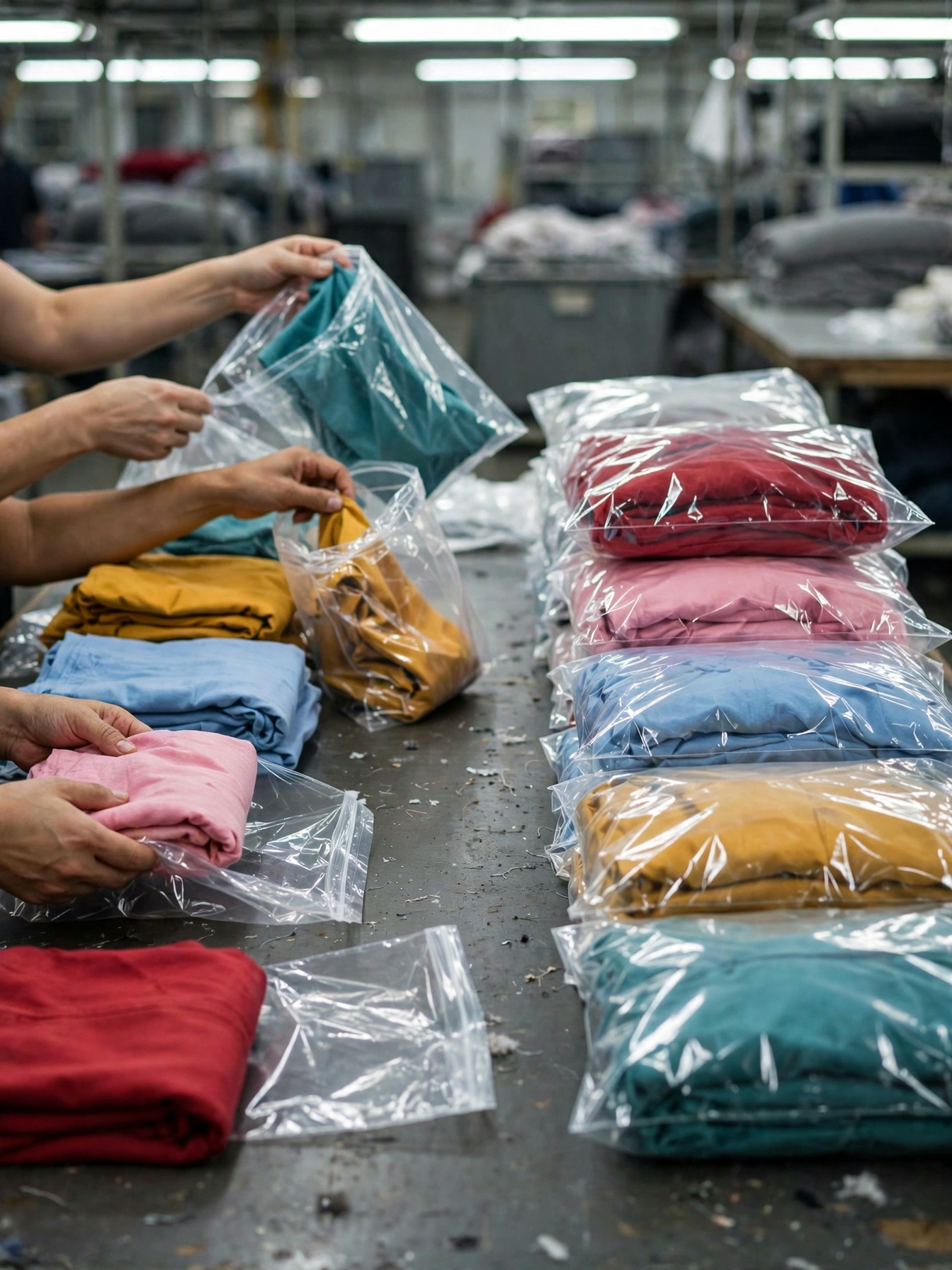
The journey is deliberately unglamorous: fabric inspected and rested, layers spread and cut, parts bundled and numbered, bundles issued to the line against the plan, garments sewn operation by operation with checks inside the line, then trimmed, measured, pressed, folded and packed to your carton specification with the packing list built from counted garments, not estimates.
Each stage signs the order file as it completes it, so the question “where is my order” always has a document behind the answer. The same file that started at sampling closes at shipment, and a copy of the key records – measurements, inline reports, final audit – is available to your quality team on request.
The People Behind the Lines and the Standards They Work Under
A garment is sewn by hands, and the standards those hands work under show in the product. Our operators are trained on the operations they run, paid through the bank on a fixed monthly date, and work in a factory organised around the codes of conduct our European and North American buyers audit against: safe exits and fire equipment, clean water and rest breaks, no child labour, no forced overtime.
Buyers are welcome to have their own auditors or nominated third parties walk the floor – the lines you see in your production photographs are the lines an auditor sees on the day, because there is only one way the floor runs.
Capacity Planning for Peak Season and Repeat Programmes
Every buyer’s calendar has the same cliffs: pre-Christmas delivery, spring range launches, back-to-school. We plan capacity backwards from those dates with our regular buyers first – repeat programmes reserve their line space when the range is costed, so a fleece order for Hamburg or a schoolwear programme for Montreal is planned into the floor before the peak arrives.
For new programmes we quote capacity from the live loading board and say plainly which weeks are tight. An honest “the floor can take this in the second week of the month” is worth more to a buying calendar than a cheerful promise the sewing lines were never going to keep. Buyers who share their range calendars early get the most from this: fabric, line space and finishing capacity can all be reserved in one conversation, months before the first sample is sewn.