
Our Business Model – Siatex Bangladesh Clothing Manufacturer
Siatex is neither a lone factory selling its own spare capacity nor an agent passing orders along. Our business model sits deliberately between the two: one accountable desk that develops, sources, manages and inspects your programme, manufacturing through our Dhaka base and a selected network of partner factories - and answers to you for all of it.
The model exists because of how buying actually fails. A single factory cannot sew every category well; a pure agent controls nothing when production starts. So the structure puts the control where the risk is: our own merchandisers and quality teams run your order day to day, while the manufacturing network gives the programme the right floor for each product.
Buyers in the USA, the UK, Germany, Canada and Australia work with us on this model, as do labels selling into France, the Netherlands, South Korea and Sweden. The sections below set out how it is built: the core idea, development, the network, management, quality, and what the structure gives a buyer in practice.


How a Clothing Manufacturer in Bangladesh Is Organised
The model has six working parts. Each is simple on its own; together they are why a programme can grow across categories and seasons without the buyer having to rebuild their supply chain every year.
1. The Core Idea: One Accountable Desk
Every order at Siatex is owned by a desk, not passed between departments or companies. The merchandiser who costs your style follows it through sampling, fabric, production and shipment, working from one order file that holds the approvals, the shade standards and the delivery promise. When you ask a question, the answer comes from that file, not from a chain of phone calls.
Accountability is the product. Factories in the network manufacture; the desk is responsible. If a fabric is late, a shade drifts or a line falls behind, there is exactly one place that owes you an explanation and a recovery plan – and it is the place you already talk to, as our merchandising page describes.
2. Development and Sampling Inside the Model
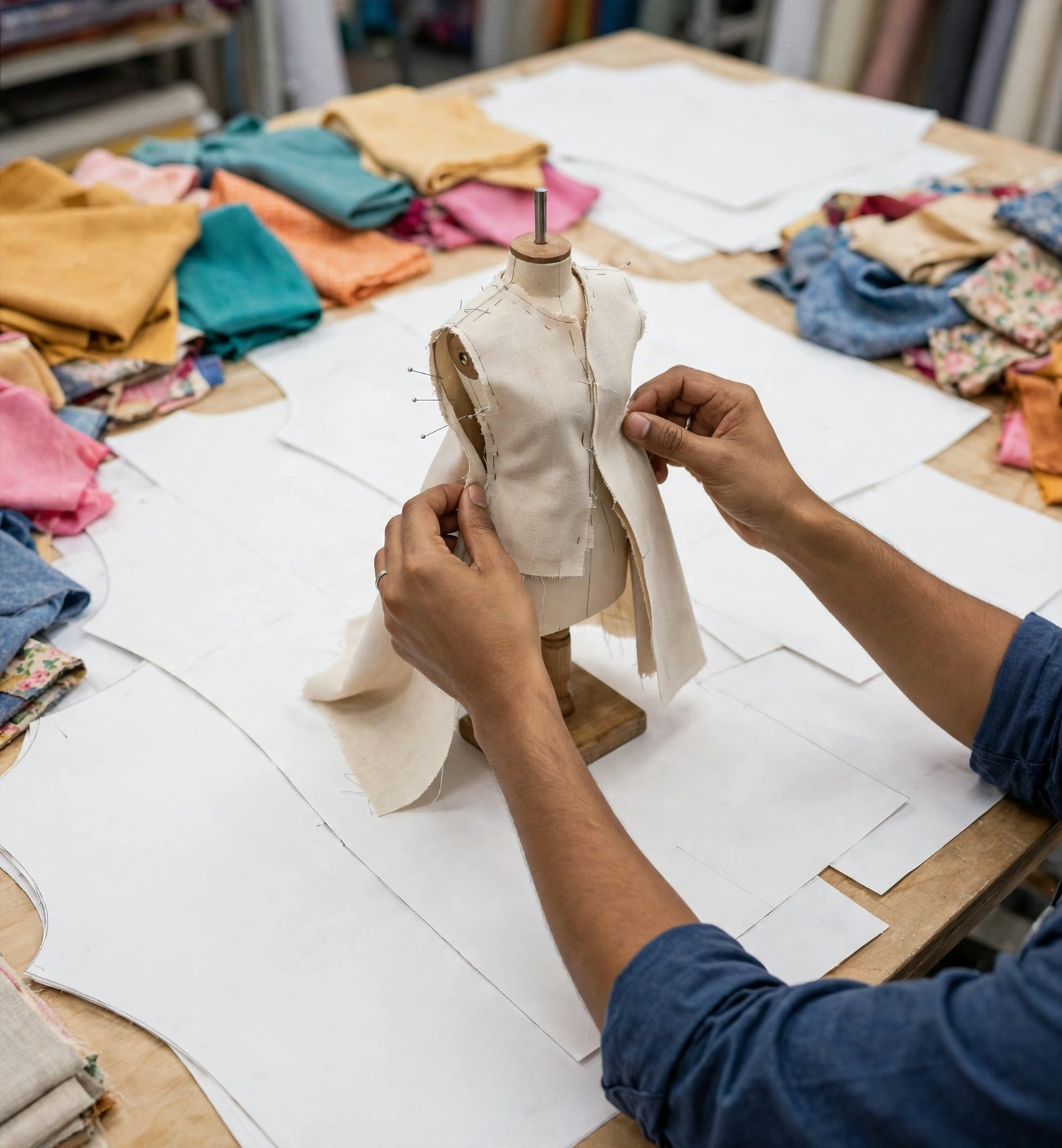
The model starts before production exists. Product development, pattern work and sampling are run by our own technicians, so the garment that gets costed is the garment that can actually be made – no sample sewn one way and bulk sewn another. Fabric and trim sourcing sit inside the same step, priced against live mill routes rather than catalogue guesses.
This is the same engine described on our full package production page, applied at company level: development is not a favour before the real work, it is the first stage of the work, and its records – patterns, samples, specifications – stay in your order file for every reorder that follows.
3. The Manufacturing Network: Dhaka Base Plus Partner Factories
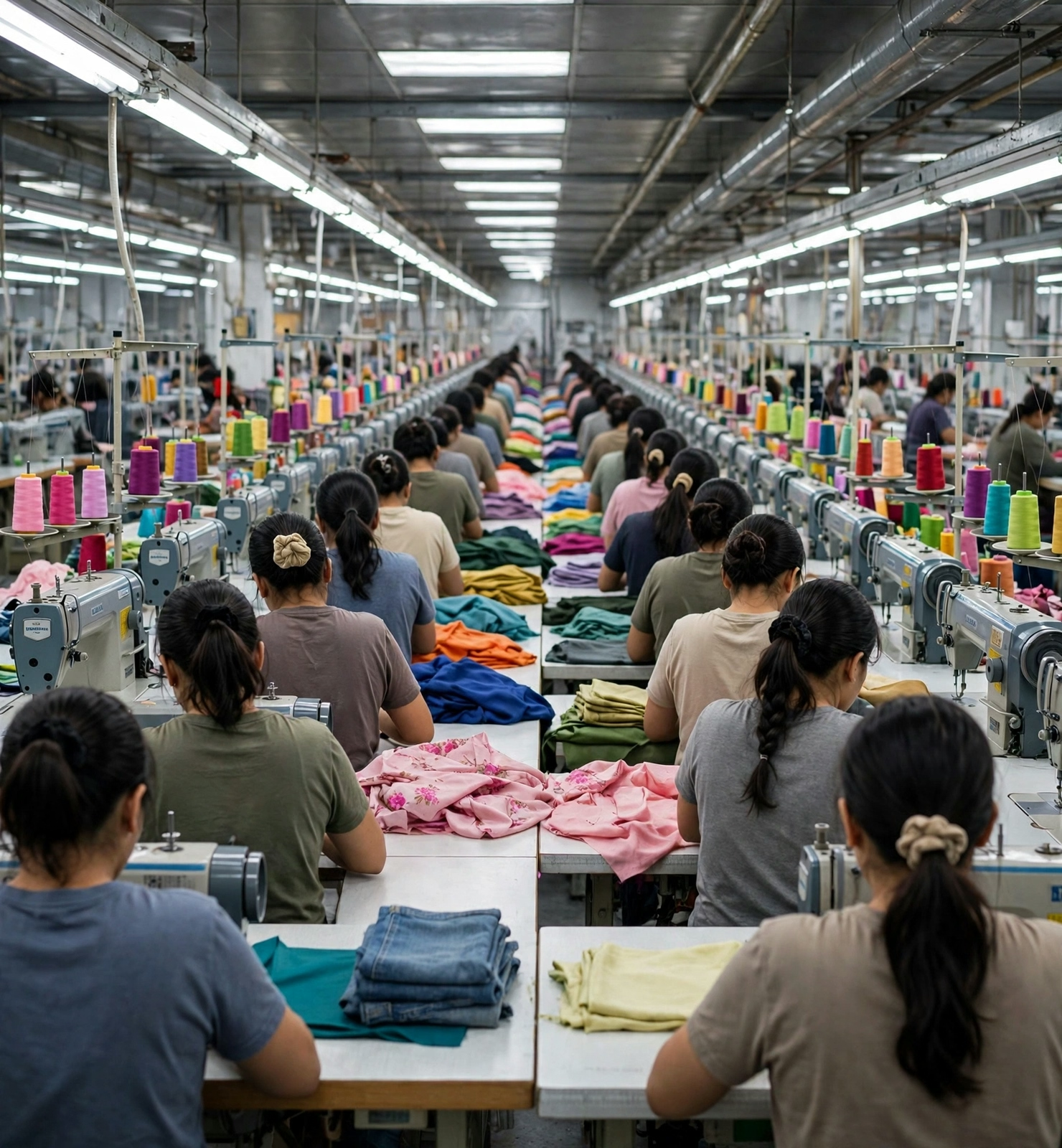
Manufacturing runs through our Dhaka base and a selected network of partner factories, matched to the programme: knit specialists for knit programmes, woven floors for woven, nightwear and volume lines where the category demands them. Selection is by capability and compliance record, and the relationship is long-term – a partner factory sews for Siatex buyers season after season, under our standards.
The network is what makes the model flexible. A buyer can run T-shirts, fleece and nightwear in one programme without forcing one floor to sew outside its strength, and volume can move across facilities when a season spikes. What never changes is who manages the floor: our merchandisers plan the production and our quality team checks it, whichever building the sewing happens in.
Matching is reviewed as programmes evolve: a partner floor that excels at fleece may not be the right home for a new woven line, and the desk moves work to where it will be sewn best rather than where it was sewn last season. The buyer never manages those moves – they are the model’s job, invisible except in the results.
4. Merchandising and Production Management
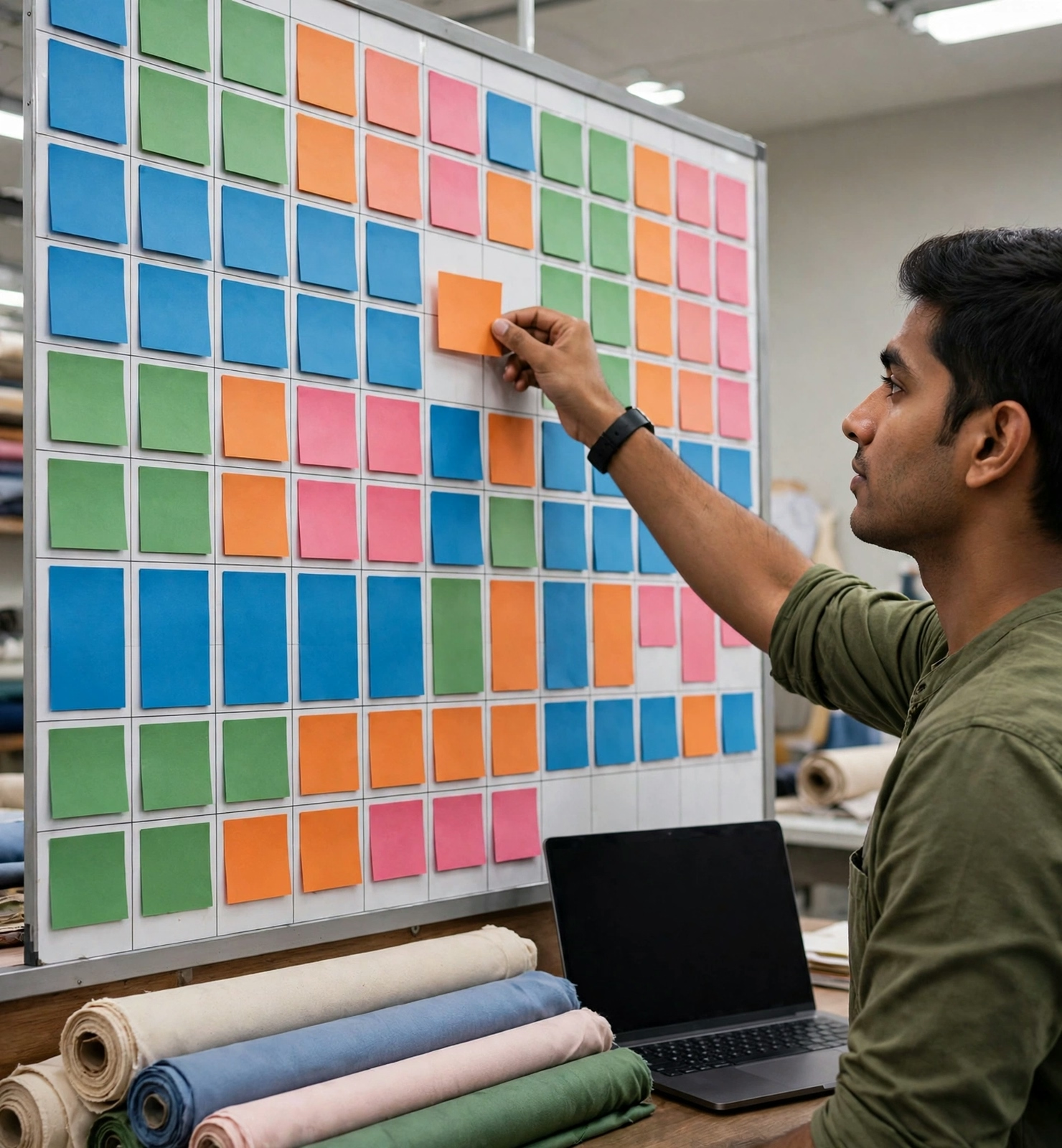
Between approval and shipment, the desk manages the order as a single timeline: fabric and trims booked against the production plan, lines scheduled, inline progress checked while correction is still cheap. The buyer sees the stages that matter – approval, materials in house, production start, inspection, dispatch – reported in writing as they happen.
Problems are surfaced, not hidden. If a mill slips or a construction detail fights back, the desk brings the fact, the effect on your date, and the worked-out alternative in the same message. That habit is the practical difference between a managed model and a forwarding one, and it is why our about us page promises communication as plainly as it promises garments.
5. Quality and Compliance Run by Our Own Teams
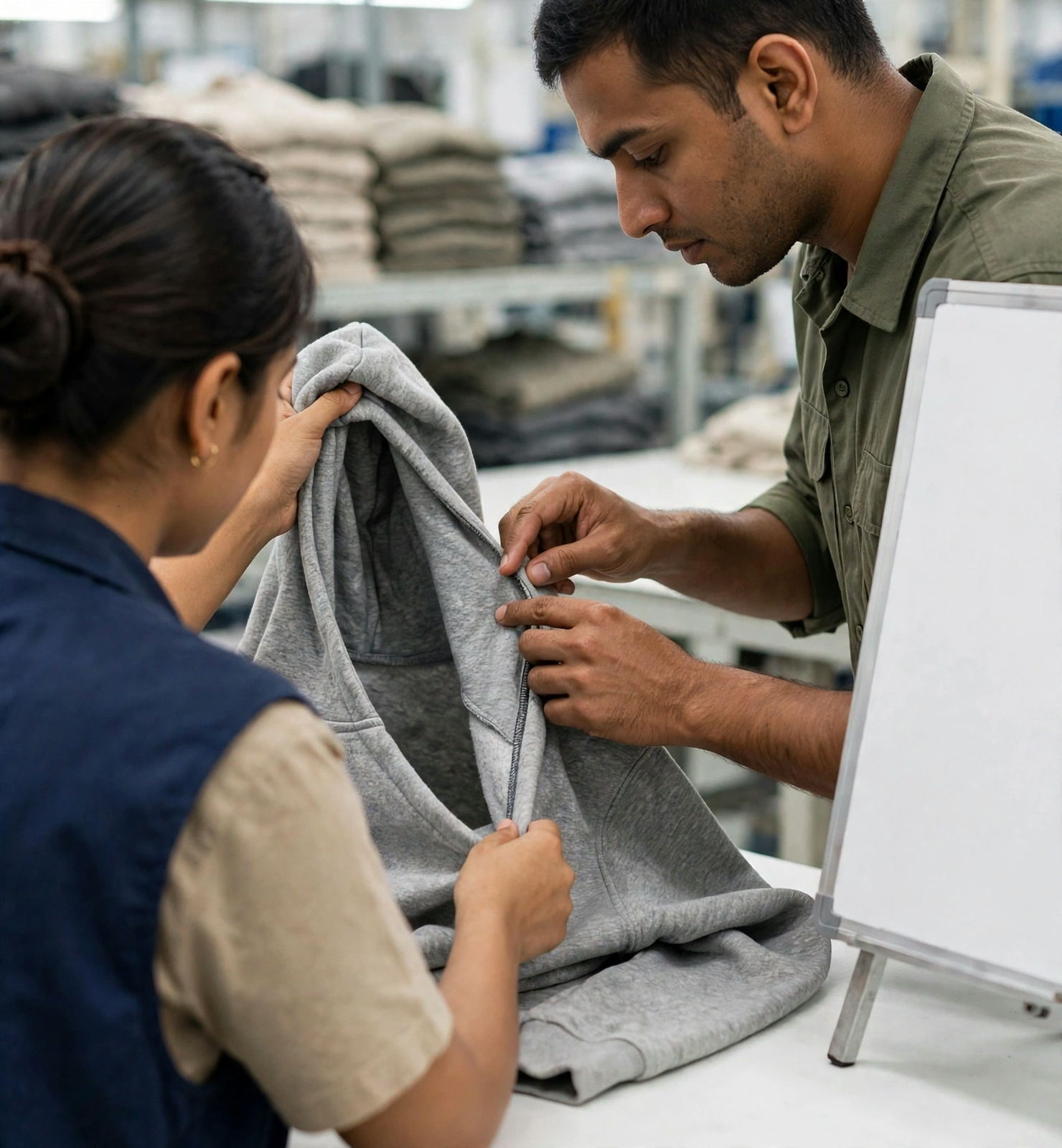
Quality is not bought in from the factory floor’s own checkers. Our quality assurance team inspects fabric on arrival, production in line, and finished garments before packing, always against the approved sample and specification in the order file. A partner factory’s internal checks are its own business; the Siatex inspection is the one your programme is judged by.
Compliance works the same way. Partner factories are selected on their compliance standing and audited against buyer requirements, and the market rules your garments must meet – labelling, fibre content, restricted substances, testing – are managed by the desk as part of the order, not left to chance at the port. Responsible sourcing is a selection discipline here, applied before an order is placed, not a claim made after it ships.
6. What the Model Gives a Buyer
In practice: one relationship covers development, sourcing, production, quality and shipment across knit, woven and nightwear programmes; capacity flexes with your seasons instead of capping them; costs are built openly from fabric, construction and finish, so you can see what you are paying for; and the standard of the approved sample is defended by a team whose only job is your order file.
The model suits buyers who want a manufacturing partner rather than a marketplace – brands and importers building ranges over seasons, who value a desk that knows their programme by heart. If that is the relationship you are looking for, the first step is a conversation through our contact us page: bring a style, and let the model prove itself on a sample.
Our Business Model for Brands in the USA, UK, Germany and Australia
Three questions test any sourcing model: why it beats the two simpler alternatives, how its costs stay honest, and where its limits honestly lie. This section answers all three the way we would across a table.
Why Not Just a Factory, Why Not Just an Agent
A single factory is the right answer for a single product sewn forever. Most private label programmes are not that: they span categories, weights and seasons, and a floor that sews jersey beautifully may sew nightwear badly. An agent solves the range problem and creates a worse one – when production starts, the agent owns nothing, controls nothing, and your order competes with every other order they forwarded that month.
Our model keeps the agent’s range and the factory’s grip. The desk contracts the capacity, stations its own people on the quality, and carries the delivery promise itself. Labels selling into France, the Netherlands, South Korea and Sweden run programmes on exactly this basis, through the same desk and the same order files.
How Costs Stay Transparent in This Model
A managed model invites one fair suspicion: is the buyer paying for layers? The defence is open construction. Every costing is built from named parts – fibre and fabric, trims, construction, finishing, packing – so you can see where money goes and decide which parts earn it. When a cheaper route exists, it is shown with its consequences rather than buried in a single number.
There is no second set of books and no margin hidden inside a fabric price. The desk earns on the service of running the whole programme properly, and says so. Buyers who have compared our costings line by line against factory-direct quotes understand the arithmetic quickly: the management is the product, priced in the open.
When the Model Fits, and When It Does Not
The model fits programmes: ranges that repeat, grow and add categories over seasons, where memory, standards and one accountable desk compound in value. It fits buyers who would rather judge a costed sample than manage five factories across three time zones themselves.
It fits less well where a buyer already runs their own in-country office with its own inspectors – there, a factory-direct route may serve better, and we will say so in the first conversation rather than after the first order. A model explained honestly, limits included, is the only kind worth building a supply chain on.