
Printing Services in Bangladesh
A print is where a plain garment becomes your product. Printing services at Siatex Bangladesh put your designs onto fabric the way this craft has always been done best in Bangladesh - by hand, screen by screen, down long printing tables - with the colour control, curing and checking that export programmes demand.
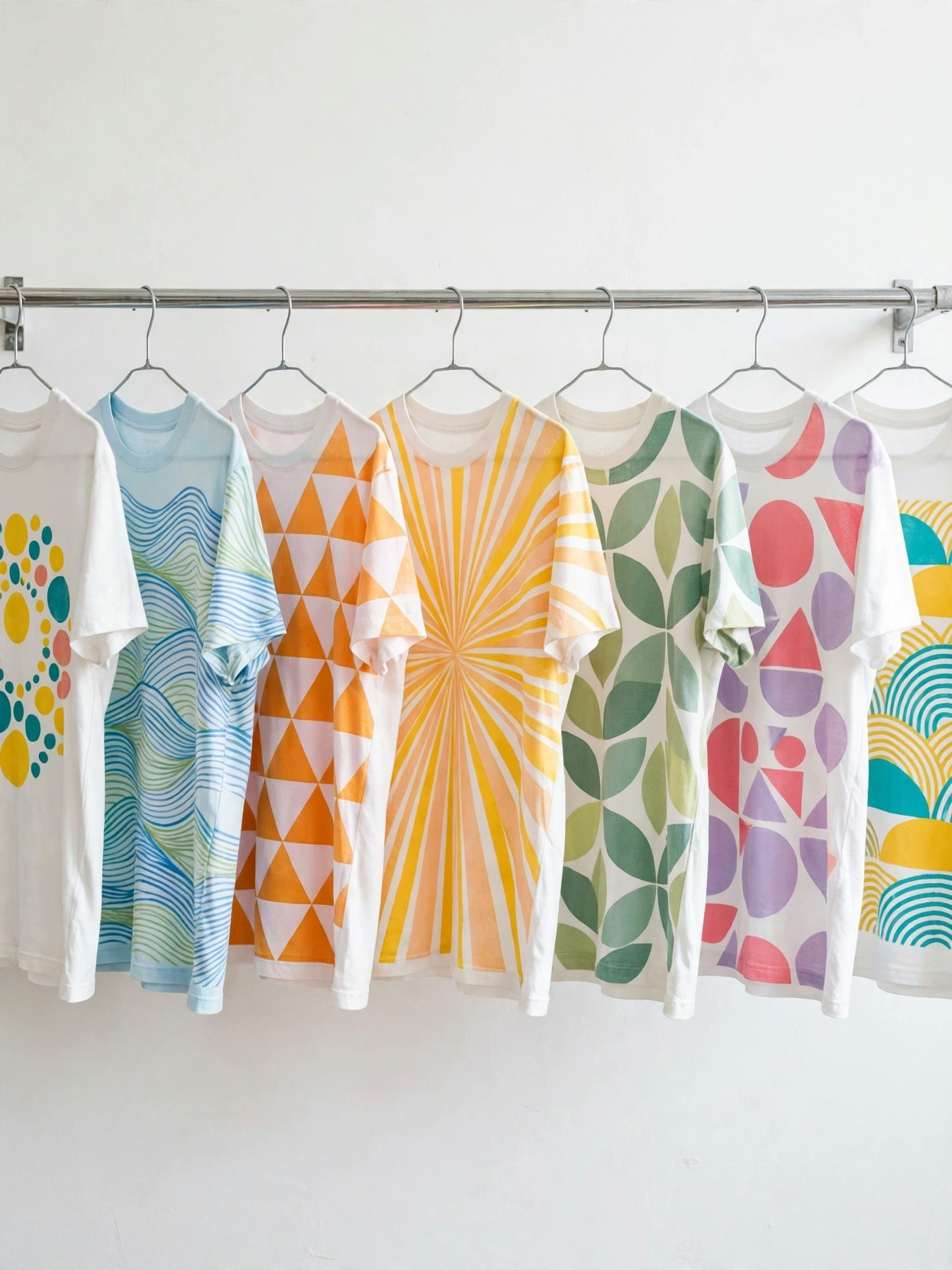
Send us your artwork and we handle the rest: film positives, screen preparation, ink matching to your colour standard, strike offs for your approval, and bulk printing by printers whose hands have done this work for years. Chest prints, back prints, sleeve prints, all over prints and panel printing, on tees, fleece, children's wear and promotional ranges.
We print for private label brands, importers and retail programmes in the USA, the UK, Germany, Canada and Australia, and for buyers selling into France, the Netherlands, Sweden and the UAE. Water based, plastisol, discharge and special effects - matched to your artwork, your fabric and your market's rules.
Garment Printing Services in Bangladesh for Private Label Brands
Hand screen printing survives in Bangladesh because it does things machines struggle with: large formats, soft hand feel, special inks, and a printer’s eye on every single pass. The sections below explain how our print floor works – the craft itself, the ink systems, artwork and screens, colour approval, and the quality checks that keep a print looking right after fifty washes, not just on delivery day.
1. Hand Screen Printing on Long Tables – Our Core Craft
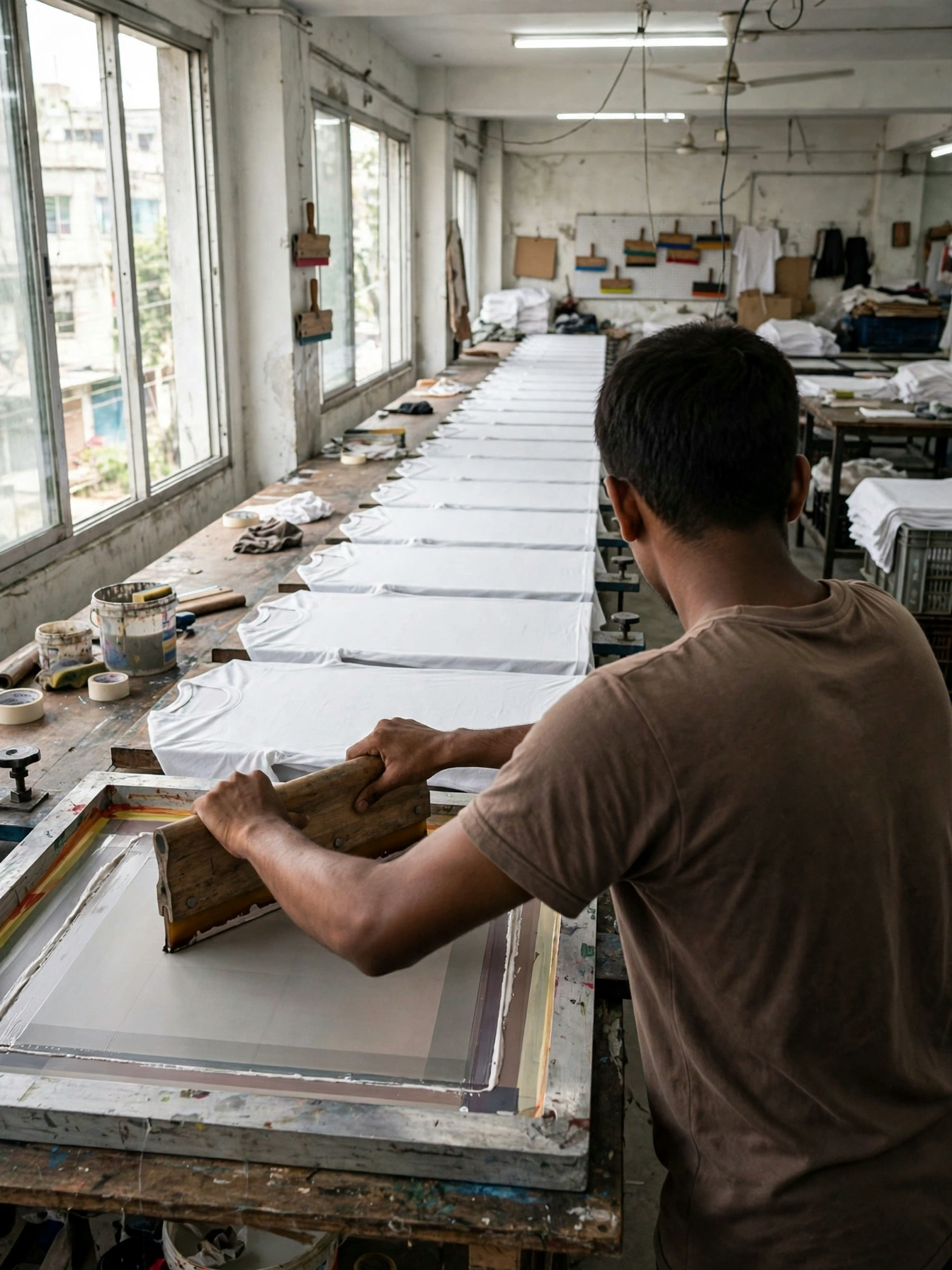
Our printing runs on long tables where garments and panels are laid in sequence and each screen is carried, positioned and pulled by hand with a squeegee – one pass per colour, the printer judging pressure and speed by feel. It is slow work compared to a carousel, and it produces prints with a character and a softness that buyers of hand printed ranges specifically ask for.
The format freedom matters as much as the feel: oversized prints, prints that run across seams, and all over designs that no machine platen accepts are everyday work on a long table. Programmes like our promo t-shirts use exactly this flexibility for bold, large format graphics.
2. Print Types We Run – Plastisol, Water Based, Discharge and Effects
Plastisol for opacity and bright colour on dark grounds; water based inks for the soft, breathable hand feel fashion ranges want; discharge printing that removes the garment’s dye and replaces it with your colour, leaving no ink film at all on suitable cotton grounds; and high-build, puff, glitter and foil effects where the design calls for them.
Ink choice is advised honestly at sampling: the system that suits your artwork, your fabric’s fibre and your market’s chemical rules – European programmes often specify water based or discharge systems for hand feel and compliance, and our sample development team strikes off in the chosen system so approval happens on the real thing.
3. Artwork, Film Positives and Screen Preparation In House
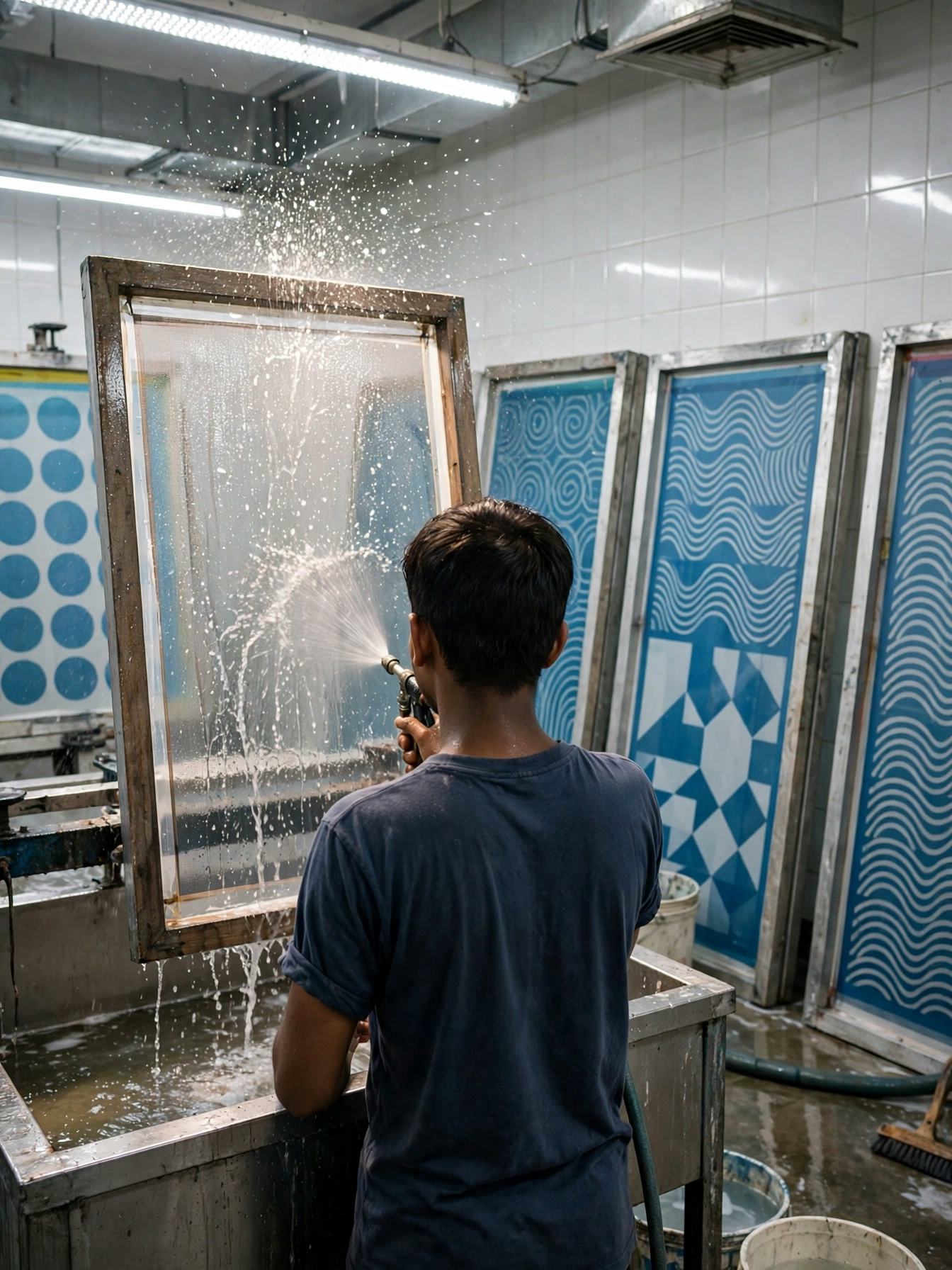
Your artwork is separated colour by colour, checked for the fine detail screen mesh can honestly hold, and output as film positives; screens are coated, exposed and washed out in house, with mesh counts chosen per colour and design area. Weak artwork is flagged before it becomes a weak print – lines too fine, gradients too fragile – with the adjustment suggested, not silently made.
Screens for running programmes are stored and maintained against your account, so a repeat order prints from the same screens, in the same positions, as the original – one reason repeat print programmes keep their look across seasons instead of drifting.
4. Colour Matching to Your Standard, Approved Before Bulk
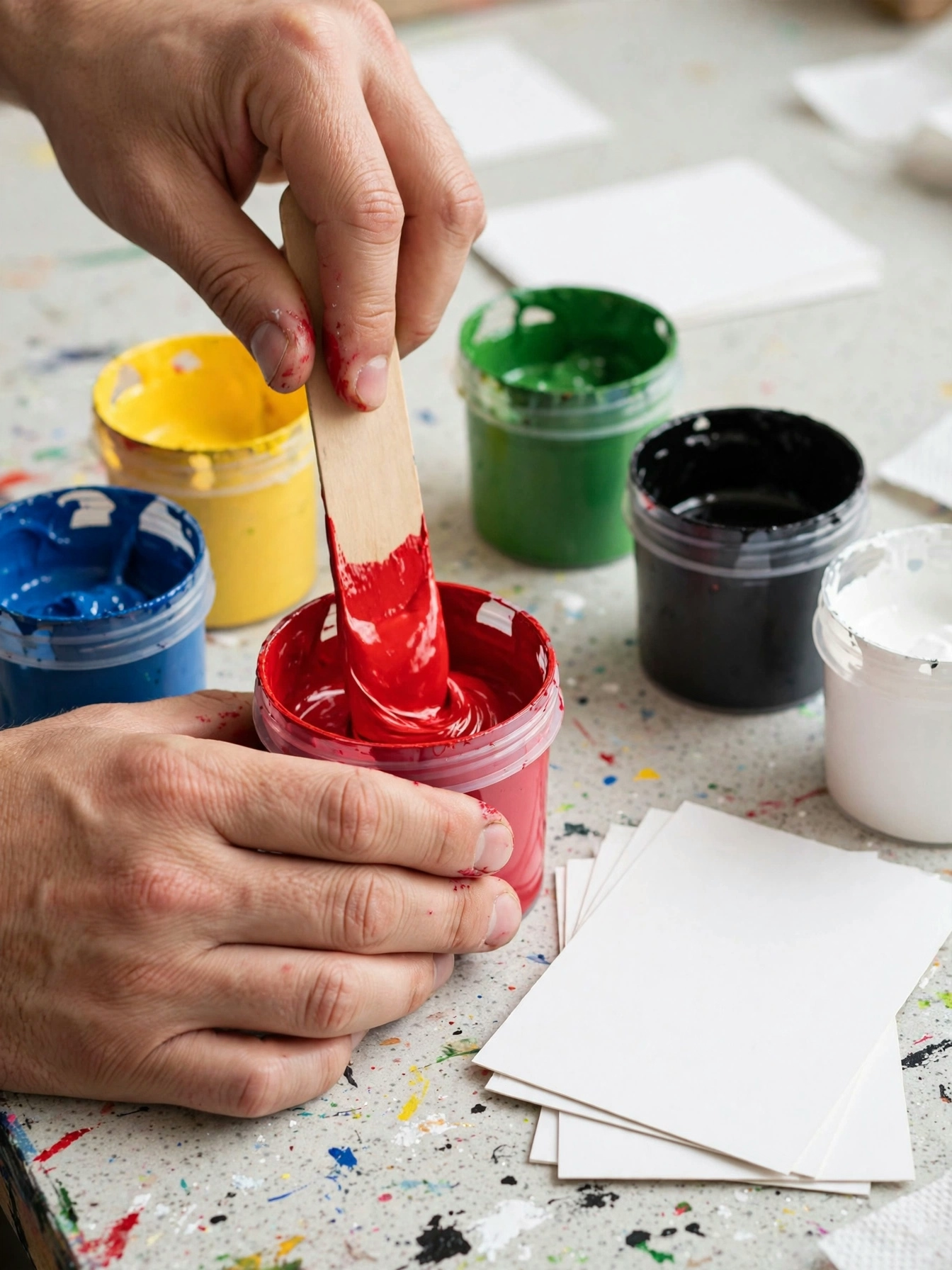
Print colour is matched to your Pantone reference or your approved physical standard, mixed in our ink kitchen and struck off on the actual garment fabric – because the same ink reads differently on white jersey, black fleece and a dyed ground. The strike off goes to you for approval before bulk, checked by us first under standard light.
Approved strike offs are filed with the ink recipe recorded by weight, so the bulk run mixes to the recipe, not to someone’s memory of the shade. On multi-colour designs, registration between screens is proven at the strike off stage, where a correction costs a screen – not at bulk, where it costs a programme like our kids t-shirts their calendar.
5. Print Quality Checks – Registration, Curing and Wash Fastness
A print can look perfect and still fail in the wash, so checking covers both: registration and sharpness on the table, print position and size against the specification per garment size, and – the part buyers cannot see – curing. Undercured ink cracks and washes out; our curing is temperature-checked and every programme’s prints pass a wash and rub test before bulk is released.
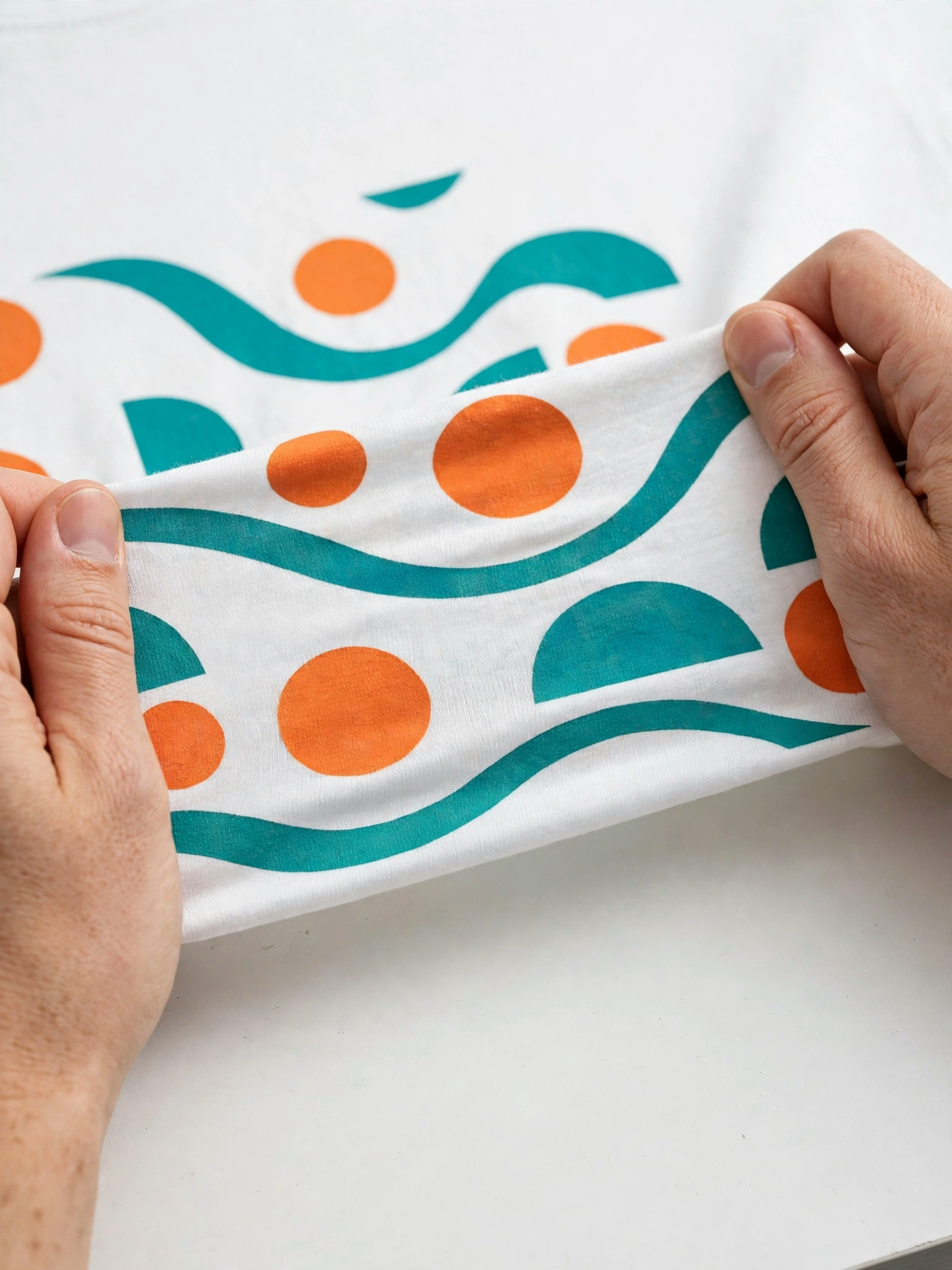
Stretch and crack tests on knitted grounds, crocking tests on dark prints, and hand feel assessment against the approved strike off complete the gate. These are the checks our quality team audits – the print is a quality item with its own standard, not a decoration applied after quality has finished.
6. Placement Prints, All Over Prints and Panel Printing
Placement prints are positioned by size-graded guides so a chest print sits correctly on every size, not just the sample size. All over prints are printed on open fabric panels before cutting, with the pattern room informed of the print’s repeat and direction, so garments are cut with the design running the way your artwork intended.
Panel printing before sewing also opens techniques closed garments cannot take – prints that continue across side seams, sleeves printed flat in full, and back-and-front compositions. A tank top with a print running over the shoulder is a panel decision made at development, and our team will always tell you which format your design truly needs.
Printing Support for Clothing Buyers in the USA, UK, Germany and Canada
Print approval at distance runs on strike offs and evidence: the strike off on your actual fabric, photographed and couriered; the ink recipe and Pantone references recorded; wash test results filed with the order. Your team approves what the bulk will genuinely look like, because the approval sample came off the same screens and the same table as the bulk will.
European buyers get ink systems chosen inside REACH and OEKO-TEX expectations; North American programmes get the phthalate and children’s safety considerations their rules require, with prints on children’s wear tested accordingly. One craft, run by hand in Dhaka, documented to the standard your market audits.
How a Screen Print Is Made, Pass by Pass
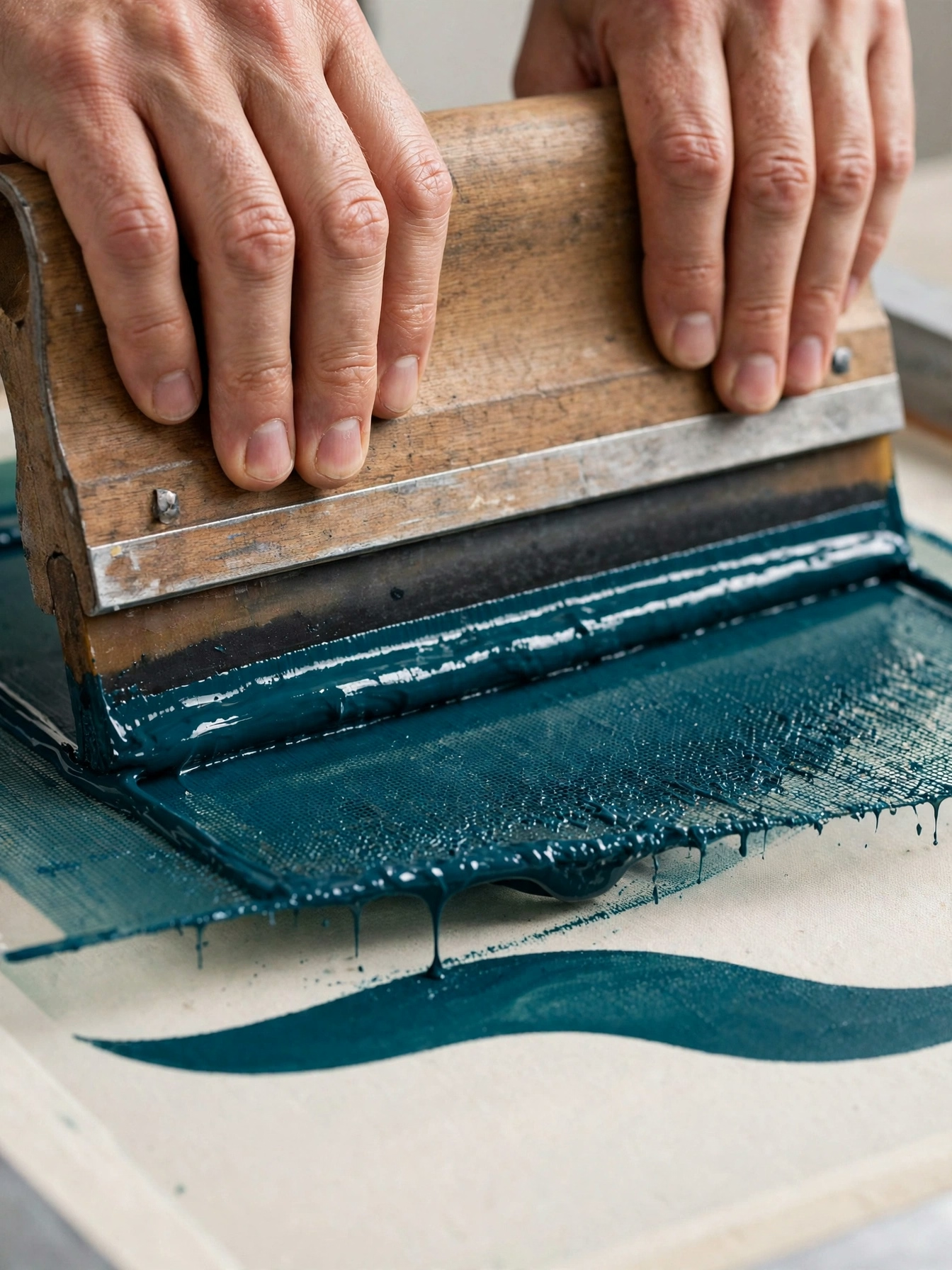
Each colour in your design lives on its own screen – a fine mesh stretched on a frame, coated with emulsion and exposed with your artwork so ink passes only where the design opens. The garment is laid flat and held on the table; the screen is positioned over it; ink is drawn across the mesh with a squeegee in one firm pass, and the garment moves down the table to dry before its next colour.
Multi-colour work is a sequence of such passes, each registered to the last by the printer’s marks and eye. Watching a long table work – screen down, pass, lift, move – is watching a rhythm built entirely of judgement: pressure, angle, speed and ink load, adjusted by feel for fabric and weather alike.
Water Based or Plastisol – Choosing the Ink for Your Garment
Water based inks soak into the fabric and cure soft – the print breathes with the garment and suits fashion tees, children’s wear and light grounds; on dark grounds they need discharge or a base to hold their brightness. Plastisol sits on the surface, opaque and vivid on any ground, durable and forgiving to print – the workhorse of promotional and graphic ranges, with a slightly firmer hand.
The choice is made with your artwork, fabric and market in front of us, and proven at strike off. Many programmes mix systems across a range – discharge on the dark fashion styles, plastisol on the promo graphics – and our advice is always which ink serves the design, never which ink is easiest to run.
Special Effects – Puff, Glitter, Foil and High Density Prints
Beyond flat colour, the table runs the effects that make a design retail: puff inks that rise with heat into a soft three-dimensional print; glitter and metallic inks for sparkle that survives washing when correctly cured; foil applied over printed adhesive for a mirror finish; high density printing that builds a sharp, rubberised relief; and crackle and vintage systems that age a print deliberately.
Each effect carries its own rules – mesh, cure, wash behaviour – and each is strike off tested and wash tested before it is offered on your programme. An effect that looks strong on delivery and fails in the wash is not an effect we will sell you; the sample you approve is the standard the bulk is held to.