
Minimum Order Quantity Requirements in Bangladesh
Every buyer asks the same first question: what is your minimum order quantity? At Siatex Bangladesh the honest answer is that there is no single figure, because the right minimum depends on the garment itself - its fabric, its colours, its sizes and the work inside it. This page explains how that minimum is set, so you can plan your order with the full picture before any price is discussed.
A minimum exists for practical reasons, not as a barrier. Fabric is dyed and finished in batches, lines are set up for a style, and trims are ordered against a quantity. Below a certain point those fixed steps stop spreading sensibly across the garments, and both price and consistency suffer. Knowing where that point sits for your product is simply good buying.
We confirm minimums order by order for private label brands, importers and retail buyers in the USA, the UK, Germany, Canada and Australia, and for labels selling into the Netherlands, Italy, Sweden and Japan. Share your product idea, tech pack or sample, and the minimum for that exact garment is worked out and explained - never quoted as a blanket number.


How Minimum Order Quantities Work for Private Label Clothing Orders
The sections below follow the same reasoning our merchandisers use on a real inquiry: what drives the minimum, how it changes between product types, and how a well-planned quantity protects your price, your quality and your delivery date.
1. Why There Is No Single Minimum for Every Garment
A plain T-shirt in a stock fabric and a washed, embroidered jacket are both “one style”, yet the work behind them is entirely different. The first can share fabric and trims with many other orders; the second needs its own dyeing, its own wash recipe and its own decoration setup. A single published minimum would be wrong for both – too high for the simple garment, too low to make the complex one properly.
That is why serious factories evaluate each inquiry on its own facts. When a supplier quotes one minimum for everything, it is either padded for the hardest case or set for the easiest and renegotiated later. Our approach is slower by one conversation and better for it: your minimum is calculated from your garment, and the reasoning is shared with you.
2. The Factors That Set Your Minimum: Fabric, Colours and Sizes
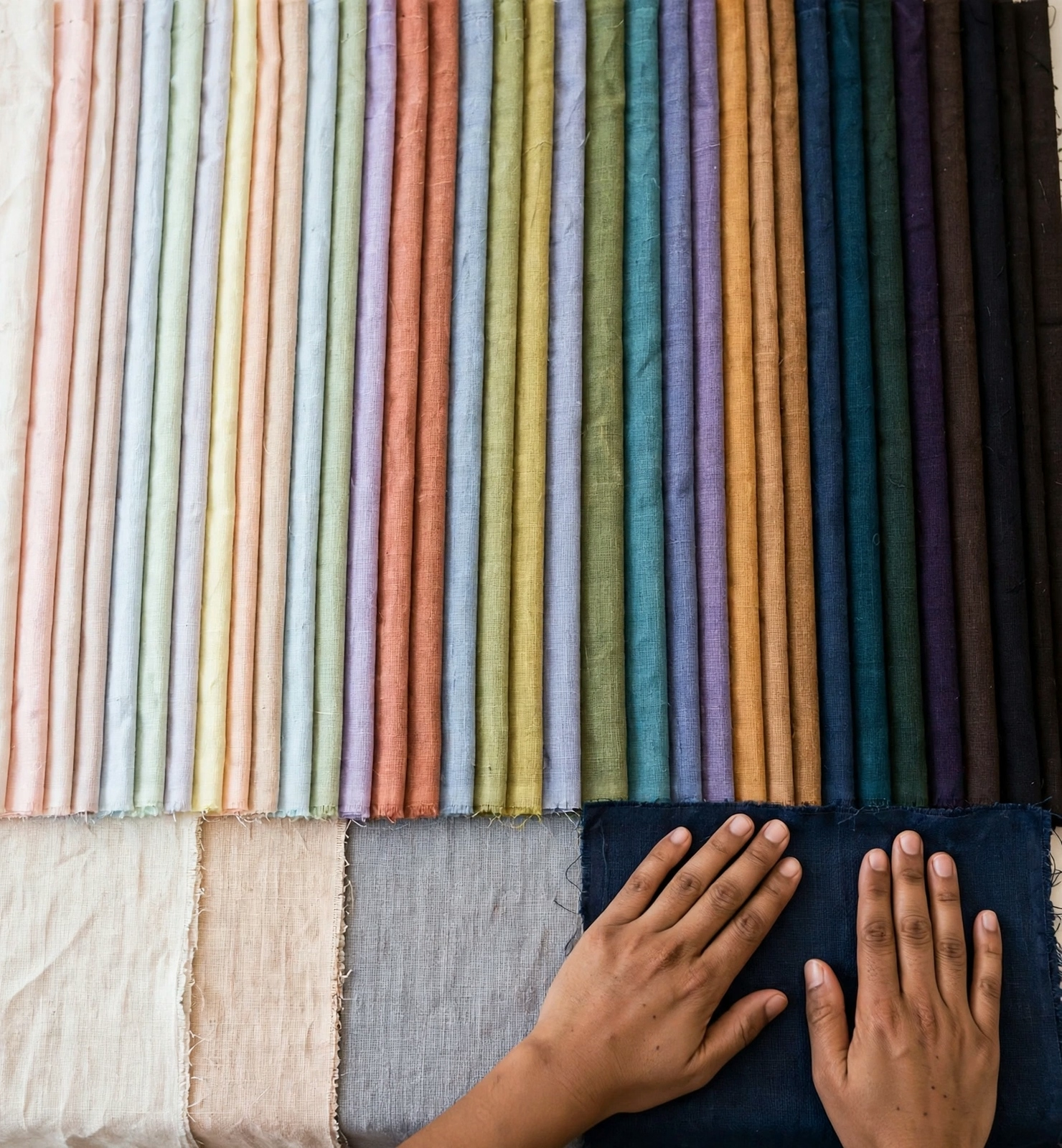
Fabric leads the calculation. A base cloth held in stock or woven from available yarn carries a very different minimum from a fabric dyed to your own shade, where the dye house works to its own batch sizes. Our fabric sourcing team checks which side of that line your fabric falls on before any figure is discussed, because it changes the answer more than anything else.
Colours and sizes divide the quantity further. An order split across many colours means each colour is its own small dyeing and cutting run; a wide size range spreads the same total thinner per size. Decoration adds its own setups – a print screen or an embroidery file is prepared per design, whatever the quantity behind it. None of this is a problem; it simply has to be counted honestly at the start.
3. How the Minimum Changes by Product Category
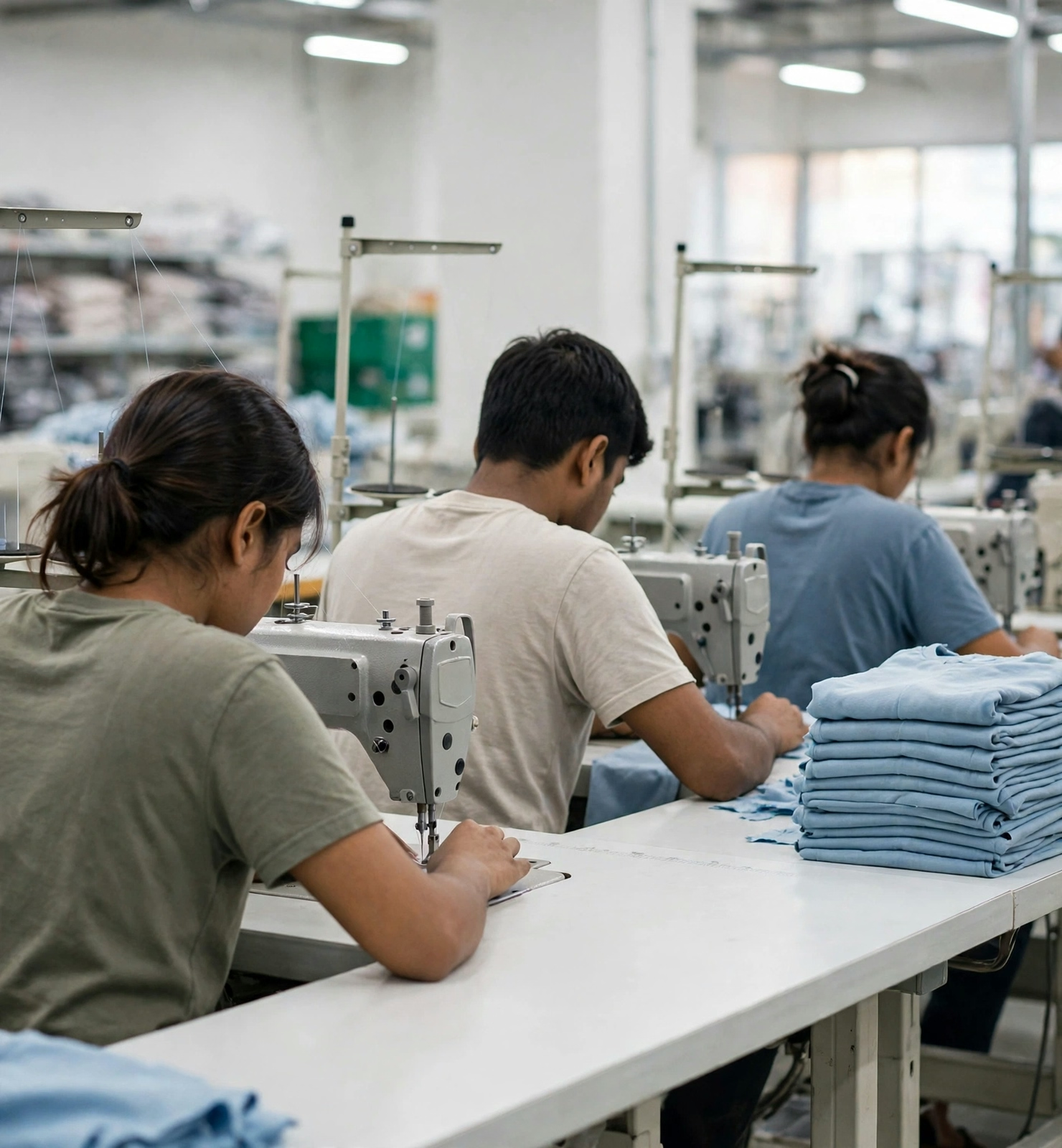
Basic knitwear – T-shirts, polos, fleece staples – usually sits at the flexible end, because the fabrics and trims are shared across the factory’s everyday work. Woven garments with washes, special finishes or tailored construction ask for more room, since each process step carries its own setup and its own trial before bulk.
Children’s wear adds safety testing and stricter packing rules into the quantity thinking, while sportswear can depend on technical fabrics sourced against the order. Private label collections balance the minimum across a whole range rather than style by style. The category matters less than the details inside it – which is why the evaluation in the last section looks at your actual product, not a category label.
4. Planning Quantities That Protect Your Price and Quality
A well-planned quantity is not the largest one; it is the one where the fixed costs of dyeing, setup and testing spread thinly enough that your unit price is honest and your quality checks stay meaningful. Our costing and pricing team shows this in the quotation: as quantities move, you can see what the garment costs and what the fixed steps add, and decide with evidence rather than pressure.
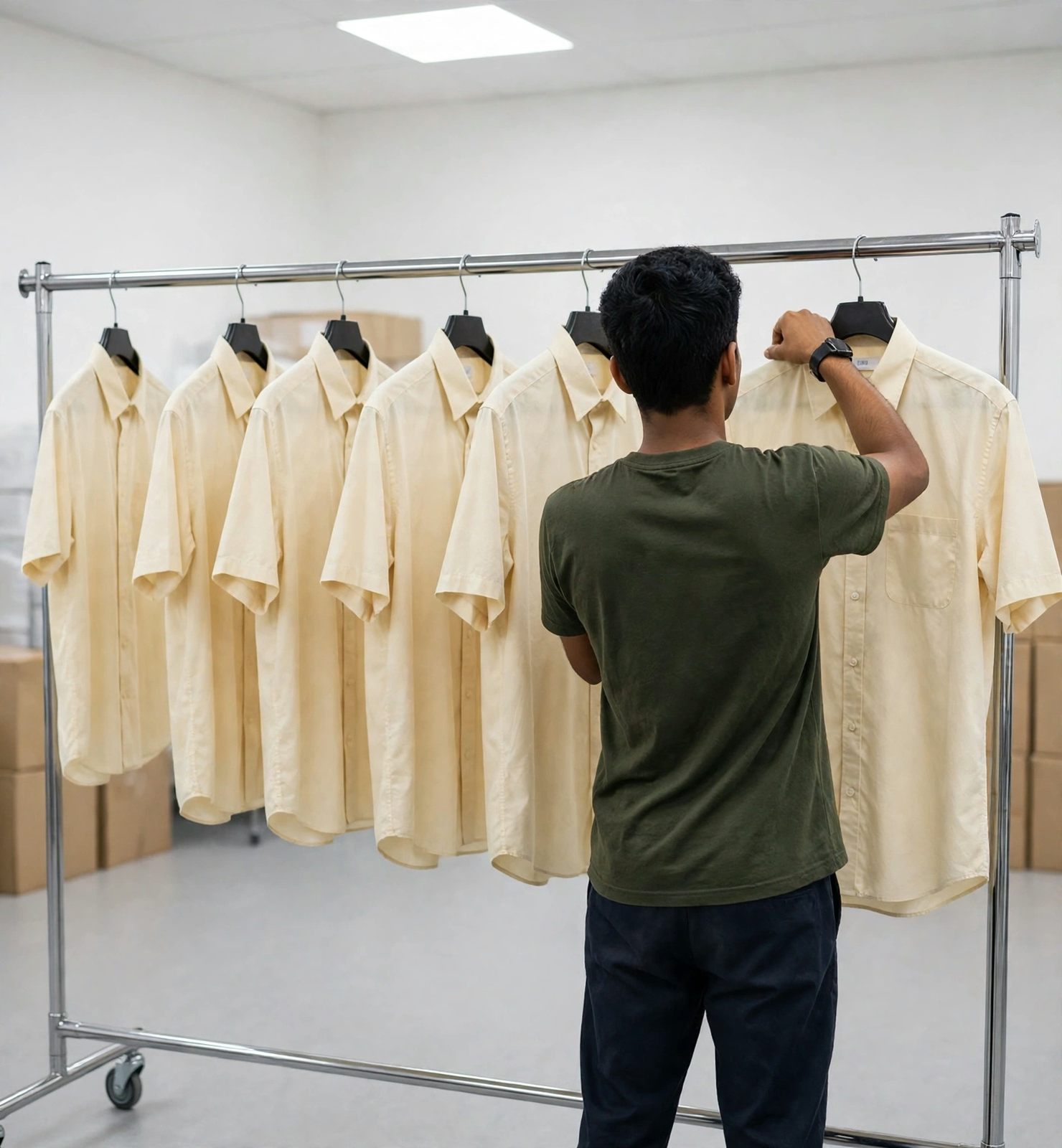
Planning also protects consistency. A dye batch matched to one order keeps shade steady across every garment; cutting and sewing in one planned run keeps measurement and workmanship even. Splitting the same style into fragments across months and batches is where shade drift and fit surprises creep in – a false economy buyers rarely choose twice.
5. Honest Options When Your Order Is Small
New brands and test ranges often start below the comfortable minimum for a fully custom garment, and that is a normal place to begin. The honest options are practical ones: choosing a stock fabric shade instead of a custom dyeing, simplifying a decoration, or grouping colours so each run stays efficient. Our full package production team will lay these choices out with their effect on price and lead time, so the smaller order is engineered rather than squeezed.
What we will not do is accept a quantity we know cannot be made properly and let the quality absorb the difference. If a request truly cannot work, you will hear why, and what the nearest workable shape is. Buyers building a brand for the long term consistently tell us that this honesty at the first order is why the second one comes back.
6. How We Evaluate Your Inquiry and Confirm Your Minimum
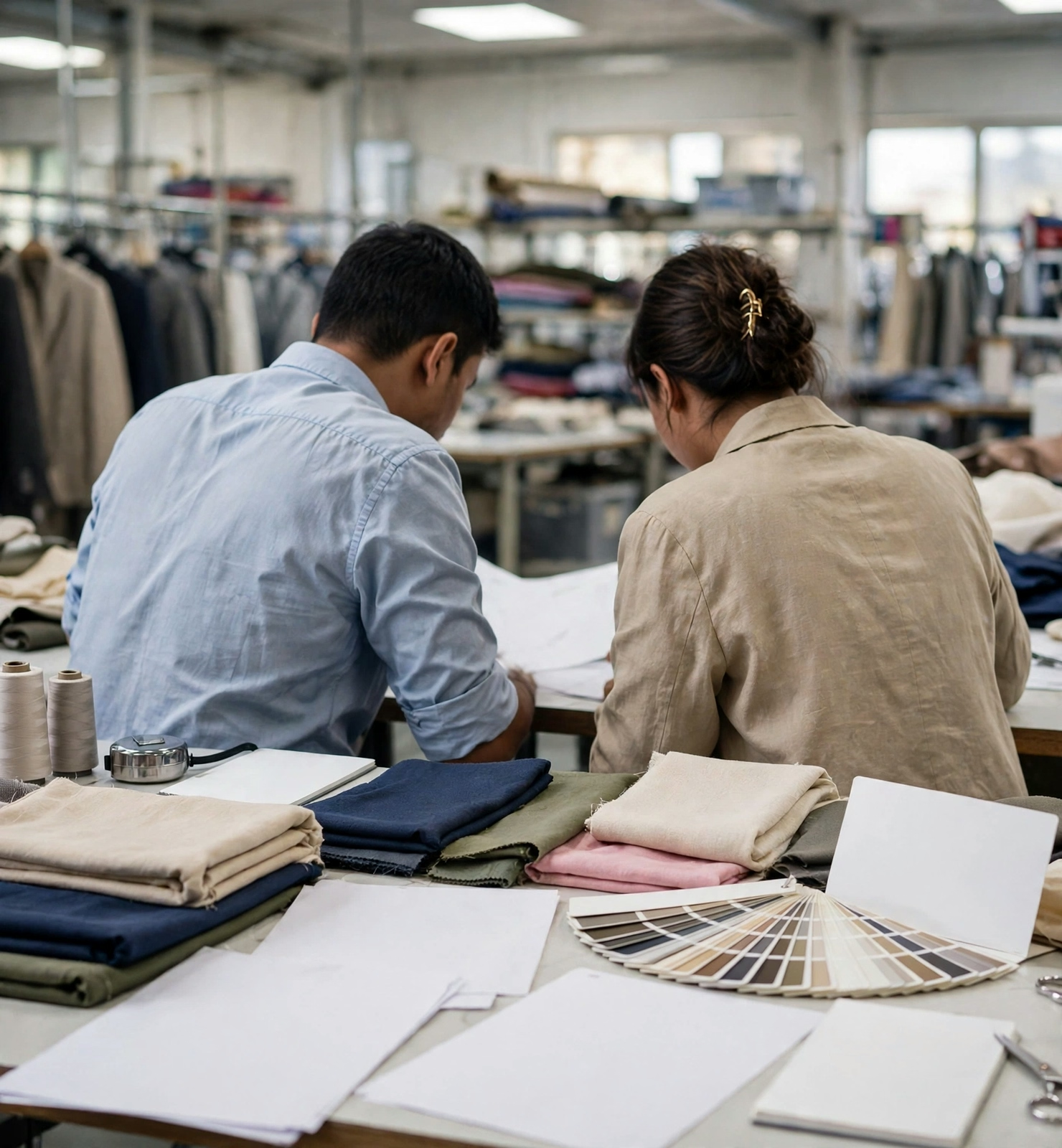
Send your tech pack, a reference sample or a clear description with your target colours, sizes and market. Your merchandiser checks the fabric route first, then the construction and decoration, then the packing and testing your market requires, and confirms the minimum for that exact specification – with the reasoning, not just the result. Where a sample already exists, the evaluation is faster and firmer, because the garment’s real consumption is known rather than estimated.
Once confirmed, the minimum is recorded on your order file alongside the specification it belongs to, so a repeat order or a new colourway starts from the same facts. If your range grows – and well-planned first orders usually do – the quantities conversation grows with it, from a position of evidence on both sides.
Minimum Order Quantity Planning for Buyers in the USA, UK, Germany and Australia
Quantity planning looks slightly different in every market we serve, because sizes, colour tastes and compliance duties differ. What follows is how the conversation usually runs for buyers building ranges with us season after season.
Trial Orders That Are Built to Grow
Many buyers in the Netherlands, Italy, Sweden and Japan begin with a deliberately contained first order: fewer colours, a proven fabric, the decoration kept simple. Run this way, a trial order is not a compromise – it is the same production discipline at a starter scale, and its records (consumption, shade, fit approvals) make the second order’s minimum lower-risk and often lower-priced per piece, because nothing has to be rediscovered.
A trial order also tests us, and we treat it that way. The same merchandiser, the same checking routine and the same document care apply as on a full programme, because the point of the trial is to learn what working together is really like – not to meet a smaller version of it.
Colour and Size Breakdowns, Decided Early
The commonest quantity mistake is agreeing a total first and splitting it later. A total that looks healthy can turn thin once it is divided across many colours and a full size curve, leaving each cell too small to cut efficiently. We ask for the breakdown at inquiry stage, shape it with you – sometimes a colour moves to a later drop, sometimes sizes are weighted to your real sales pattern – and the minimum you confirm already reflects the split.
One Conversation Before Any Costing
Because quantity decides so much of the price, we settle it before detailed costing rather than after. A short exchange about your product, your market and your growth plan lets the merchandiser confirm a minimum and a price that belong together, instead of a price that has to be reopened when the quantity changes. It is a small discipline that saves both sides the commonest frustration in garment buying.
Bring whatever you have: a tech pack if one exists, a selling sample if it does not, or photographs and measurements from a garment you already buy. The evaluation works from any of these starting points, and the sampling stage then turns the agreed quantity and specification into something you can hold.