
Garment Packaging Services in Bangladesh
Packaging is the last thing that happens to a garment in our factory and the first thing your customer touches. Done well, it protects the product through weeks of transit, presents the brand at its best, and arrives ready for the shelf or the warehouse rack. Done badly, it creases garments, breaks retail rules and quietly cheapens everything inside it. This page covers garment packaging at Siatex Bangladesh.
Packaging here is specified, sampled and approved like every other part of your order - not improvised on the packing table. Your packing method, materials and presentation are agreed in advance, a packed sample shows the finished result, and bulk packing follows that approved sample piece by piece and carton by carton.
We pack for private label brands, importers and retail buyers in the USA, the UK, Germany, Canada and Australia, and for labels selling into France, Italy, Denmark and Japan. From a single folded garment in a printed polybag to a full export carton programme, the packing floor works to your specification and your destination's rules.
Garment Packaging That Protects the Product and Presents the Brand
The sections below cover the packaging options we run, how branding is carried, how protection is built through the packing chain, and how the whole method is approved before bulk packing begins.
1. Packaging Options: Polybags, Tissue, Tags and Cartons
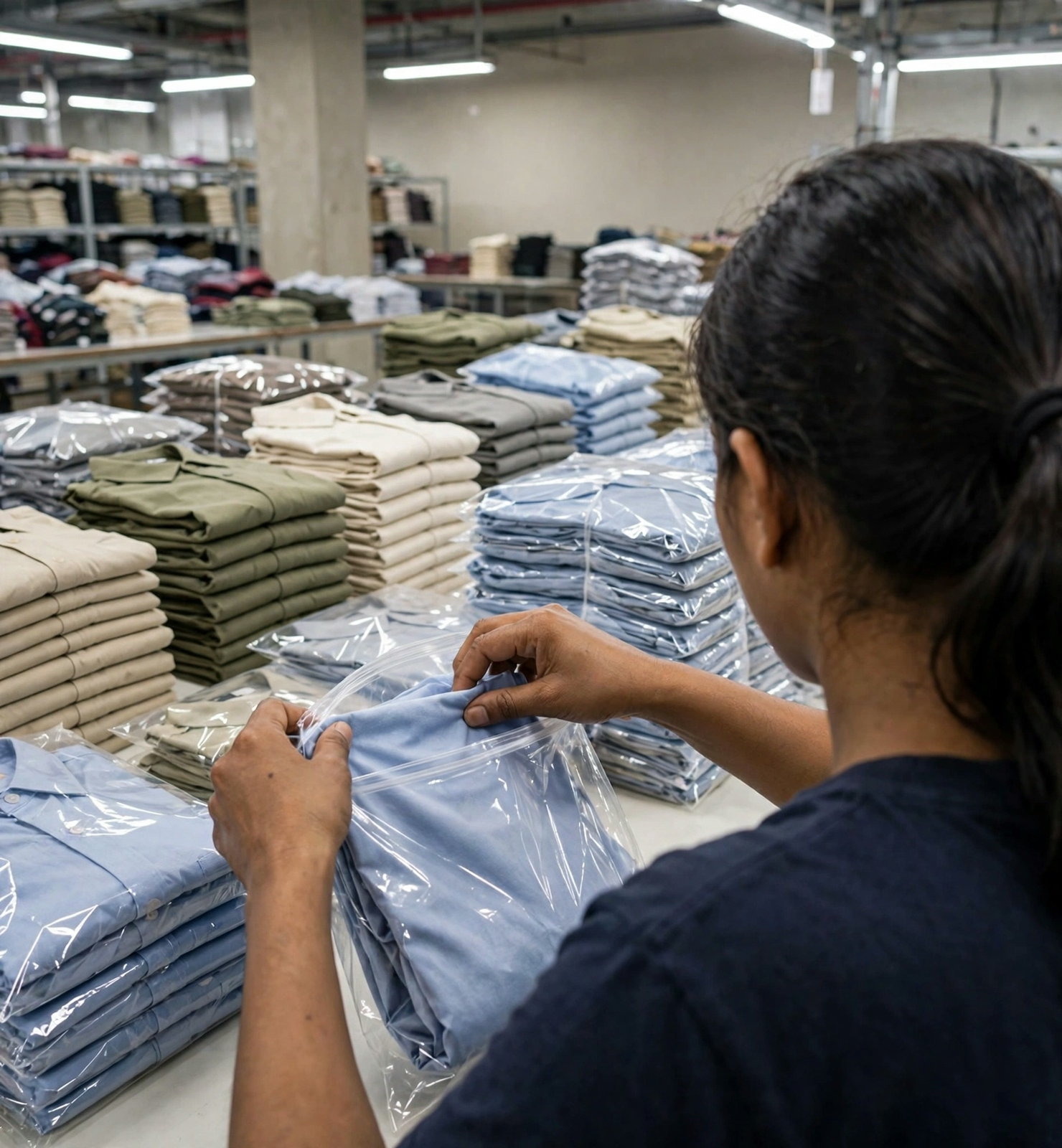
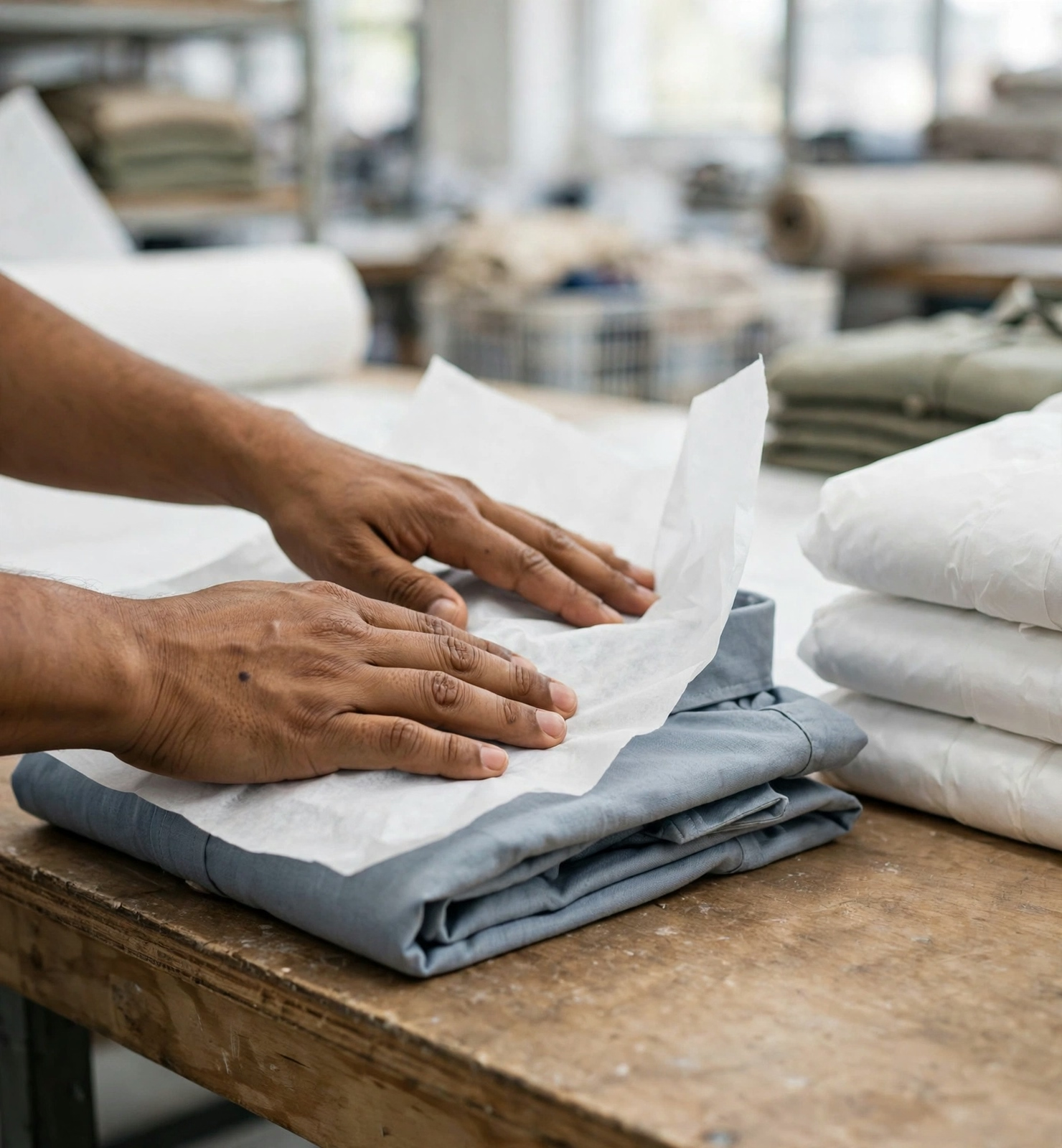
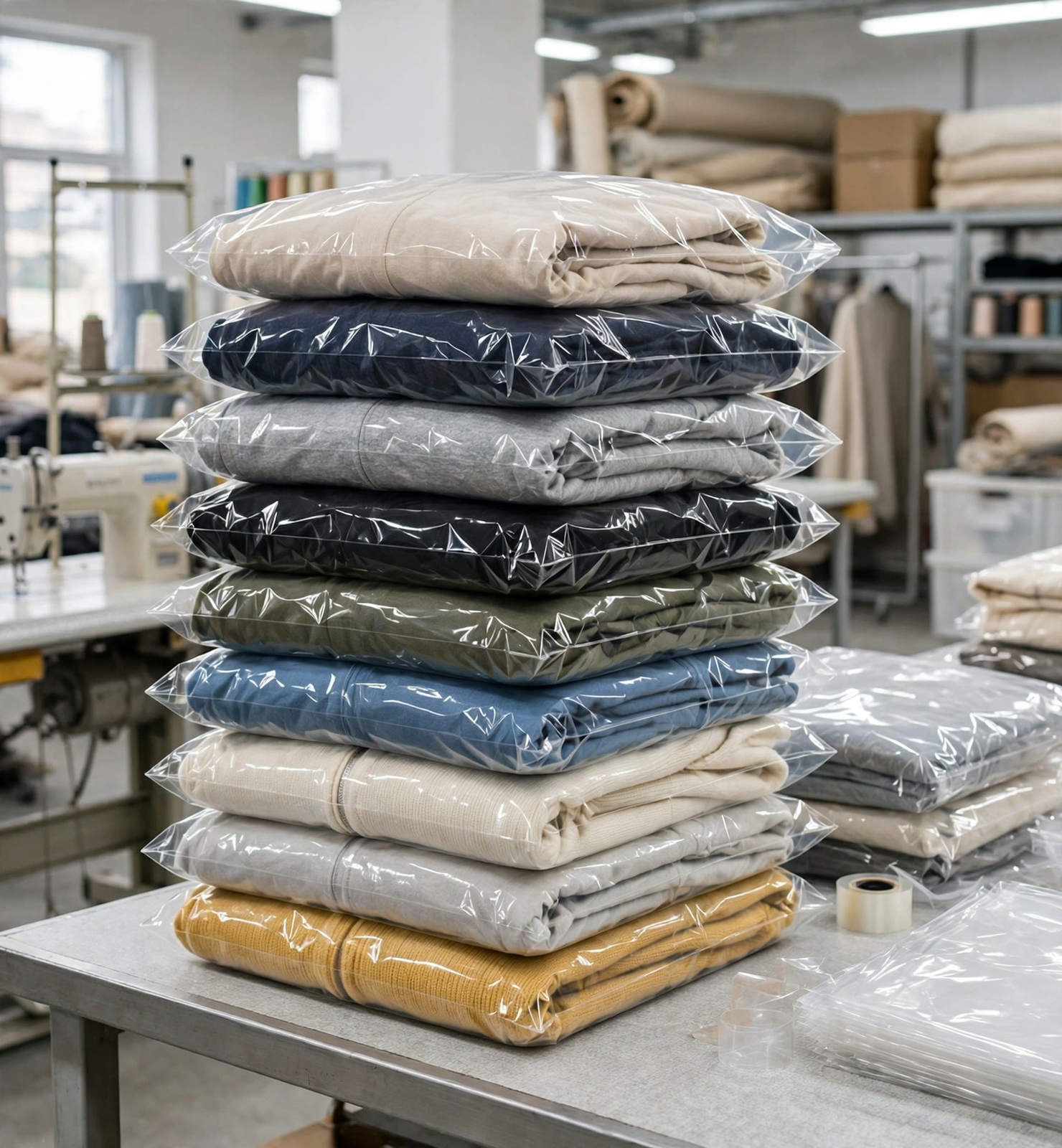
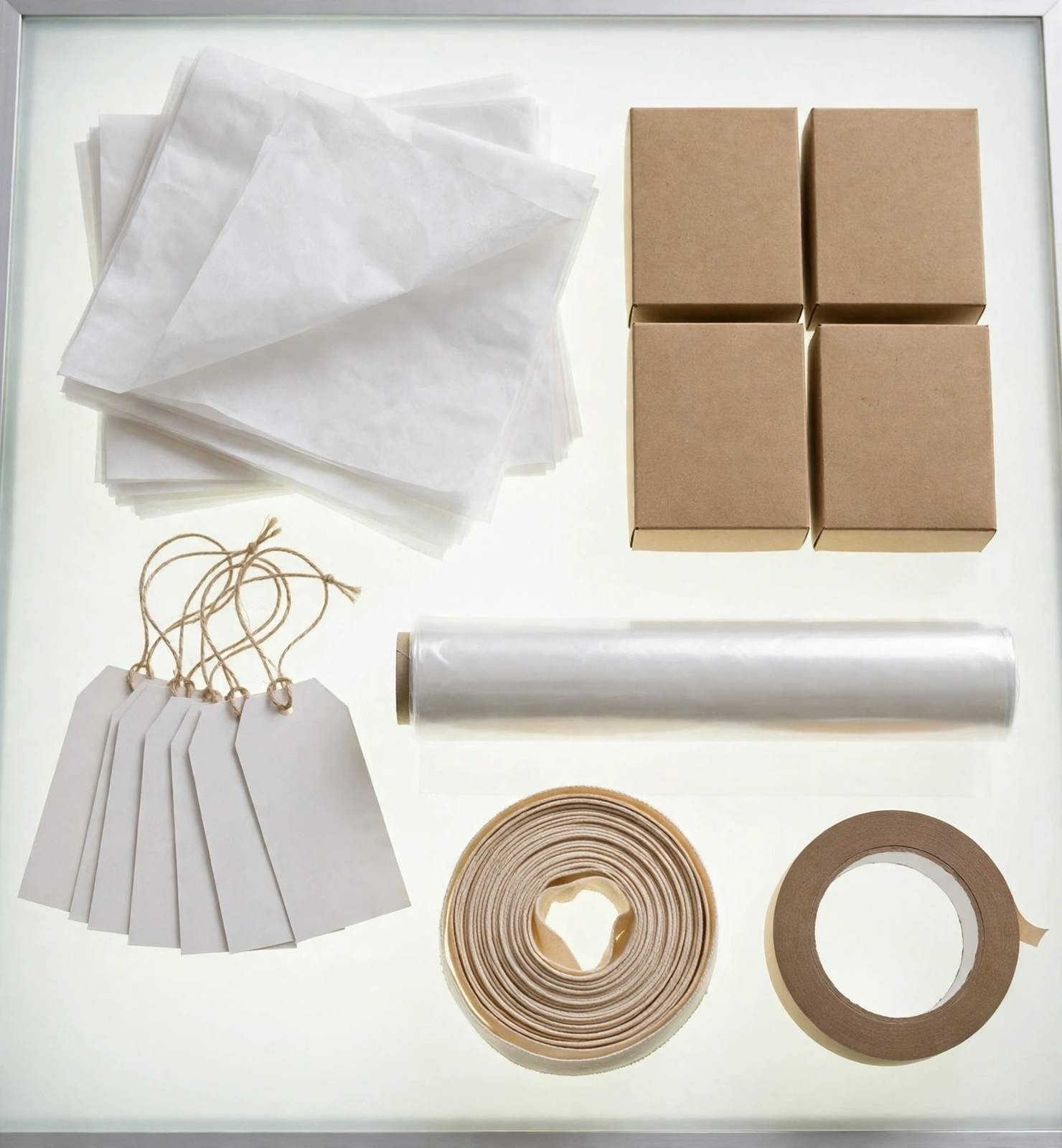
The core options cover the full journey. Garments are folded to your method, with tissue paper or board inserts where the presentation calls for them, and sealed into polybags – plain, printed, or biodegradable and compostable-input options where your programme specifies them. Hangtags, price tickets and barcode labels are applied at this stage, while the garment is in hand and can be checked as it is dressed.
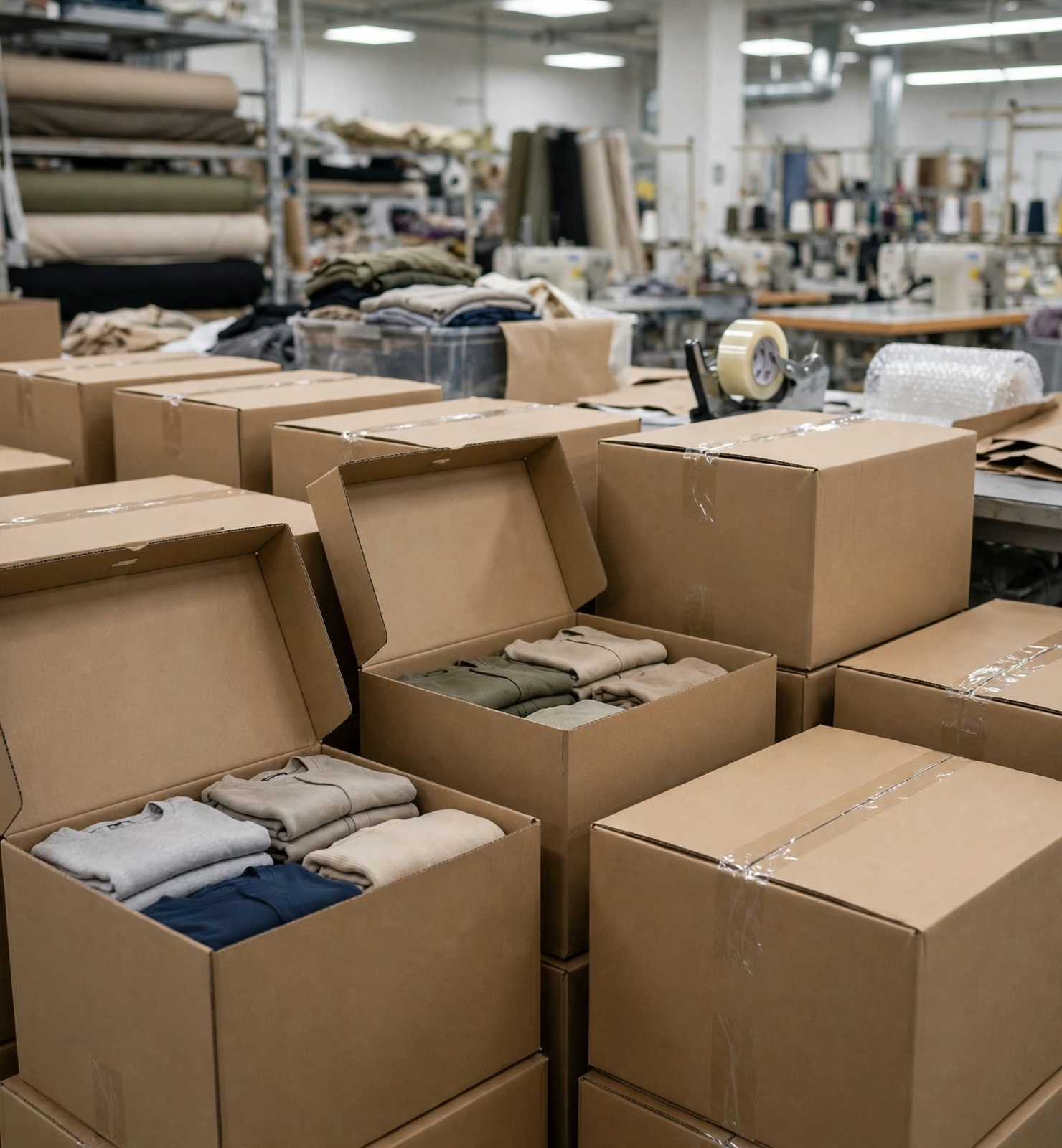
Packed pieces then move into export cartons: strong corrugated boxes sized to the product, lined where needed, and filled to your packing plan – solid colour and size, or ratio assortments across sizes and colours. Custom packaging designs, from printed polybags to branded boxes and inserts, are produced to your artwork through the same approval route as every other branded component.
Smaller presentation items sit in the same range: collar stands and butterfly clips that hold a shirt’s shape, tissue and acid-free wraps for delicate fabrics, and gift-ready boxes for premium lines. Each is a small decision with a visible effect, which is why each is sampled rather than assumed.
2. Branded Packaging and Retail Presentation
For retail brands, packaging is display. Printed polybags, branded tissue, logo cartons and insert cards carry the brand from the warehouse shelf to the customer’s hand, and their artwork follows the discipline of our trims work: sampled, approved by you, and recorded on file so a repeat season prints identically.
Presentation standards are part of the specification, not a matter of taste on the day: fold dimensions, tissue placement, tag position and bag sealing are all written down and shown in the approved packed sample. When your goods reach the store, they should look like a system – every pack the same, every garment sitting the way your display expects it.
3. Protection Through Transit: From Folding to Export Carton
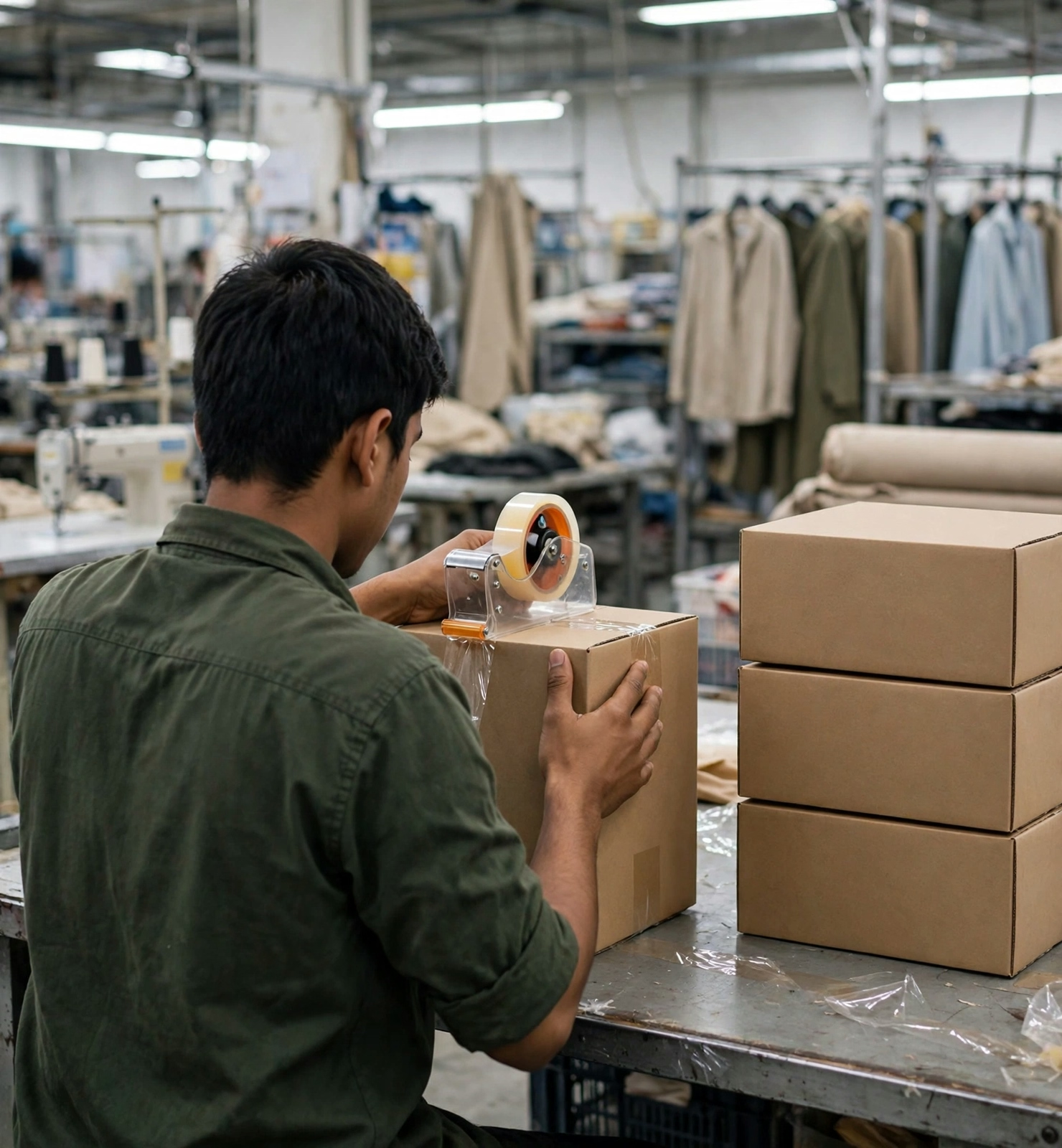
Most transit damage is decided at the packing table. Garments are fully dry and finished before bagging, folds are made to the packed sample so creases fall where they can recover, and cartons are filled firmly without crushing – underfilled cartons collapse in a stack, overfilled ones burst their seams. Moisture protection, from bag sealing to carton lining, is matched to the route and season your goods will travel.
Cartons themselves are specified for export work: board strength suited to stacking and container travel, taped and strapped to standard, and marked with your carton data so warehouses can identify contents without opening them. Our delivery and shipment team takes over from the sealed carton, but the protection that decides how goods arrive is built here, one fold at a time.
4. Eco Packaging Options, Stated Honestly
Lower-impact packaging is now a standard part of the conversation: recycled-content polybags, compostable-input bags, recycled carton board, paper tape and reduced-plastic packing methods all sit within normal sourcing reach. As with our trims, each option is quoted for what it actually is – the recycled content it carries, the standard it meets – and any certification behind a material is the maker’s own, available for you to check.
Honesty matters because packaging claims are printed where customers can read them. We will help you choose materials your market accepts and phrase claims your evidence supports, rather than dress a conventional pack in green language. Where a destination restricts certain plastics, the alternative is planned into the specification at approval, not substituted in a hurry at the packing table.
5. Labelling, Barcodes and Destination Rules
Packaging carries rules as well as products. Polybags for several markets must carry printed safety warnings; barcode and price tickets must match your system data exactly; carton marks must agree with the packing list and the shipping documents. Our packing floor works from your data with a check at application, because a wrong barcode found at your warehouse costs a relabelling operation, while the same error caught here costs a reprint.
Final inspection includes the pack as well as the garment: our quality assurance audit samples finished cartons, opens them, and verifies garment, fold, bag, tag, ticket and carton data against the specification before release. Packaging faults found at this stage are corrected inside the factory, where they are still cheap to fix.
6. Packaging Inside the Order: Specification, Approval, Packing
The process starts in your tech pack or packing instruction: fold method, bag type and size, tissue and inserts, tag and ticket placement, carton dimensions and the packing plan for sizes and colours. Where any element is missing, your merchandiser agrees it with you before bulk – the packing stage of a full package production programme holds the whole method in the one order file.
Approval is a physical packed sample, made with the real materials on the real garment, judged by you alongside the garment samples. Once approved, the packing line works to that sample, station by station – folding, dressing, bagging, ticketing, cartoning – and the finishing stage covered by our trimming and accessories team feeds it garment by garment. The pack your customer opens was decided by you, not by the end of a busy line.
Garment Packaging for Clothing Brands in the USA, UK, Germany and Australia
Three packaging questions come up in most programmes: how mixed cartons are planned, how e-commerce orders differ, and how the pack stays identical across reorders. This section answers them the way our packing floor does.
Ratio Packing and Assortment Planning
Many orders ship as pre-packed assortments: cartons containing a planned mix of sizes and colours, ready to flow straight into a store network. Ratio packing is exact work – the mix in every carton must match the plan, because a store that opens a carton trusts its contents.
Our packing line works assortment cartons against a written carton plan with a count check at sealing, and the packing list that travels with the shipment is built from what was actually packed, carton by carton. Labels selling into France, Italy, Denmark and Japan run the same system through their distributors, and a mixed carton is never sealed on trust alone.
E-Commerce Packaging: Ready for the Parcel Network
Online orders punish weak packaging differently: individual garments travel alone through parcel networks instead of resting inside a protected wholesale flow. E-commerce packing therefore leans on stronger individual bags, cleaner folds that survive a mailer, and brand presentation that works at a doorstep rather than on a rail.
Programmes can also be packed at our end into your mailer-ready units, so your fulfilment centre handles a finished, scannable pack instead of a garment. Returns handling benefits too: a pack that opens cleanly and reseals simply comes back in better condition. Tell us the channel mix at specification stage and the packing method follows it.
Consistency Across Repeat Orders
A pack that changes quietly between seasons – a thinner bag, a different fold – is noticed by warehouse teams and loyal customers alike. The guards are familiar ones: the approved packed sample kept on file, materials and suppliers recorded by name, and carton audits that compare current packing against the standard before release. Reorders therefore open the same way the first order did, which is precisely the point of treating packaging as a specification rather than a habit.
When you do change the pack – a refreshed print, a new box size, a move away from plastic – the change runs through a fresh packed sample and a fresh approval, however small it looks on paper. Small unrecorded changes are exactly how two seasons of the same product end up looking like different brands on the same shelf.