
Clothing Trims and Accessories in Bangladesh
Trims are the small components that finish a garment: the woven label in the neck, the hangtag on the string, the button, the zip, the drawcord. Buyers rarely lead with them, yet a wrong label or a late zip can hold an entire order, and a cheap-feeling hangtag can undo a premium garment in the customer's hand. This page covers how trims are ranged, sourced and controlled at Siatex Bangladesh.
Our approach treats trims as part of the product, not as shopping at the end. Every trim on your specification is sourced against your artwork and standards, sampled and approved alongside the garment, and held in the order file with its supplier and shade recorded - so the five hundredth garment carries the same label quality as the first.
We source trims for private label brands, importers and retail buyers in the USA, the UK, Germany, Canada and Australia, and for labels selling into Spain, the Netherlands, Sweden and South Korea. Whether your programme needs a full branded trim set or a single replacement component, the desk works the same way: specified, sampled, approved, recorded.
Garment Trims and Accessories Sourcing for Private Label Brands
The sections below cover the trims range we handle, how trims carry your brand, where they are sourced, how they are approved, and why their timing is protected inside every order plan.
1. The Trims Range: Labels, Tags, Buttons, Zippers and More
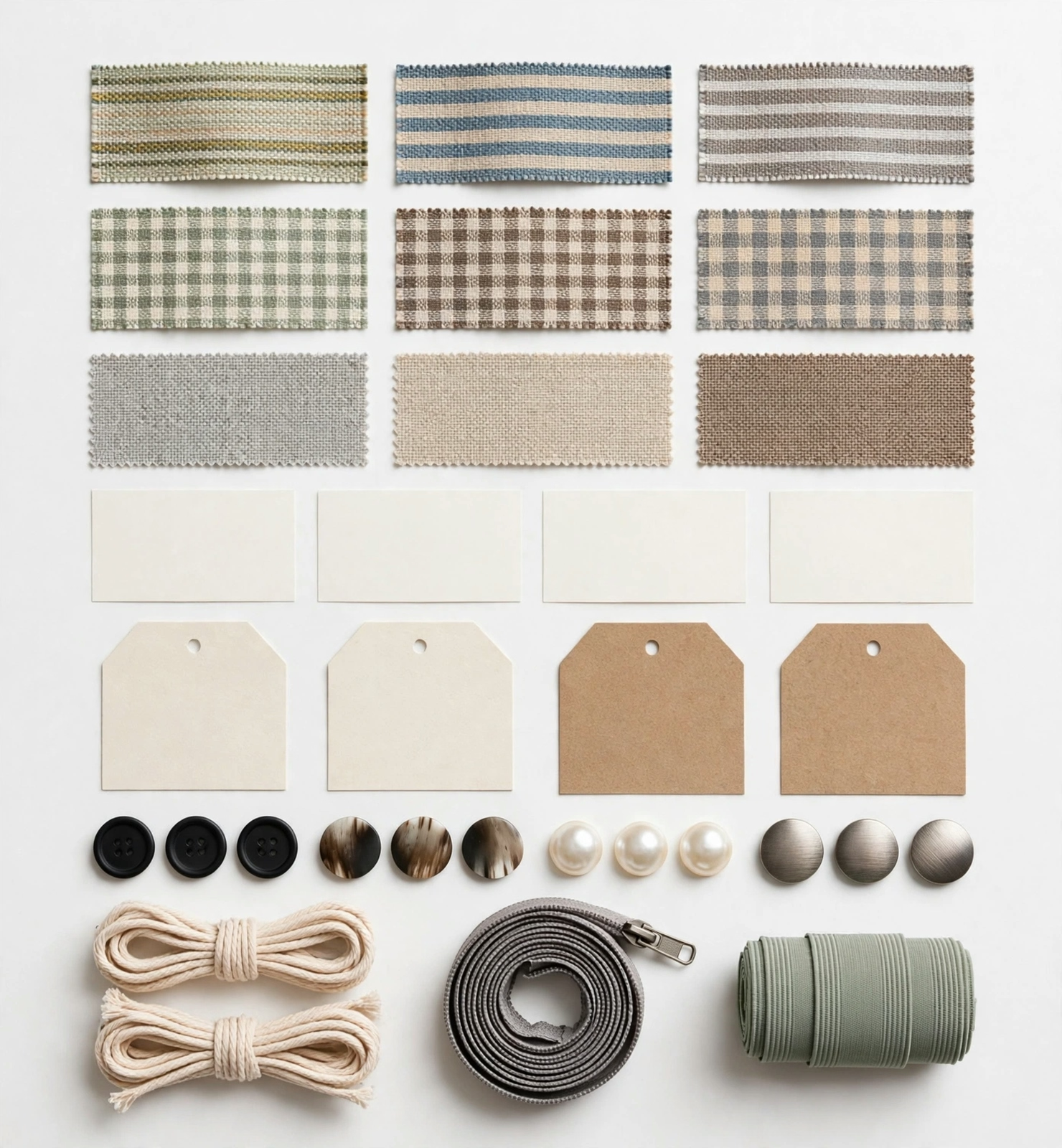
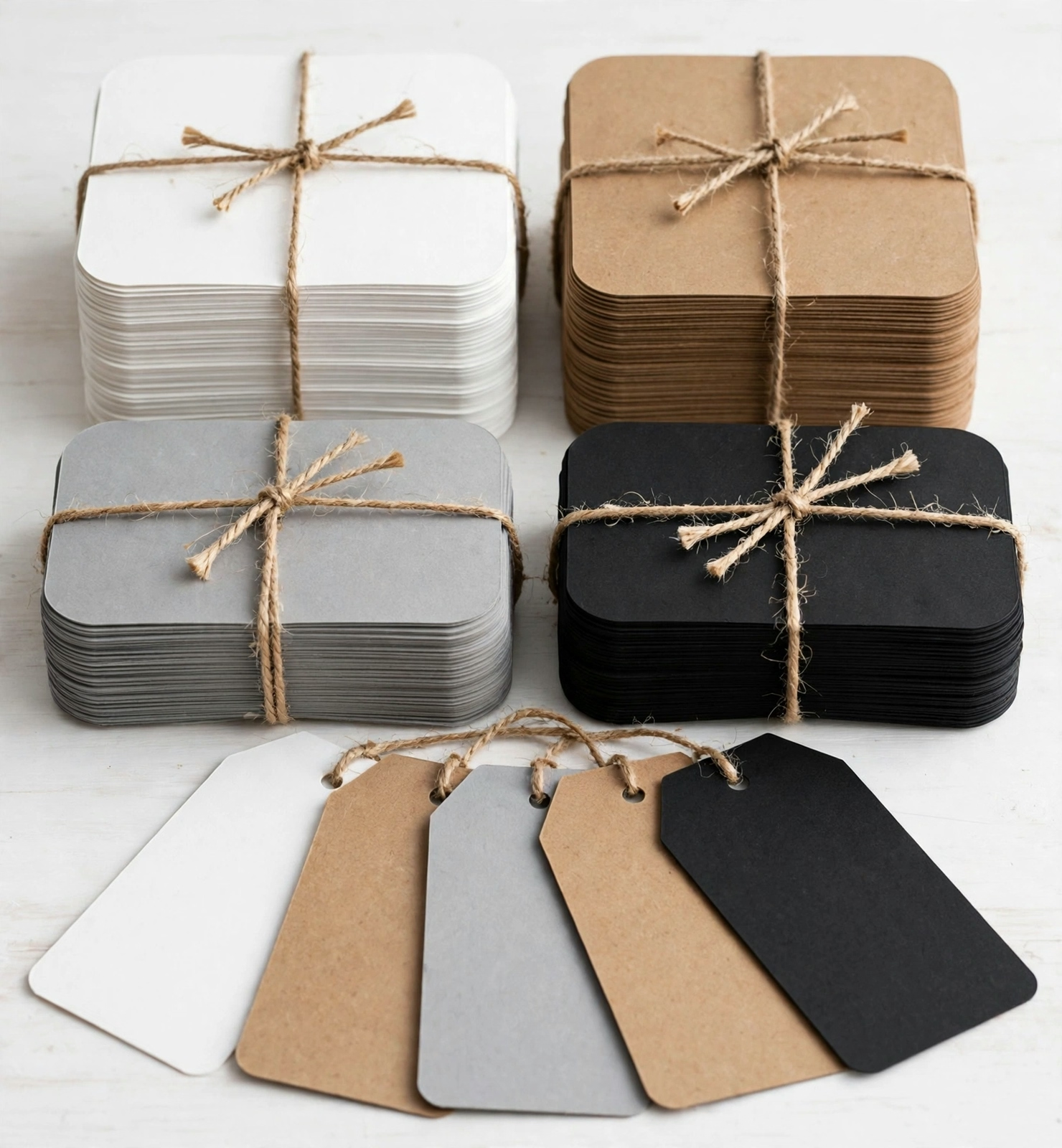
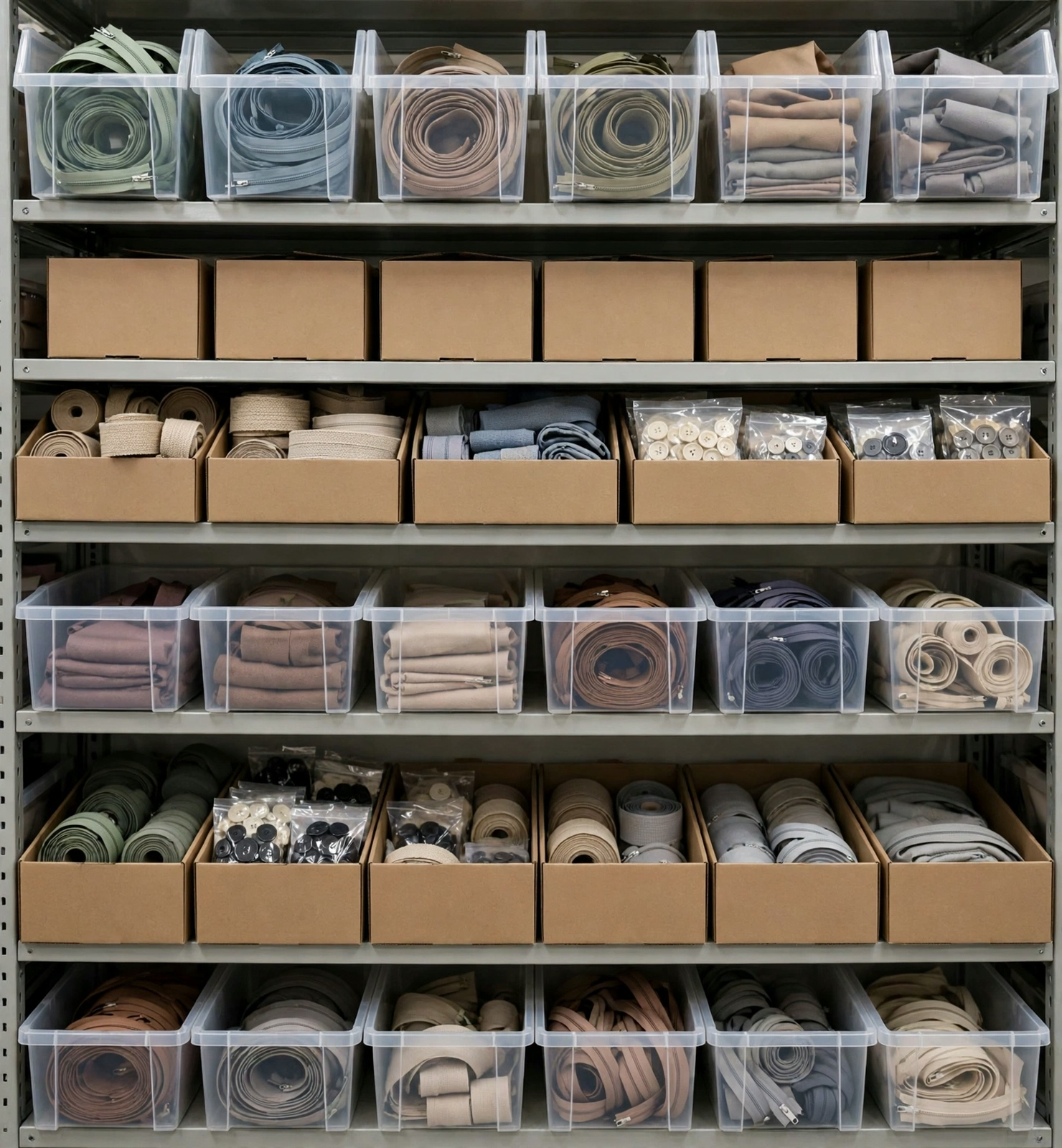
Labels anchor the range: woven main labels, size labels and flag labels, printed satin wash-care labels, and woven back neck tapes, all produced to your artwork and fold specification. Beside them sit hangtags and swing tickets in board or specialty papers, with strings, seals and pins, plus the retail layer of size, price and barcode stickers where your channel needs them.
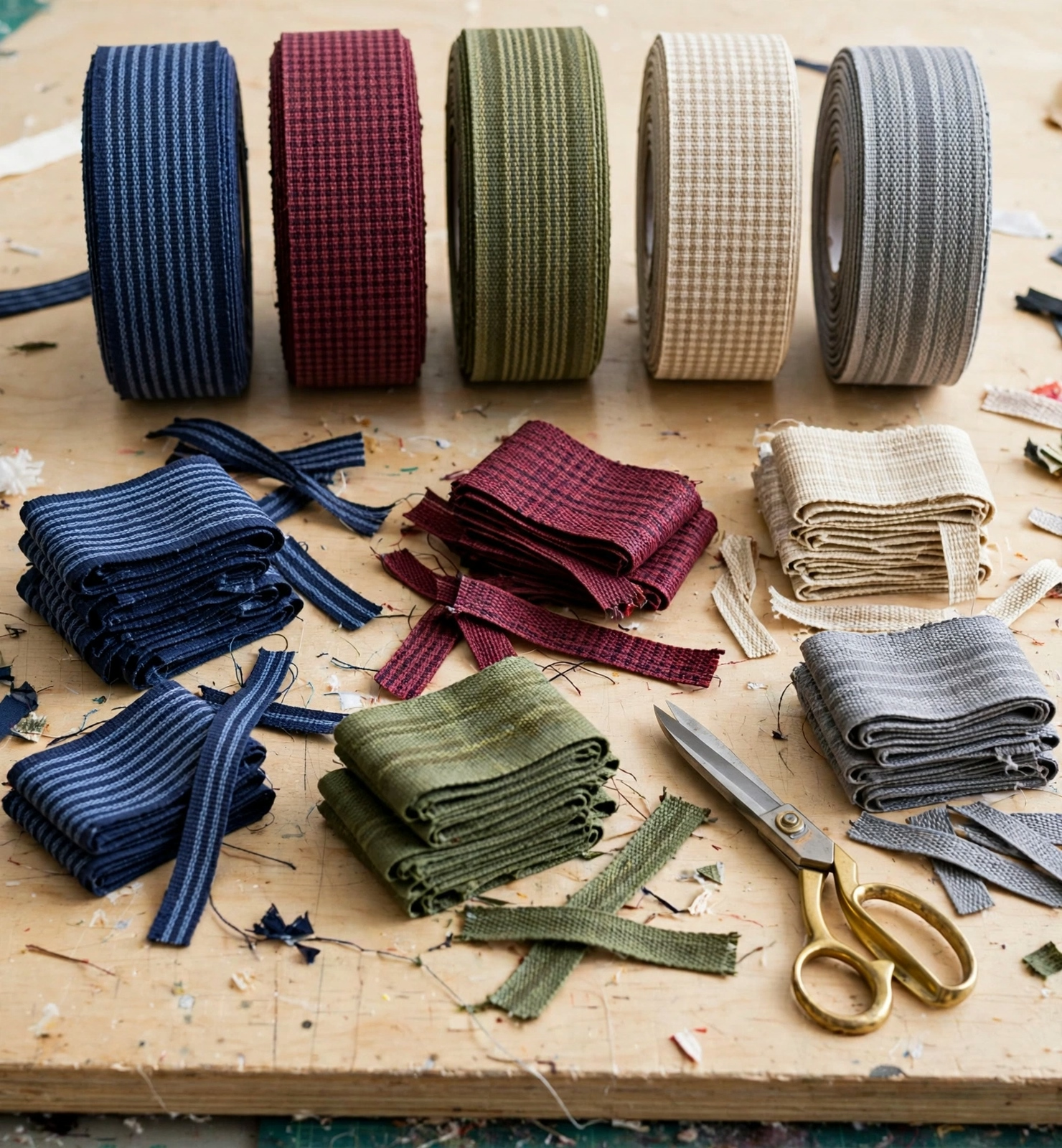
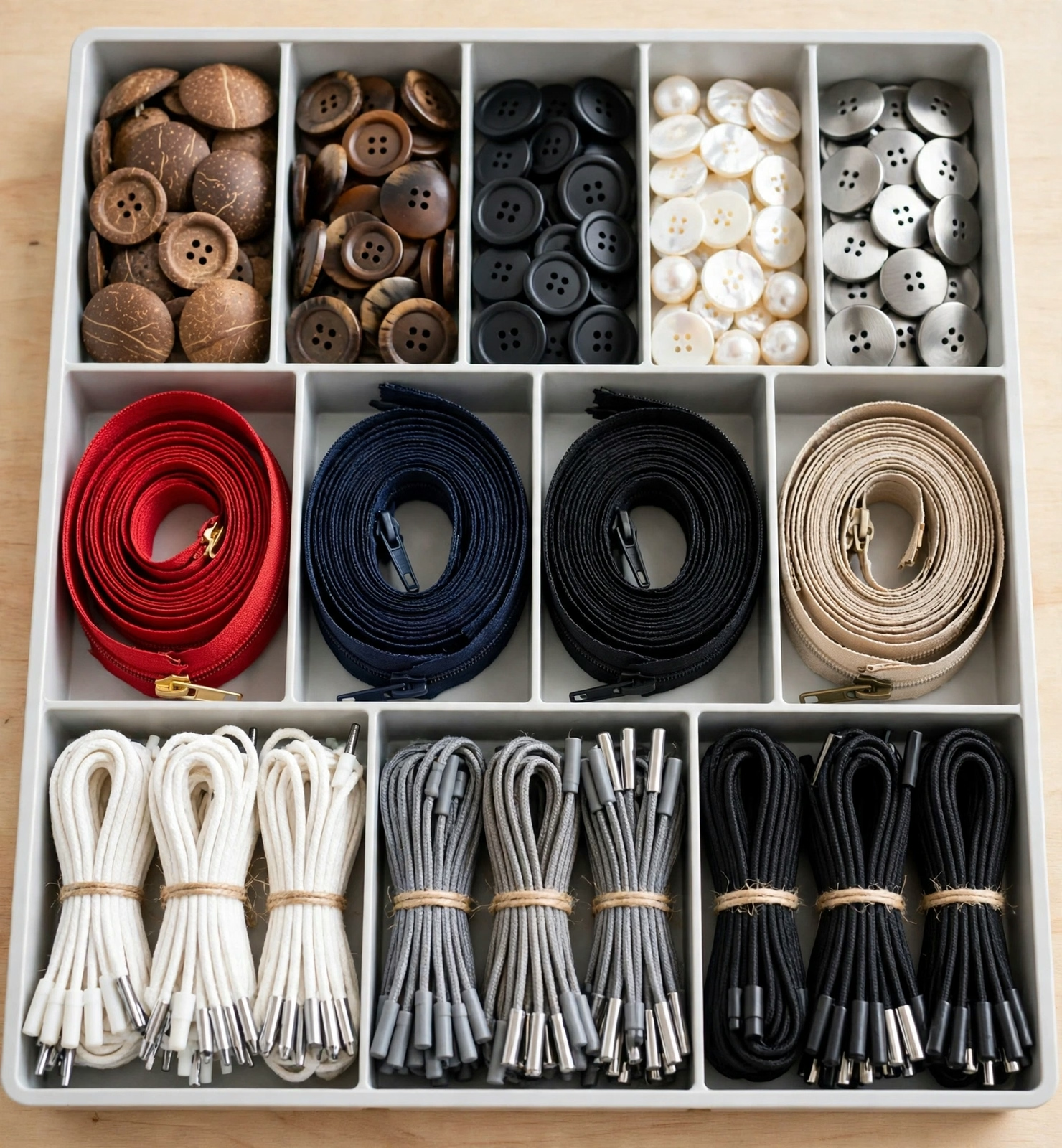
The functional components run just as wide: buttons in every common material and finish, zippers of every type and tape colour, drawcords plain or tipped, jacquard and plain elastics, hook-and-loop, snaps, rivets and eyelets. Badges and woven tabs complete the set for brands that sign their garments on the outside. If a trim exists in garment making, the desk can source it – and if it is unusual, sampling is where we prove it.
Thread, interlining and shoulder tape sit in the same store – the invisible trims. They rarely appear in a buyer’s specification, yet their quality decides how a collar sits and how a seam wears, so they are bought to garment-grade standards as a matter of policy rather than to the cheapest available count.
2. Trims as Brand Identity: Your Logo in Every Detail
A woven label is often the only permanent branding a garment carries, which makes trims a brand-identity discipline as much as a purchasing one. Your artwork is translated into weave or print with its colours matched under standard light, and the strike-off or woven sample is approved by you before bulk production of the trim begins – the same approval discipline we apply to embroidery and print.
Consistency is recorded, not remembered: the approved trim set for a programme is kept as a physical trim card in the order file, so repeat orders and new styles inherit the identical label weave, hangtag board and button finish. Brands building a range over seasons feel the benefit most – the branding never quietly drifts.
3. Local Sourcing and Customer-Nominated Suppliers
Bangladesh has a deep local trims industry, and most labels, tags, buttons, zippers and packaging components are available from capable local makers whose quality we audit through our procurement work. Local sourcing keeps lead times short and lets a replacement batch be produced quickly if bulk inspection ever rejects a delivery.
Many international buyers nominate their own trim suppliers – global label and packaging groups with Bangladesh operations – and we work with nominated sources as readily as with our own panel. Where a nominated item is not made locally, it is imported against the order plan with its longer lead time built into the schedule from the start, never discovered halfway through production.
4. Trim Approval Before Bulk: Samples and Strike-Offs
No trim goes to bulk on a catalogue picture. Each item is sampled in your artwork, colours and material, and approved alongside the garment sampling round, so the label, the hangtag and the garment are judged together as one product. Buyers working through our sample development process receive the trim set with the garment samples as a matter of routine.
Approval also fixes the specification in words: label fold and size, hangtag board weight and finish, button material and diameter, zip tape and puller. Written down once, those details protect both sides – you against substitution, us against ambiguity – and they make the bulk check a comparison against evidence rather than an argument about memory.
5. Care Labels, Compliance and Market Rules
Wash-care and fibre-content labels carry legal wording, and the rules differ by market: the USA, the UK, Germany, Canada and Australia each prescribe their own content, symbols and language requirements. Our merchandisers check your label artwork against the destination market’s rules at the approval stage, flagging a missing fibre line or a wrong care symbol while it still costs a reprint, not a relabelling of finished stock.
Beyond the label text, trim materials themselves sit inside product-safety expectations – nickel limits on metal components for Europe, lead and phthalate rules for the USA, general chemical compliance through schemes such as OEKO-TEX where buyers specify them. Tell us your standard and the sourcing is filtered by it from the first quotation, as our quality assurance team verifies on arrival.
6. Trims Timing: The Small Items That Can Stop a Line
A sewing line can have fabric, machines and operators ready and still stand idle for want of a zip. Trims therefore sit on the critical path of every order plan: they are ordered at the start of the programme, against the approved specification, and their arrival is tracked by your merchandising team with the same seriousness as fabric.
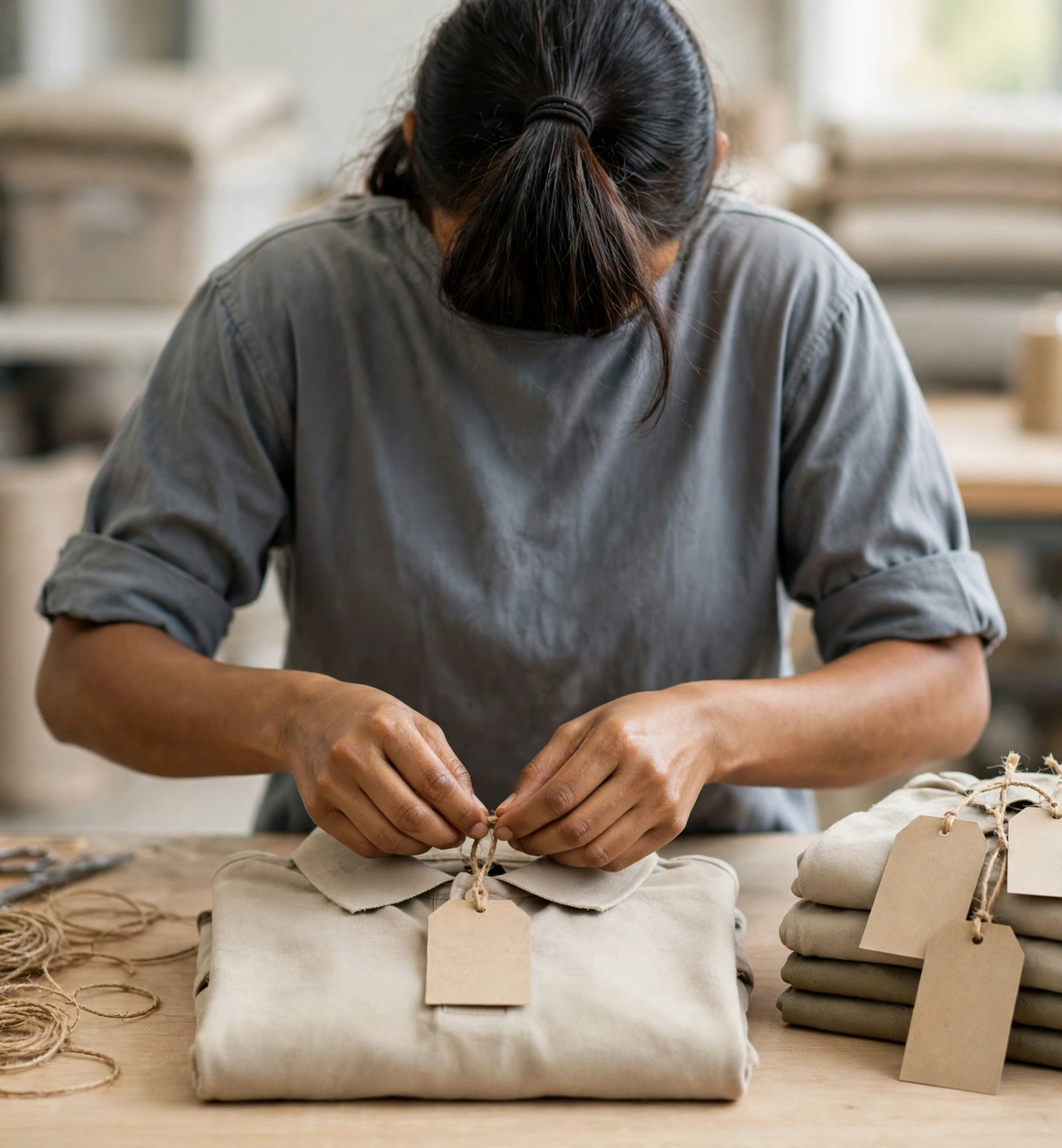
On arrival, trims are counted, checked against the approved trim card and stored by order in our trims store until the line calls for them – and the finishing end of the process, where labels are sewn and tags attached, is covered by our trimming and accessories stage. Small items, handled with big discipline: that is the whole policy.
Garment Trims for Clothing Brands in the USA, UK, Germany and Australia
Three trim questions come up in almost every new programme: how the retail finish is handled, what sustainable options genuinely exist, and how consistency survives reordering. This section answers them plainly.
Retail-Ready Finish: Hangtags, Barcodes and Tickets
For retail programmes the trim set extends beyond the garment itself: hangtags with your retail branding, barcode and price tickets matched to your system, size stickers and the polybag markings your warehouse expects. These are specified and approved with the rest of the trim card, so goods arrive store-ready rather than needing a ticketing operation at destination.
Brands selling into Spain, the Netherlands, Sweden and South Korea run the same discipline through their importers, with the ticket data supplied by the buyer and checked against the packing list before application. Where a retailer changes its ticketing format mid-season, the change is treated like any other specification change – re-approved on the trim card before the next production lot is ticketed.
Sustainable Trim Options, Stated Honestly
Recycled and lower-impact trim options are real and growing: recycled polyester woven labels, paper hangtags from responsibly managed forests, natural-material buttons and recycled-metal zips all sit within normal sourcing reach. What we will not do is over-claim: each option is quoted with what it is actually made from, and any certification behind it is the supplier’s own, shown to you on request. Buyers can then make the sustainability statement their market allows, on evidence rather than on a sales line.
The practical route is substitution at the approval stage: swap one trim at a time – the label first, then the hangtag, then the button – and judge cost and appearance on the sampled garment before the whole set changes.
Consistency Across Repeat Orders
Trim consistency fails quietly – a slightly different label weave, a hangtag board a shade lighter – and is usually noticed first by the brand’s most loyal customers. The guards are the same as everywhere in our system: the approved trim card kept on file, and suppliers and shades recorded by name and code.
Incoming checks compare each new delivery against that card before it reaches the line, and a delivery that does not match is replaced, not argued onto the garment. A repeat order therefore starts from physical evidence of what your trims are, not from last season’s purchase order – and a new merchandiser on either side can pick the programme up from the card alone.