
Embroidery Services in Bangladesh
Embroidery is the decoration buyers choose when a logo has to look permanent, premium and identical on every garment. Stitched thread does not crack, peel or fade the way surface prints can, and it carries a weight that suits workwear, uniforms, premium polos and retail brands. This page explains the embroidery services we run at Siatex Bangladesh for private label clothing.
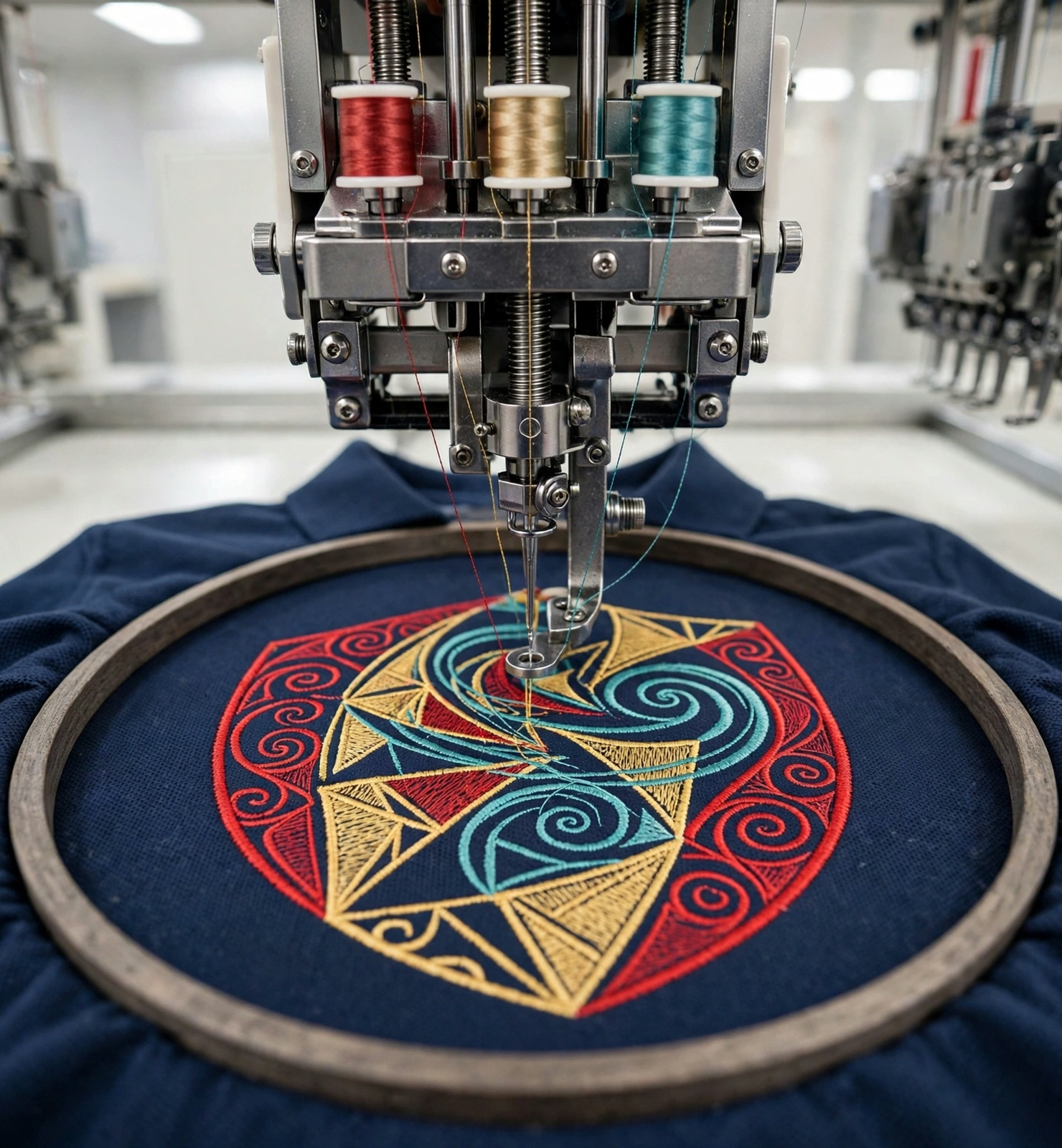
Good embroidery is a chain of small disciplines: clean digitising, the right thread and backing for the fabric, accurate placement, and a strike-off you approve before bulk ever starts. Miss one link and the logo puckers, drifts or varies between garments. Our embroidery unit works inside the same order file as your garments, so the decoration is planned with the clothing, not bolted onto it.
We embroider for private label brands, importers and retail buyers in the USA, the UK, Germany, Canada and Australia, and for labels selling into France, Japan, Denmark and South Korea. Send your artwork with your inquiry and the sampling stage returns it as stitches you can judge in the hand, not on a screen.
Custom Embroidery Services for Private Label Clothing Brands
The sections below cover the techniques we run, how artwork becomes a stitch file, where embroidery sits on a garment, and how quality is held from the first strike-off to the last production piece.
1. Embroidery Techniques: Flat, 3D Puff, Appliqué and Badges
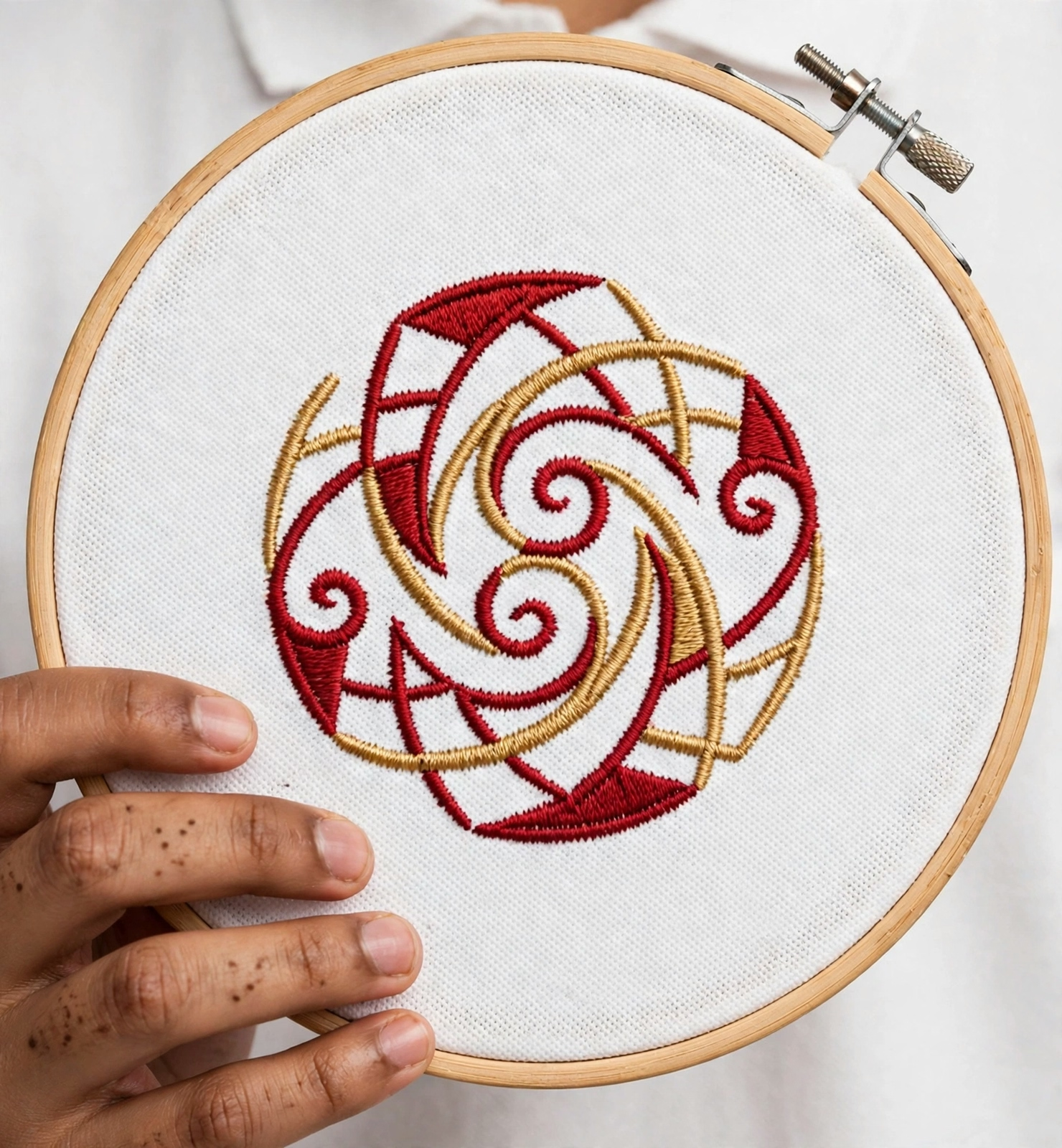
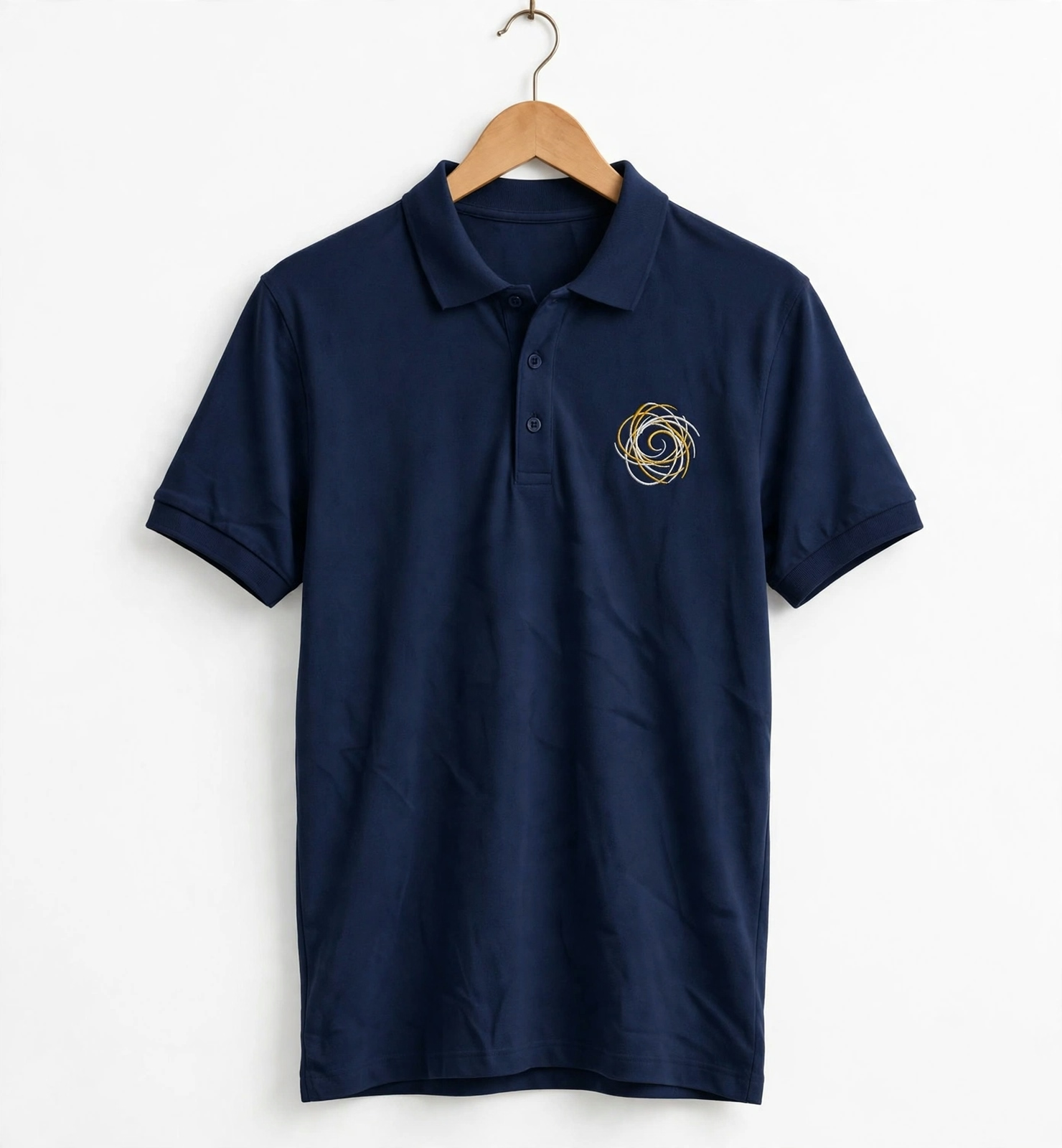
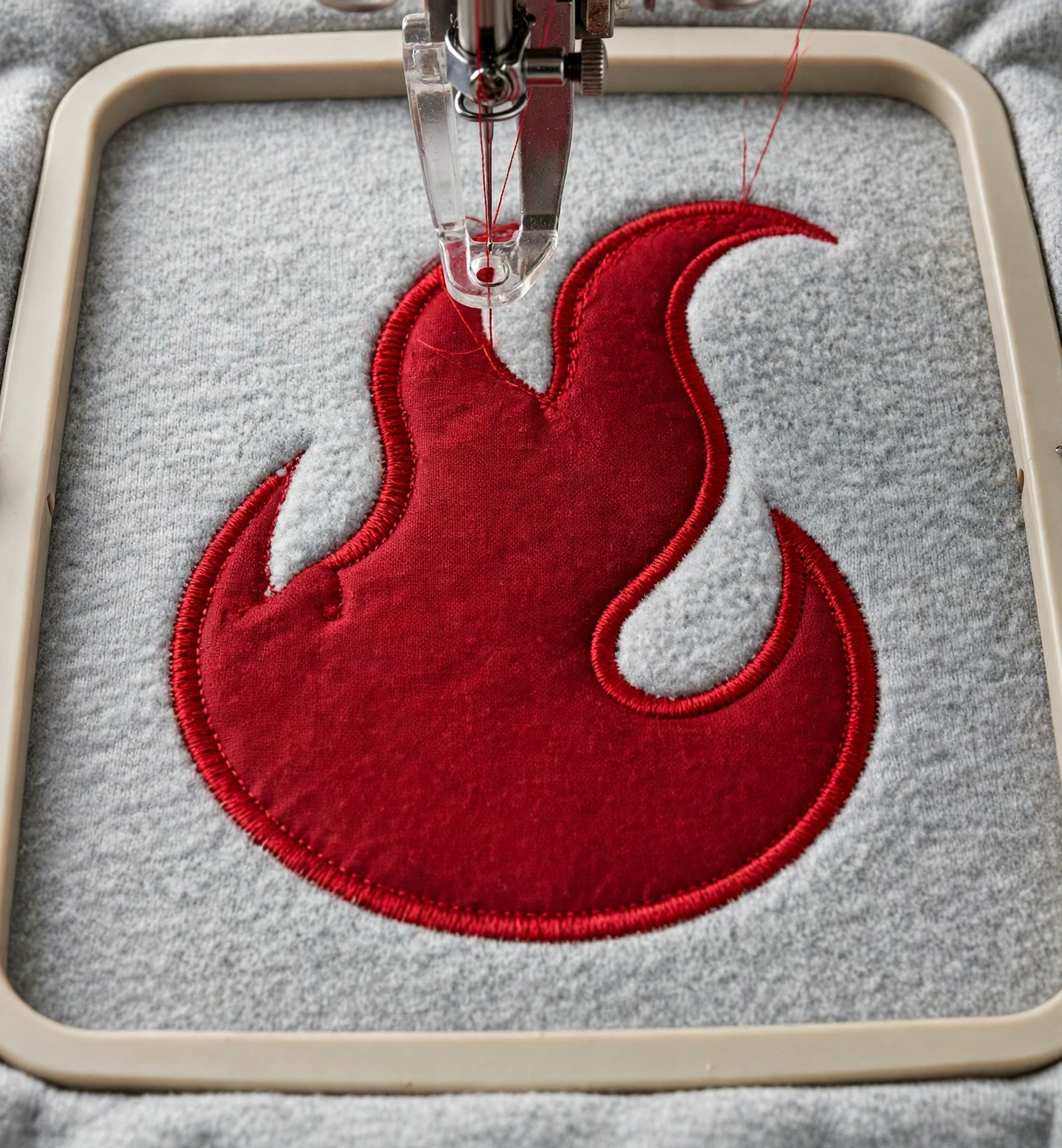
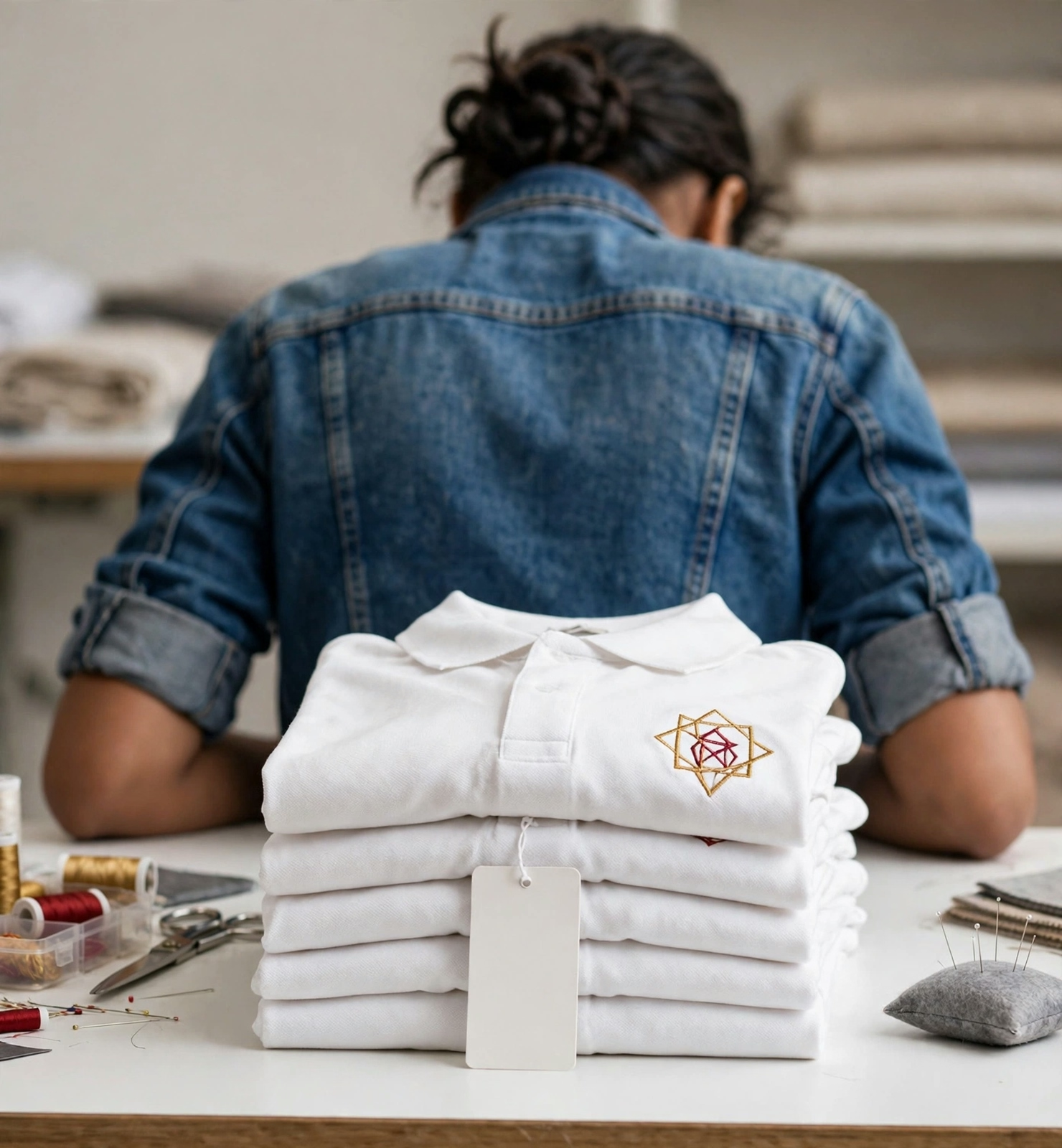
Flat embroidery is the workhorse: logos, crests and lettering-style designs stitched directly onto the garment with a smooth, slightly raised finish. It suits chest logos, sleeve marks and back designs across polos, T-shirts, fleece and woven shirts, and it is the technique most brand programmes are built on.
Beyond flat work, 3D puff raises the design on a foam base for a bold, sculpted effect popular on heavier garments and headwear-style pieces. Appliqué stitches a shaped fabric piece onto the garment under an embroidered edge – efficient for large designs and strong on sportswear.
Badges and patches are embroidered separately and applied to the garment, giving a defined border and an easy route to consistent placement across every style in a range. Techniques can also combine within one design – a flat base with a puffed centre mark, for example – and your sampling strike-off shows exactly how the combination reads before bulk.
2. From Your Artwork to a Stitch File
Embroidery machines do not read artwork; they read stitch files. Digitising is the craft of translating your logo into stitches – choosing stitch types, directions and densities so curves stay smooth, small details survive, and the design sews cleanly at its real size. Fine detail that prints perfectly can vanish in thread, so our digitisers adjust the artwork honestly for the medium and show you the result as a sewn strike-off, not a simulation.
Thread count and density are balanced against the fabric: too dense on a light jersey and the garment puckers; too loose on a fleece and the design looks thin. Getting this balance right at the file stage is what makes bulk embroidery boring in the best sense – the same clean logo, garment after garment.
3. Placement and Garment Types
Placement is agreed as measurements, not impressions: the design’s size and its position from fixed points on the garment are written into the specification, and the hooping stage works to them on every piece. Left chest, full chest, sleeve, yoke and back placements each have their own conventions, and our production team sets the frames and templates that keep a whole order in the same place.
Fabric behaviour governs the details. Knits stretch, so backing stabilisers carry the design and stop distortion; wovens hold a stitch more easily but show puckering if the density is wrong; heavy fleece swallows fine detail and asks for bolder shapes. These are sampling-stage discoveries, which is why the strike-off is always sewn on your actual garment fabric, never on a substitute.
4. Threads, Colours and Matching Your Brand
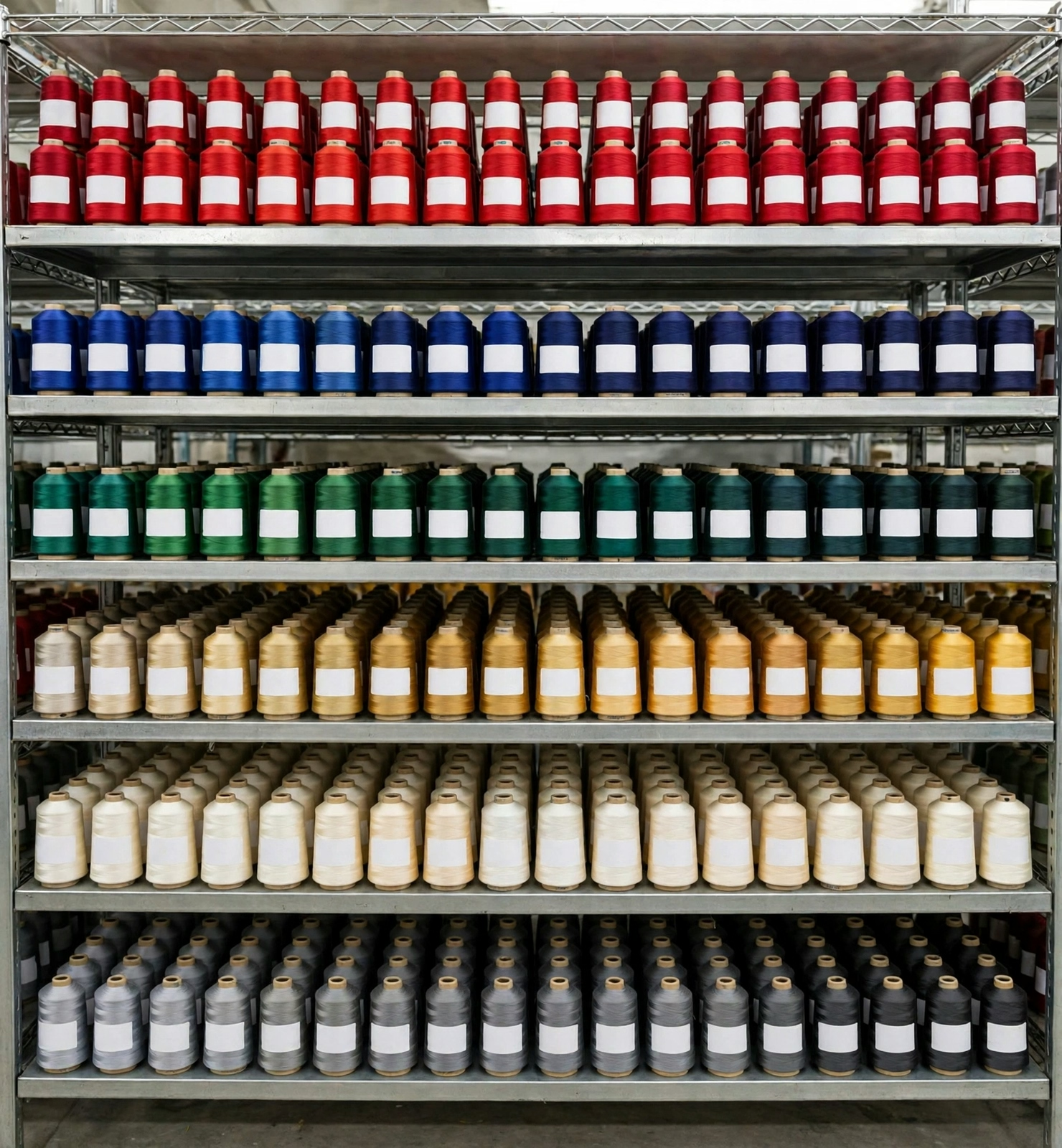
Thread is chosen for colour, sheen and endurance together. Brand colours are matched against thread shade cards under standard light, and the chosen shades are recorded in your specification so a repeat order two seasons later stitches in the same colours. Where a design carries several colours, the sequence and changes are programmed into the file, keeping every garment’s logo identical.
Endurance matters as much as appearance: embroidery thread must survive the garment’s washing life without bleeding or breaking, and our trims sourcing keeps to threads specified for garment use. Metallic and special-effect threads are available for designs that call for them, with the honest caveat sampled first – they behave differently and the strike-off shows how.
5. Sampling and Approving Embroidery Before Bulk
No embroidery goes to bulk unapproved. The process runs through a strike-off: the design sewn at final size, in final threads, on the actual garment or its fabric. You judge size, colours, density and placement from the physical piece, comment, and receive a revised strike-off if needed – the same discipline as our garment sampling, applied to the decoration.
Buyers often combine this with the garment’s own sampling round, approving garment and logo together through our sample development process. Where a programme runs many styles, a single approved strike-off per design anchors them all, so the same logo lands identically on a polo, a fleece and a jacket within one range.
6. Embroidery in Bulk Production and Quality Checks
In bulk, garments move through hooping, machine sewing, de-hooping, trimming and inspection as a planned stage inside the order, whether the embroidery runs before garment assembly (on panels) or after (on finished pieces) – your specification records which, because each suits different designs. Machine operators work to the approved strike-off mounted at the workstation, and output is checked against it through the run, not only at the end.
Final checks look for the embroidery faults that matter: loose threads, missed stitches, placement drift, backing show-through and pucker around the design. Pieces that fail are corrected or rejected at this stage, inside the factory, under the same quality discipline as the garments themselves – and under a full package production programme the whole chain, from artwork to inspected garment, sits in one file under one merchandiser.
Custom Embroidery for Clothing Brands in the USA, UK, Germany and Australia
Most buyers arrive at embroidery with the same three questions: whether it suits their product better than print, how consistency holds across a season, and what it does on different fabrics. This section answers them the way our embroidery desk does.
Embroidery or Print: Choosing Honestly
Embroidery wins where permanence and perceived value matter – logos on workwear, uniforms, premium polos and outerwear that will be washed hard and worn long. Print wins for large artwork, photographic detail and light summer garments where stitches would weigh the fabric down.
That is why our printing services sit alongside embroidery in the same factory. Many ranges use both, embroidery for the brand mark and print for the graphic, and buyers in France, Japan, Denmark and South Korea regularly build programmes that way.
Our advice at sampling is based on your garment and your market, not on which machine we would rather run. Cost follows the same honest logic: embroidery is priced by the design’s stitch work and machine time, and it stays economical across long runs because the approved file sews identically for years.
Consistency Across a Season and Beyond
A logo stitched in the first order must match the same logo in the fifth. The anchors are boring and effective: the approved strike-off kept on file, the thread shades recorded by code, the placement measurements written into the specification, and the same digitised file used until you change the design. Reorders then start from evidence rather than memory, and a new style added to the range inherits the same logo discipline automatically.
When you do change the design – a refreshed logo, a new colourway, an added line of text under the mark – the change runs as a fresh strike-off and a fresh approval, however small it looks on screen. Small changes are where inconsistency creeps into long-running programmes, and treating every change with the same discipline is what keeps a five-year-old brand mark as sharp as the first season’s.
How Fabric Changes the Stitch
The same design sewn on a piqué polo, a brushed fleece and a poplin shirt gives three slightly different results. Dense knits hold detail well; lofty fleece needs bolder shapes and a solider base; fine wovens reveal every tension fault. Sampling on the real fabric is therefore not a courtesy but the whole method – it is how the result on your bulk order becomes predictable before the bulk order exists.