
Trading Partners – Siatex Supply Chain Bangladesh
Behind every garment Siatex ships stands a chain of trading partners: the mills that weave and knit the fabric, the suppliers who make the trims, the production partners who sew, the testing houses that verify, and the logistics partners who move finished goods to the port. This page introduces them - by role, because the roles are what a buyer's programme depends on.
Partner names, like client names, are commercially sensitive, and for the same reason they are not printed here. What can be described openly is how each partner type is chosen, what standard they are held to, and how the desk manages the chain so a delay in one link never reaches the buyer as a surprise.
Programmes run through these partners serve buyers in the USA, the UK, Germany, Canada and Australia, with partner capacity also supporting labels selling into Italy, France, Sweden and Japan. The sections below walk the chain in order, from fibre to freight.




The Supply Chain Partners Behind Garment Programmes in Bangladesh
Five partner groups carry a programme. Each one is selected once, audited regularly, and managed daily by the same desk that manages the buyer’s order.
1. Fabric Mills and Knitters
Fabric is the largest cost and the longest lead in any garment, so mill partnerships are the deepest in the chain. The desk buys from knitters and weavers it has traded with across many seasons – mills whose yarn sourcing, dyeing consistency and delivery honesty are known from records, not promises. The routes behind each fabric family are described on our fabric sourcing page.
Mill selection is per programme: the partner whose looms suit the construction and whose dye house holds the shade across repeat orders. Where a buyer’s fabric is nominated to a specific mill, the desk works inside that nomination; where it is open, the desk recommends from its traded panel and proves the choice with strike-offs and lab dips before bulk is booked.
Upstream of the mills sits one more layer the desk manages: yarn and greige sourcing for the constructions our programmes repeat. Holding relationships at that level is what lets a fabric be re-ordered a year later and arrive as the same fabric – same yarn, same hand feel, same shade behaviour – rather than a close cousin of it.
2. Trim and Accessories Suppliers
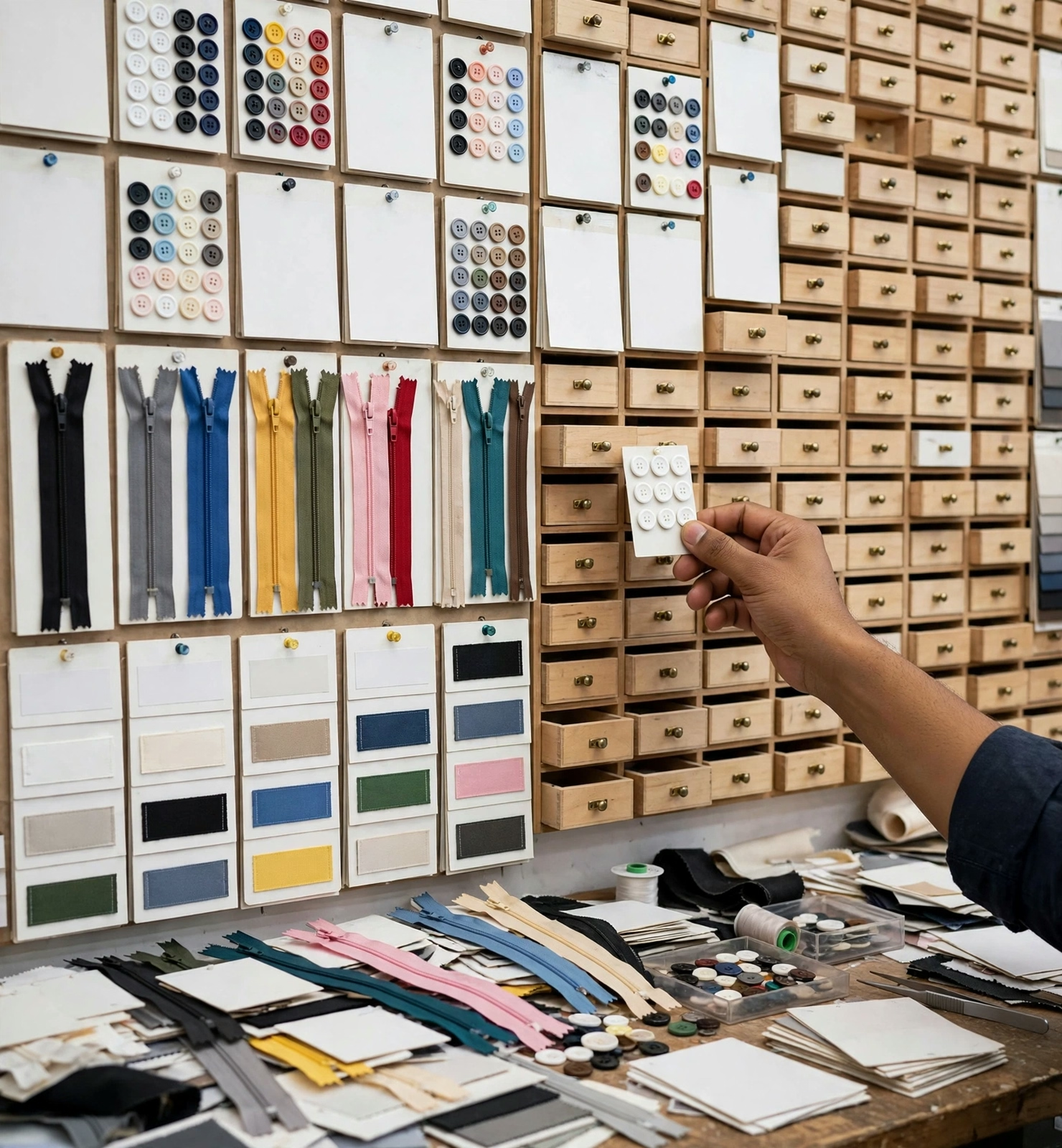
Buttons, zips, labels, elastics, threads and packaging parts arrive from a second partner group: trim suppliers chosen for consistency at garment scale. A button that varies between cartons or a label that fades in the wash can fail an inspection as surely as bad sewing, so trim partners are approved against samples and held to them, exactly as our trimming and accessories page sets out.
The desk consolidates trim buying across programmes where it helps – thread and generic components in steady supply – while keeping buyer-specific branding parts separate, ordered against each order file. Every trim lot is checked on arrival against the approved standard before it is allowed near a production line.
3. Production Partners
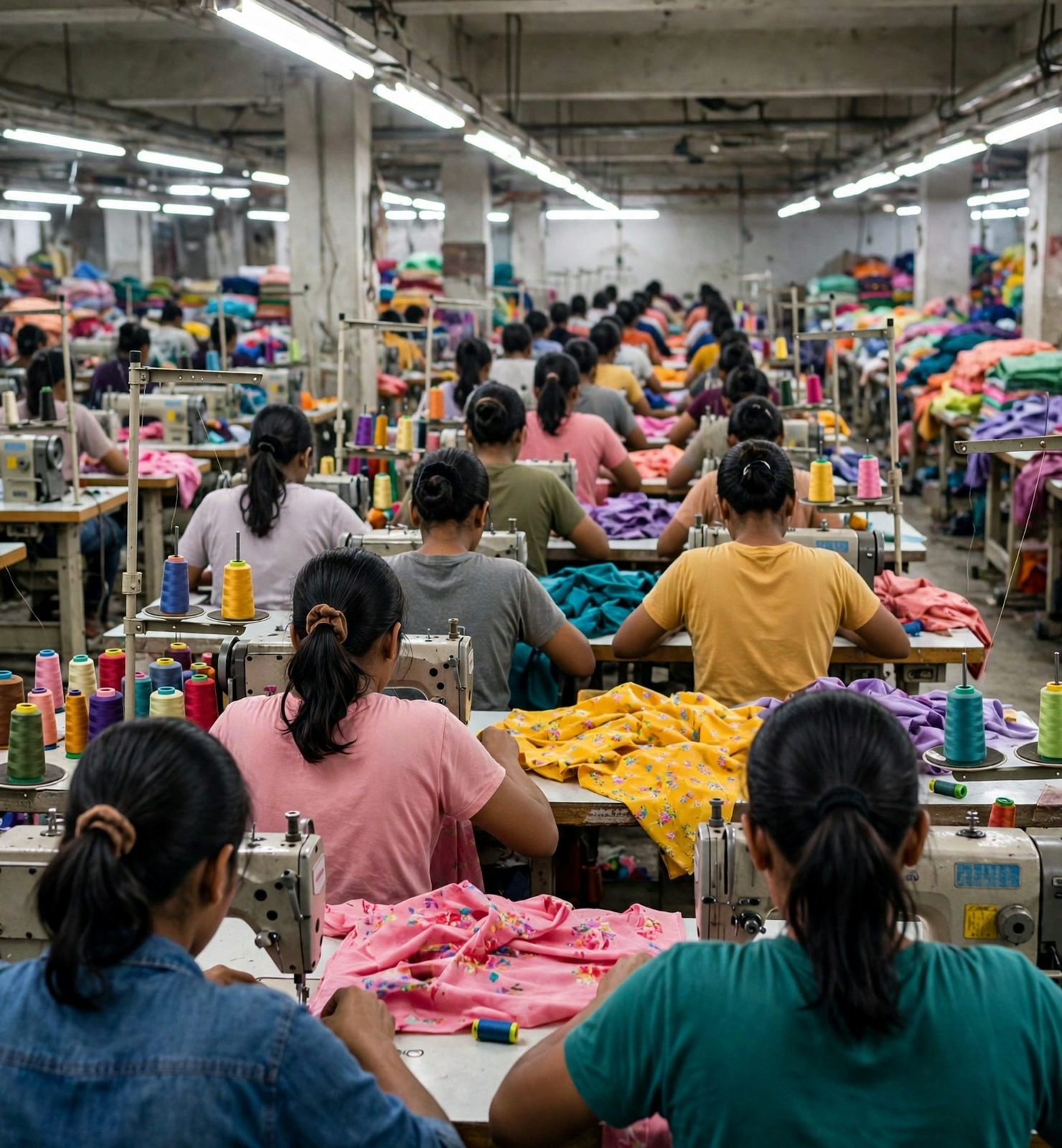
Manufacturing itself is shared between our Dhaka base and selected partner factories, matched to category and volume as the business model page explains. These are the most closely managed partners in the chain: our merchandisers plan their lines, our quality team inspects their work, and their compliance standing is a condition of the partnership, reviewed rather than assumed.
Production partnerships are deliberately long. A factory that sews for Siatex buyers season after season learns the standards those buyers expect, and its lines run our programmes with fewer surprises each year. New production partners enter through trial orders and enhanced inspection, earning volume the way any partner here does – by performance on the record.
4. Testing and Compliance Partners
Some checks cannot be done on a factory table. Independent testing partners verify what buyers and markets require: colourfastness, shrinkage, fibre composition, restricted substances and physical performance, run to the methods of the destination market. Their reports sit in the order file beside our own inspection records, so due diligence is documented, not asserted.
Compliance partnership runs wider than the laboratory. Partner factories’ social and safety standing is part of their selection, and the desk tracks audits and renewals as programme facts. When a buyer arrives with their own code of conduct or audit protocol, it is layered onto the partnership terms from the first order – see the approach on our procurement page.
5. Logistics and Freight Partners
The last link carries the goods: cartage to the port, documentation, and the freight forwarders who book sea and air capacity out of Bangladesh. These partners are chosen on one criterion above price – reliability of the sailing and the paperwork, because a perfect garment on a missed vessel is still a late delivery.
The desk plans backwards from the buyer’s required date with the logistics partners in the room, as our delivery and shipment page describes: carton completion, port cut-offs and document checks sequenced so the final week of a programme is calm. Buyers using their own nominated forwarders are worked with on the same terms – the chain flexes at its last link without breaking.
Documentation is treated as a partner deliverable in its own right: packing lists, carton markings and export papers are checked against the goods before the truck leaves, because a document error can hold a container as firmly as a production delay. The partners know the standard, and the desk enforces it at the gate, not at the port.
6. Becoming a Trading Partner
The chain is not closed. Mills, trim makers, service providers and logistics companies with something real to offer – a construction we cannot source, a finish we cannot match, capacity in a category we are growing – are welcome to introduce themselves through the contact page. Bring specifications and evidence: samples, certifications, references from the trade.
New partners start the way all ours did: a trial, a record, and volume that follows performance. It is a slower door than some suppliers offer, and it is why the partners already inside it can be described the way this page describes them – chosen, audited and managed, link by link, behind every programme we ship.
Trading Partners Behind Shipments to the USA, UK, Germany and Australia
Two questions sit behind any partner chain: how partners are chosen and held to standard, and what happens when one of them fails. The answers are the difference between a list of suppliers and a managed supply chain.
How Partners Are Selected and Reviewed
Selection starts with evidence. A mill shows its yarn sources and dye records; a factory opens its lines, its audit history and its order book; a forwarder prices a route and proves it with references from the trade. Samples and trials follow before any partner touches a live programme, and the desk records the results for future orders.
Review never really stops. Every programme a partner touches leaves a record – shades held or missed, dates kept or slipped, documents right or corrected – and those records decide the next allocation. Partners who perform grow with us; partners who coast are quietly routed less work, and the chain strengthens a link at a time. Labels selling into Italy, France, Sweden and Japan ship through the same reviewed chain.
When a Partner Fails: The Desk Absorbs It First
Partner failure is not a hypothetical: a dye lot drifts, a vessel rolls, a trim lot arrives short. The model’s answer is that the desk absorbs the problem before the buyer feels it – rebooking fabric from the second mill on the panel, splitting a shipment, air-freighting the shortfall quantity, with the buyer informed in writing, early.
That absorption is possible only because the chain is plural. One mill per fabric family is a dependency; a panel of traded mills is a supply chain. The redundancy is deliberate, maintained in quiet seasons so it exists in loud ones, and it is the least visible, most valuable thing the network does.
What We Ask of Partners, and What They Get
Partners are held to the standards our buyers hold us to: honest dates, approved-sample fidelity, documents that match the goods, and problems reported the day they are known. In return they get what suppliers value most: a steady, well-specified flow of work, honest forecasts, and payment behaviour that keeps a partnership worth having.
That reciprocity is why the chain holds. A network squeezed to the last cent breaks at the first difficulty; a network treated fairly answers the phone when a programme is in trouble. Buyers rarely see this machinery; they see the outcome: fabric that matches, cartons that sail, seasons that land. The outcome is the partners, managed.