
Why Choose Siatex – Clothing Manufacturer in Bangladesh
Every supplier website says it is reliable, competitive and quality-driven. Buyers have learned to discount the adjectives and look for the machinery underneath: who answers, what is recorded, how problems surface, and whether the tenth order is handled with the same care as the first. This page describes that machinery at Siatex, so the choice can rest on how we work rather than on what we claim.
The short version: one accountable desk in Dhaka runs your programme end to end; a selected partner chain is managed daily behind it; quality is documented rather than asserted; and your order file gives every reorder a memory. Buyers in the USA, the UK, Germany, Canada and Australia build programmes on that structure, with labels in France, Italy, Denmark and Japan shipping through the same system.
Six reasons follow, in the order buyers usually raise them when they compare us with the factory they are thinking of leaving.



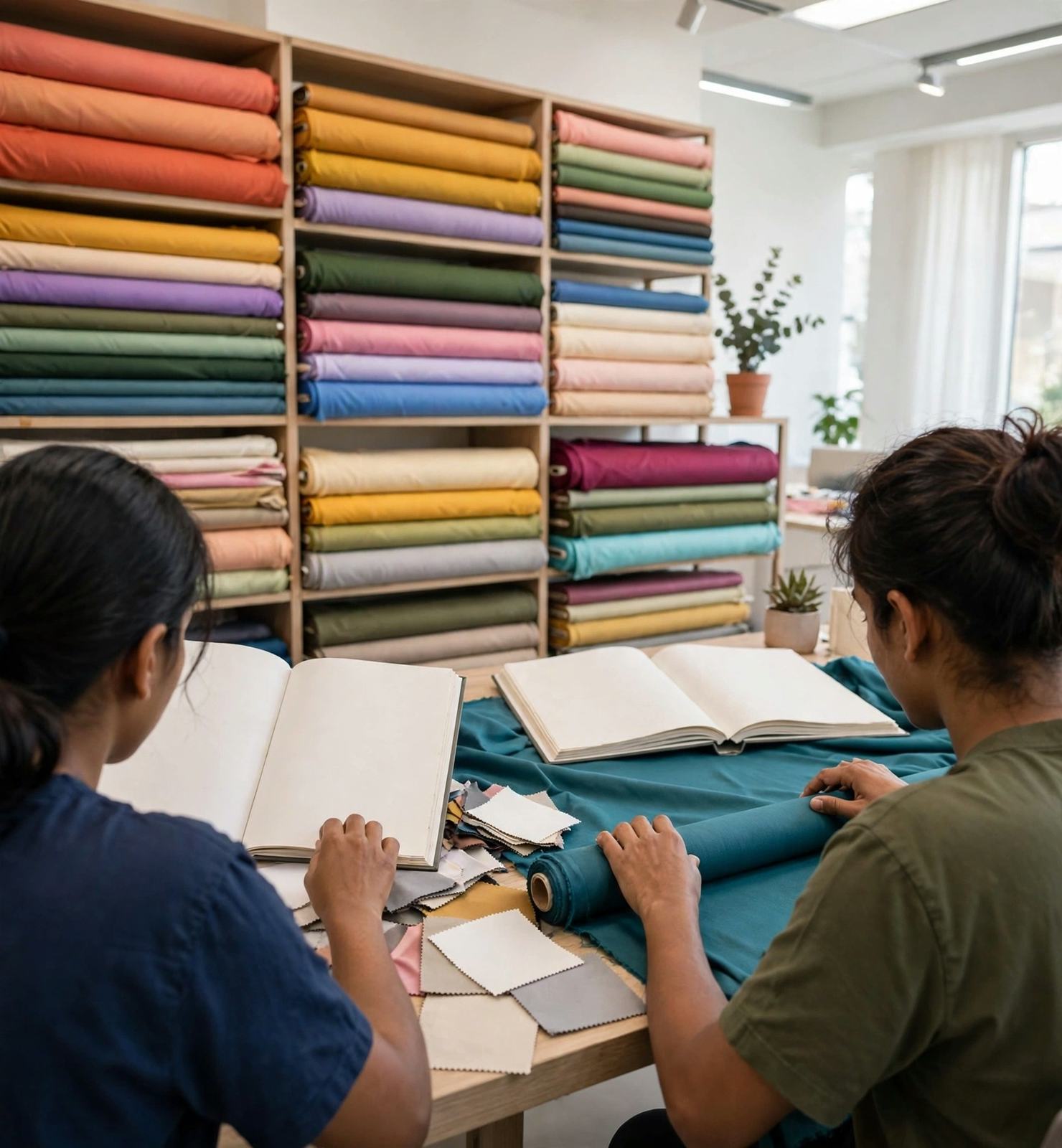


Why Buyers Choose This Clothing Manufacturer in Bangladesh
None of these reasons is a slogan. Each one is a working practice a buyer can test at sample stage before a bulk order is ever placed.
1. One Accountable Desk
Your programme has one desk and one merchandiser who knows it. Questions about costing, sampling, production and shipping land on the same desk that holds your order file, so nothing is handed off into a void between departments. When you write, the person who answers is the person who knows where your order stands.
That accountability is the structure our business model page describes: the desk in Dhaka plans, costs and follows every stage, and it carries the result personally. Buyers comparing suppliers often find this is the difference they feel first – in reply speed, in answers that match earlier answers, and in commitments that survive staff changes because they live in the file, not in one person’s head.
2. A Managed Partner Chain
Behind the desk stands a chain chosen link by link: mills, trim suppliers, production partners, testing houses and freight partners, each selected on evidence and reviewed on the record of your programmes. The desk manages them daily, so a fabric delay or a trim shortage is worked on inside the chain before it can become your problem.
The chain’s breadth is practical, not decorative. Knit and woven categories, printing and embroidery, dyeing and washing sit inside one system, as the full package production page sets out – so a label’s whole range can be carried by one partner instead of being scattered across factories that never speak to each other.
The desk also holds the chain to account in a way a single buyer rarely can. A mill supplying twenty programmes hears about a shade problem once, from a customer it cannot afford to disappoint – and the correction then protects every programme behind yours, including the next one you place. That pooled weight is part of what you are buying when you choose a managed chain over a lone factory gate.
3. Quality You Can Read
Quality here is a paper trail before it is a promise: approved samples held as the standard, inline and final inspections recorded, independent testing where the market requires it, and reports that sit in your order file where your own team can read them. Our quality assurance page describes the system in full.
That documentation changes the buying experience. Instead of trusting photographs of a tidy floor, you judge records: measurements against tolerance, test results against the destination market’s rules, corrective actions closed on dates. A supplier confident in its quality is happy to be audited on paper first – we are.
The habit extends backwards as well as forwards. Fabric is checked against the approved lab dip before cutting, trims against their approved samples when they arrive, and the first garments off a line are measured before the line is allowed to run at speed. Defects are cheapest at the gate, long before they can become claims, and the whole system is organised to catch them there.
4. Your Programme Is Remembered
The desk keeps each client’s order file: patterns, approved samples, shade standards, packing instructions and the small preferences every label has. A reorder starts from that file rather than from a blank thread, which is why our long-standing clients describe the tenth order as easier than the first – the story our clients page tells from their side.
Memory compounds. Colour stories stay consistent across categories, size standards do not drift between seasons, and the mistake corrected once is not repeated next year. Buyers building a brand over seasons are buying exactly this: a supplier whose knowledge of their range grows instead of resetting.
5. Problems Surface Early
Production everywhere meets problems; suppliers differ in when the buyer hears about them. Here, a fabric delay or a shade argument reaches you early, in writing, with its effect on your date and the recovery plan attached. Buyers forgive a problem. They do not forgive a surprise at the dock.
The same honesty runs through costing. Quotes are built openly from fabric, trims and making, so you can see what you are paying for and where a target price would have to give. A cheaper promise that quietly thins the fabric is not a saving; it is a claim waiting to happen. It is also why our quotations ask questions before they give numbers: a price built on a guess serves neither side.
6. A Low-Risk Way to Start
Choosing a new supplier is a risk decision, and the arrangement is built to shrink it. Start with one style: the sample programme runs through the same desk, costing method and quality checks as bulk, so what you feel at sample stage is what bulk feels like, only larger. Judge us on that evidence before any volume is committed.
From there the path is the one this page describes: an order file opened in your name, a merchandiser who learns your range, and a chain managed behind both. Send the first style through our contact us page and let the sample make the argument – that is how most of the programmes we now run began.
Why Brands Choose Siatex in the USA, UK, Germany and Australia
Three final notes buyers ask for before the first order: what it costs to try, how we handle the comparison with their current supplier, and what kind of buyer gets the most from the arrangement.
What It Costs to Try
Trying us costs one sample programme: the development and sampling work needed to prove one style, priced openly and run through the same system as bulk. There is no signup fee, no retainer, no minimum commitment beyond the sample itself – the risk is one style’s worth of effort, and the evidence it produces belongs to you whatever you decide.
That is deliberately small on purpose. A supplier worth choosing is confident being chosen slowly, on evidence, one style at a time. The programmes that now fill our seasons mostly began exactly that way – one style, judged honestly, then a second. Most buyers tell us the sample told them more than a factory tour would have.
How to Compare Us With Your Current Supplier
If you have a supplier today, compare on the machinery, not the marketing: who answers your questions and whether the answers stay consistent; whether records, shade standards and inspection reports are produced when asked; whether problems arrive early with a recovery plan or late as surprises. Labels selling into France, Italy, Denmark and Japan run the same comparison before they switch, and the same records decide it.
Many buyers keep the comparison running in parallel for one season – the current supplier on half the programme, Siatex on the rest – and let delivery dates, claim rates and the quality of the communication decide. It is the fairest test we know.
Who Gets the Most From This Arrangement
The fit is strongest where a range is going somewhere: a young label adding categories season by season, a wholesaler pulling scattered production into one pair of hands, a retail buyer who wants the same standard in March as in October. Programmes like these draw the most from the system, because each season builds on the records of the last.
Where the buying is a one-off hunt for the lowest number, the fit is weaker – not because price does not matter here, but because a single order cannot use the memory, the chain or the records that make the difference over time. Send us the style anyway and judge the costing on its merits; if the work grows into a programme, the rest follows.