
Waterproof Kitchen Apron Manufacturer Bangladesh for Private Label Buyers, Wholesalers and Hospitality Suppliers
Waterproof kitchen apron manufacturer Bangladesh programmes are built on coating quality. A kitchen apron is judged in a working kitchen: the coating has to stay flexible, wipe clean and resist cracking, so the material specification and the making have to stay identical from one production run to the next.
The range we manufacture for private label and wholesale programmes covers:
- Full-length waterproof kitchen aprons with divided pockets
- Butcher and fishmonger aprons in heavier coatings
- Half aprons and waist aprons for cafe service
- Bib aprons in cotton canvas and denim
- Children’s waterproof aprons for retail programmes
- Promotional and printed apron programmes
- Cross-back and Japanese-style apron styles
Every style is developed to your tech pack, pattern and measurement specification. Workwear buyers keep the same colour standard as our mens clothing programme, so aprons sit naturally inside a wider uniform offer.
Waterproof Kitchen Apron Material Options
Waterproof kitchen apron material options are chosen for protection, flexibility and how the apron cleans:
- PVC-coated polyester, the standard waterproof kitchen base
- PU-coated nylon for lighter, flexible aprons
- Heavy coated canvas for butcher and industrial use
- Cotton canvas and denim for bib apron programmes
- Oil-resistant coated finishes for food processing
- Flame-retardant treated materials for specified channels
- Other buyer-specified materials, produced or sourced to order
Material is produced or sourced against each confirmed order to the buyer’s specification, then checked for coating evenness, weight and flexibility before cutting begins.
OEM/ODM Private Label Apron Production
Private label production means the apron carries your brand at every point the customer sees: the printed or woven label, the print design, the strap specification and the retail packing. As a manufacturer and wholesale supplier working exporter-side for overseas buyers, our merchandising team holds the same standard across every repeat order, so an apron delivered in Amsterdam matches one delivered in Toronto.
Production runs under one roof in Bangladesh: pattern and grading, material inspection, cutting, sewing, finishing and packing, with export coordination handled by the same team that followed the order from sampling.
The Making Craft – Coating, Straps and Pocket Work
An apron works hard, so the stress points are built to last. Neck straps are adjustable with reinforced stitching at the join, waist ties are hemmed and bar-tacked, and pocket divisions are stitched to measured widths so tools and order pads sit where the wearer expects. Edges are bound or hemmed cleanly so the coated material cannot fray, and every apron is checked for coating cracks at the folds before packing.
The same workwear making discipline runs across our casual wear production, where hard-wearing garments are built to one consistent standard.
Custom Colours, Prints and Branding
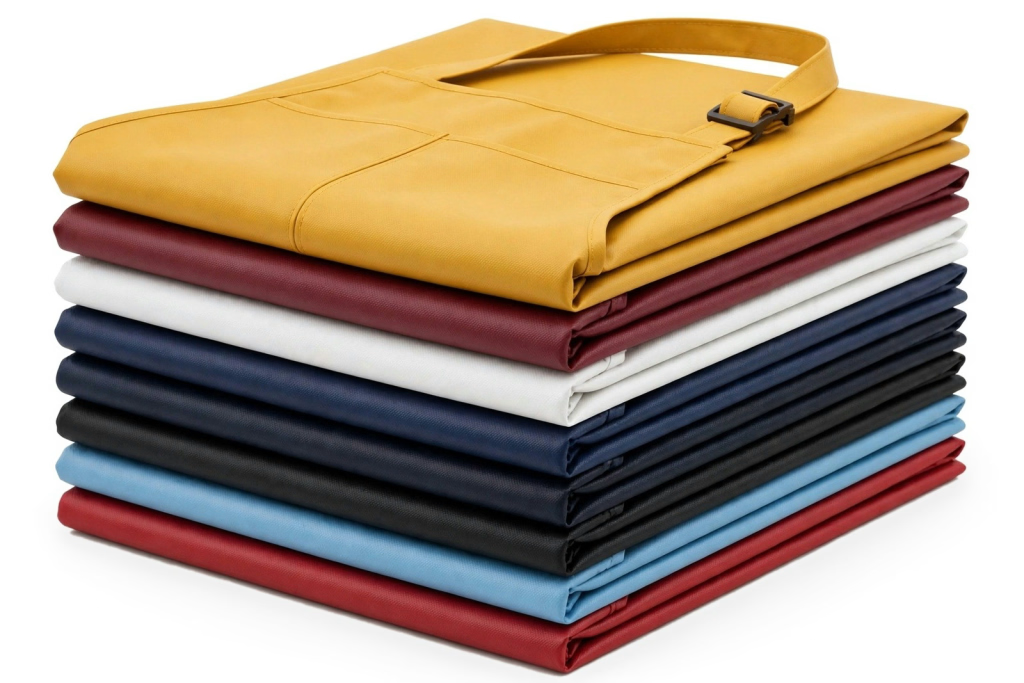
Black, navy, burgundy and white anchor most professional ranges, with full colour programmes and printed designs for retail and promotional channels. Printing is done on the coated or canvas face from your artwork, positioned to your template, and branding is completed with woven labels and hangtags.
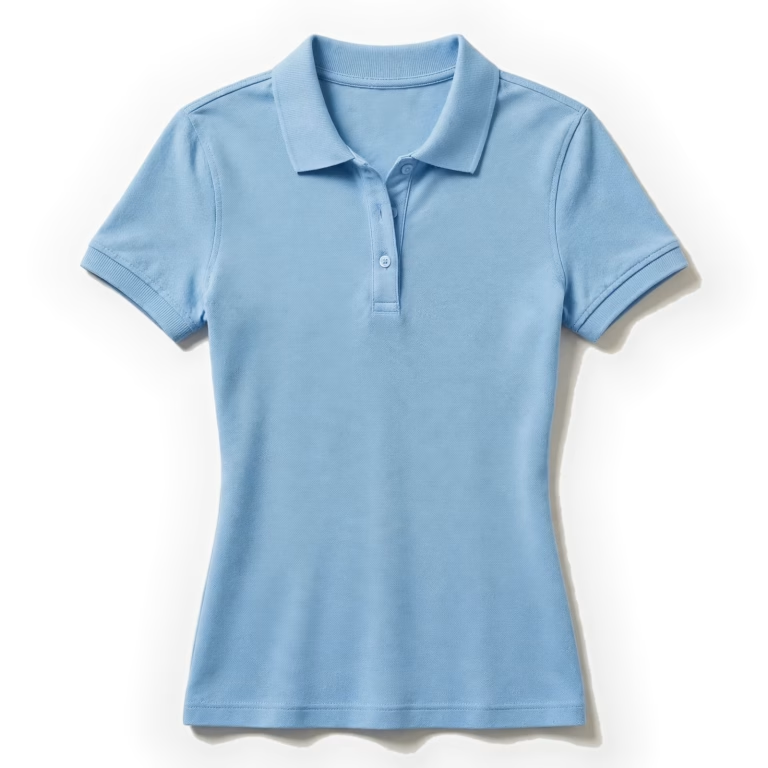
Hospitality buyers coordinate apron colours with our polo shirts uniform range, so a full staff uniform ships from one supplier.
Waterproof Kitchen Apron Sampling and Product Development
Sampling starts from your tech pack, drawing or a reference apron. Our sample room develops the pattern, sets the pocket layout and strap lengths, and produces a full sample in the actual coated material, so fit, coverage and coating flexibility are judged on the real product before bulk production is confirmed.
Comments are applied and a revised sample is issued, with the approved sample kept as the production standard for the order and for every repeat that follows.
Salesman samples are produced in the same way, so your sales team shows the same apron your customers will receive, in every colour you plan to sell.
Print position samples are approved alongside the plain sample, so branded programmes carry exactly the artwork placement that was signed off at development, on every colour in the range.
Custom Colours, Sizes, Styles and Size Ranges
Lengths and widths are set by the buyer’s channel: full-length for kitchens and processing, half-length for service, with strap and tie lengths adjusted for the wearer’s market. Children’s sizes follow their own graded patterns, and every dimension is set against the buyer’s own specification rather than a house standard.
Programmes are measured to the same discipline as our womens clothing range, so sizes stay consistent across a buyer’s catalogue.
Because hospitality programmes repeat on contract cycles, the approved pattern, material standard and colour references are kept on file, so the next repeat starts from the proven standard instead of from the beginning.
Quality Assurance and Production Follow-Up
Quality is checked at each stage rather than only at the end: material inspection before cutting, coating and flexibility checks, inline checks on the sewing floor for strap and pocket work, and a final inspection of finished, packed goods against the approved sample.
Our merchandisers follow each order daily and report progress to the buyer, so any question on material, print or packing is answered while the order is still on the floor, not after it has shipped.
Custom Labels and Packaging
Aprons are packed the way your channel sells them: folded singly in polybags, bundled for trade programmes, or on retail hangers with printed cards. Woven labels, printed stickers, hangtags and barcode labels are all produced to your artwork.
Trade programmes are packed to the same presentation standard as our t-shirt range, which ships high-volume basics to many of the same buyers.
Why Source Waterproof Kitchen Aprons from Bangladesh?
Bangladesh offers apron buyers a rare combination: skilled sewing labour at a competitive cost, a deep workwear-garment base, and factories experienced in high-volume uniform programmes for the USA, the UK, Germany, Canada and Australia. Programmes for the Netherlands and France run on the same production lines, held to the same specification.
Compared with Pakistan, Cambodia, Indonesia or Egypt, Bangladesh pairs that cost base with long experience in sewn workwear specifically, so strap reinforcement, pocket work and coated-material handling are routine work rather than new development.
Why Choose Siatex Bangladesh?
Siatex Bangladesh has worked in the Bangladesh apparel industry since 1987, supplying private label clothing to importers, wholesalers and retail buying teams. Product development, sampling, merchandising, quality assurance, production and export coordination sit under one roof, so one accountable team follows your order from the first sample to the final carton.
Everything is made to order. We hold no stock of finished goods or fabric and sell nothing under our own label, so our production capacity is reserved entirely for our customers’ brands.
Looking for a Waterproof Kitchen Apron Manufacturer Bangladesh?
Send us your tech pack, artwork or a reference sample, and our merchandising team will reply with material options, a sampling plan and a production proposal for your range. Use the Get Price button on this page to add the product to your inquiry, or contact us with your target colours, sizes and packing format.
Whether the programme is a first private label apron range or a repeat contract for an established workwear supplier, the first step is the same: send the specification, and we will develop the sample that your bulk order will be measured against.
Choosing the Right Coating and Weight for Buyers in the Netherlands and France
Coating choice sets the apron’s protection and price point. Standard PVC-coated polyester covers most professional kitchens; lighter PU coatings suit cafe and light-duty ranges where flexibility leads; heavier coated canvas serves butchers and processors. Dutch hospitality wholesalers often specify full-length coverage with divided pockets, while French buyers frequently add printed bistro branding, and the material standard chosen at sampling is the standard held in bulk.
Strap and tie specification is part of the same decision. Webbing straps adjust faster across a shift; self-fabric ties read more traditional. Because materials are produced or sourced to order for each programme, the coating, weight and strap standards are set at sampling and held for every repeat.
How Coverage and Stitching Are Held from Sample to Bulk for USA and UK Buyers
Coverage is locked at the approved sample and then defended in production. Aprons are measured for length, width and pocket position on finished goods, strap joins are pull-checked, and coating is inspected at the folds for cracking at inline and final inspection. American programmes often run wider, longer coverage for processing work, British programmes standard kitchen dimensions, and the patterns are kept separate for each.
Because hospitality contracts repeat on cycles, the tenth order must match the first. The specification records, approved samples and material standards kept for each order make that comparison possible, and any proposed change to material or construction is sampled and approved before it reaches a bulk order.
How a Waterproof Kitchen Apron Order Moves from Sample to Shipment to Germany, Canada and Australia
An order moves through sampling, material production or sourcing to the confirmed specification, cutting, sewing, finishing and packing, with the buyer updated at each stage. Finished cartons ship from Chattogram to the buyer’s port: Hamburg for Germany, Toronto and Vancouver for Canada, Sydney and Melbourne for Australia, with Felixstowe and New York serving our British and American programmes and Rotterdam and Le Havre handling Dutch and French deliveries. Export documents are prepared by the same merchandising team that followed the order, so the paperwork matches the goods in the carton.